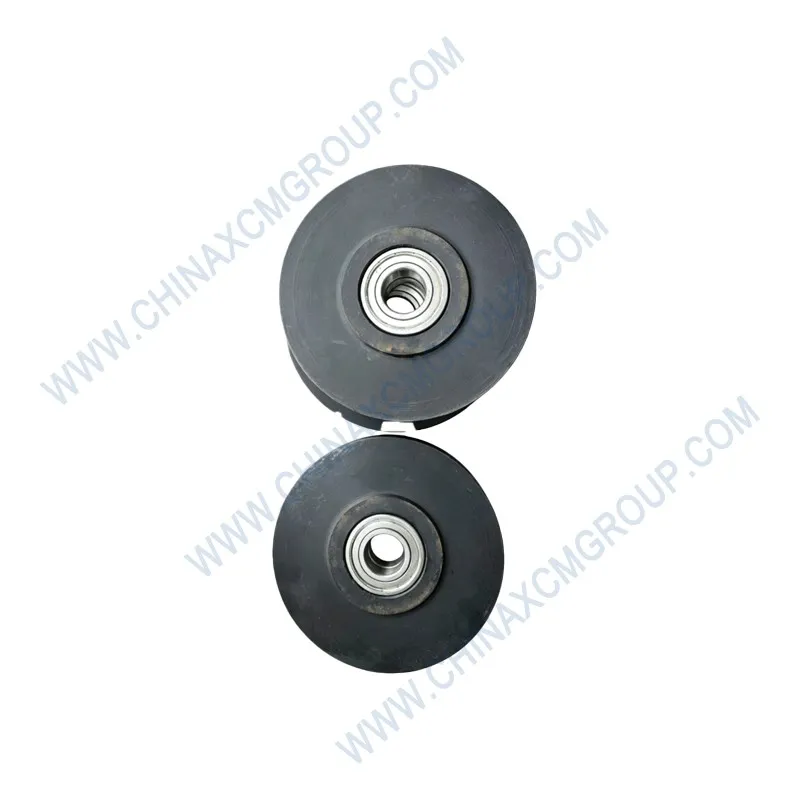
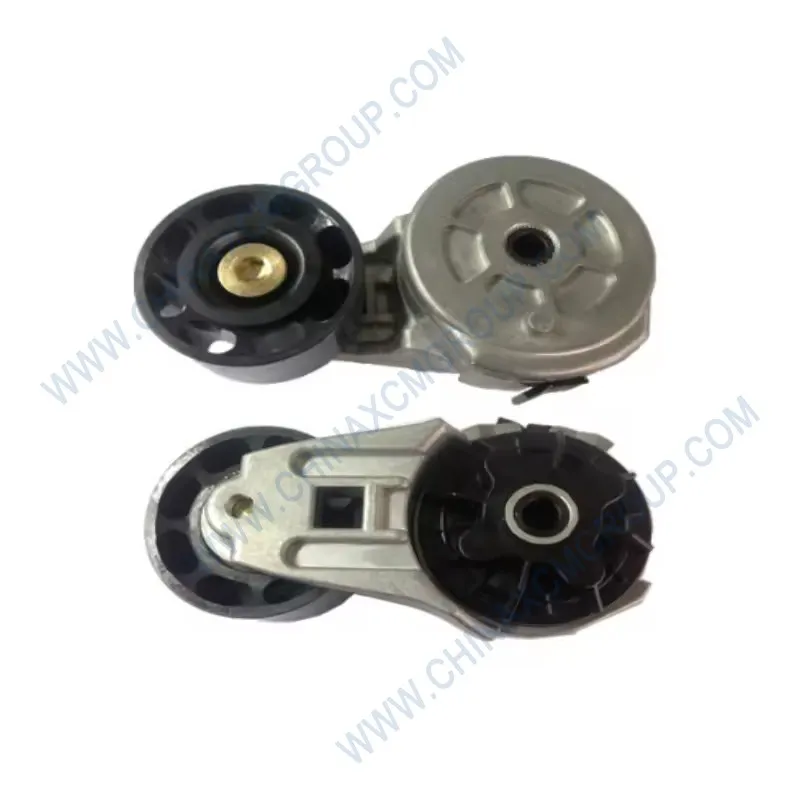


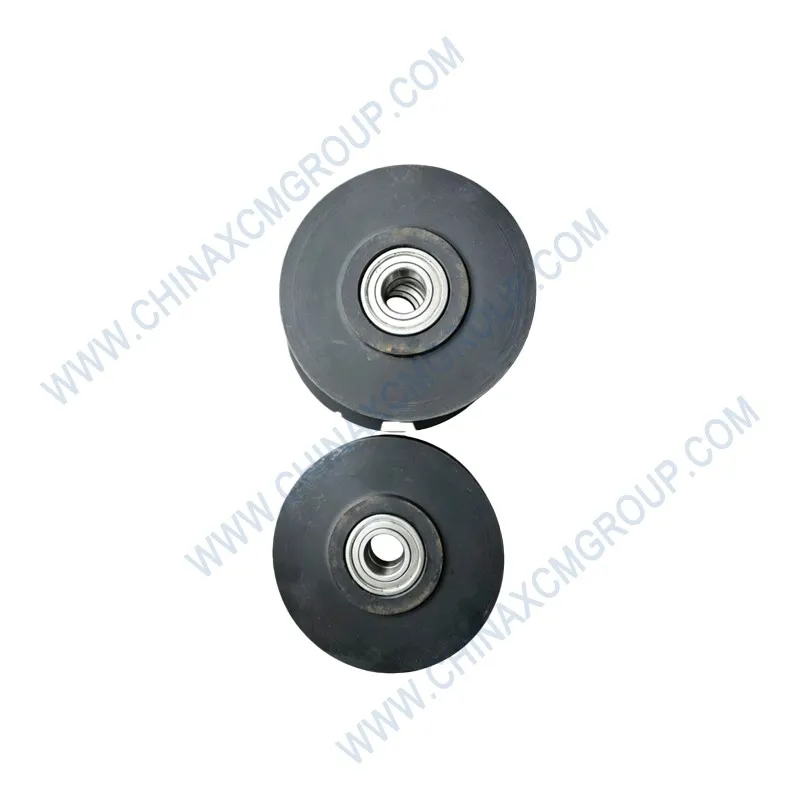
The genuine XCMG Idler Pulley with OEM number 800172824 is a precision-engineered belt guide component designed for XCMG articulated dump trucks, wheel loaders, and heavy off-highway equipment. This idler pulley redirects the serpentine belt to ensure proper wrap angle around accessories such as the alternator, water pump, fan, and power steering pump. Manufactured from high-strength steel or cast iron with a sealed ball bearing and smooth phenolic-coated groove, the XCMG 800172824 idler pulley provides low friction, quiet operation, and long service life in extreme mining and construction environments. Built to withstand high belt tension and temperatures up to 125°C, this pulley eliminates belt flutter and reduces wear on the entire accessory drive system.
The XCMG Idler Pulley 800172824 is a critical component of the engine serpentine belt system. While the belt tensioner provides correct belt tension, the idler pulley(s) guide the belt around obstacles, increase belt wrap on small pulleys (like the alternator), and reverse belt direction. A failed idler pulley – with a seized bearing or worn groove – will cause belt squeal, accelerated belt wear, and eventual belt failure, leading to loss of cooling, charging, and power steering.
On AD60 and AD80 articulated dump trucks, the 800172824 idler pulley is typically located near the water pump or fan hub. Field data shows that genuine XCMG idler pulleys outlast aftermarket copies by 3:1, maintaining smooth rotation and groove integrity for over 8,000 hours. The sealed bearing keeps out dust and mud, even in high-pressure washdown environments.
The 800172824 idler pulley features a steel or cast iron body, precision‑machined for perfect concentricity. The groove is coated with phenolic resin, which reduces belt friction and noise. The steel construction provides high strength to withstand belt tension (up to 800 N) without flexing. The pulley is dynamically balanced to G6.3 grade, minimizing vibration at high engine speeds.
The sealed ball bearing is a premium grade (e.g., 6203-2RS or similar) with high-temperature grease (good to 150°C). The bearing has dual rubber seals to prevent water and dust ingress. Each pulley is 100% noise‑tested (audible and vibration) and runout‑checked before leaving the factory. The bearing is designed for a minimum L10 life of 50,000 hours under typical loads.
The XCMG idler pulley 800172824 is a direct OEM replacement for original part numbers 800172824A, 860124579, and 860298753. It is available in several diameters and groove configurations to match the specific belt routing of each engine variant. The pulley is marked with the part number and an arrow indicating the direction of belt rotation (if applicable).
When replacing, always use a new bolt (provided in the kit) with a thread‑locking compound. The mounting boss on the engine block should be cleaned and inspected for damage. The new pulley should spin freely by hand with no roughness. If the pulley has a shoulder bolt, torque to the engine manual specification (typically 50–70 Nm). For pulleys with a washer, ensure the washer is oriented correctly.
To replace an idler pulley, first remove the serpentine belt (use the belt tensioner tool to relieve tension). Use a socket (typically 15mm or 16mm) to remove the bolt securing the old pulley. Clean the mounting stud or boss. Install the new XCMG 800172824 pulley, applying a small amount of anti-seize to the bolt threads if not pre‑coated. Torque to specification.
Reinstall the serpentine belt, ensuring it seats correctly in all grooves. Rotate the engine by hand (using the crankshaft bolt) to verify belt tracking. Start the engine and listen for any chirping or grinding. If noise persists, re‑check belt tension and pulley alignment. The idler pulley should rotate smoothly and silently.
During routine maintenance, inspect the idler pulley for: excessive radial play (grab the outer flange and try to move it side‑to‑side – more than 0.5mm play indicates bearing wear), rough rotation (turn by hand), or visible cracks in the pulley body. Replace immediately if any of these signs are present. Proactive replacement every 4,000‑6,000 hours is recommended.
Counterfeit idler pulleys sold as 800172824 often use unsealed bearings that fail rapidly from dirt ingress, or stamped steel pulleys that are not balanced, causing vibration. Symptoms include belt chirp, growling noise from the front of the engine, or visible belt wear on one edge. Genuine XCMG pulleys have a smooth, even surface finish, a laser‑etched part number, and a holographic label on the packaging. The bearing will be marked with a manufacturer’s name (e.g., SKF, FAG, NSK).
Another common issue is incorrect offset dimension. Aftermarket pulleys may have the belt groove positioned 2–3 mm too far in or out, causing belt misalignment and edge wear. Genuine XCMG pulleys are CNC‑machined to match the original location. Always compare the new pulley’s flange offset to the old one before installation.
Material fatigue: Low‑quality pulleys may be made of low‑carbon steel that corrodes and pits, destroying the bearing seal. Genuine XCMG pulleys are zinc‑plated or E‑coated for corrosion resistance. The groove coating (if phenolic) is uniform and bonded, not peeling.
A seized idler pulley will melt the belt and leave the truck without alternator (dead battery), water pump (overheating), and power steering (dangerous). The cost of a roadside repair – including towing, belt, pulley, and labor – can exceed $800. Replacing a worn idler pulley with a genuine XCMG 800172824 pulley costs approximately $35. This is one of the most cost‑effective preventive actions.
Predictive maintenance: During daily inspections, listen for any unusual noise from the belt drive area. Use a mechanic’s stethoscope to isolate a noisy pulley. Also, check for belt glazing or fraying – that often indicates a rough idler pulley groove. Replace the pulley when replacing the serpentine belt (every 1,500‑2,000 hours) to ensure maximum reliability.
Payback analysis: A genuine idler pulley costs ~$35. If it prevents one breakdown ($800 towing + repair + lost production), the savings exceed 20 times the cost. For a fleet of 20 trucks, replacing all idler pulleys every 4,000 hours as a set virtually eliminates belt‑related failures.
Every XCMG Idler Pulley 800172824 is manufactured in an IATF 16949‑certified facility. Each pulley undergoes 100% balancing, runout inspection, and bearing noise testing (using an accelerometer). Random samples are subjected to high‑temperature endurance (200h at 120°C), dust ingress testing, and salt spray corrosion testing. XCMG provides a 24‑month warranty against bearing seizure, pulley cracking, or excessive noise.
Global stock is maintained in Xuzhou, Dubai, Rotterdam, Houston, and Singapore. Emergency orders ship within 24 hours. Bulk packs of 10 pulleys (part number 800172824‑B10) are available for fleet customers at a 12% discount. Each pulley includes a new mounting bolt (where applicable) and a small tube of thread‑locking compound.
To verify authenticity, scan the QR code on the packaging – it links to the test certificate showing runout, bearing clearance, and balancing data. Always insist on genuine XCMG 800172824; counterfeit pulleys have been known to fail within weeks, causing belt derailment and engine damage.
XCMG engineers tested the 800172824 idler pulley under extreme conditions: -45°C cold starts, +55°C desert ambient, 5,000 hours of continuous engine operation, and high‑pressure steam cleaning (IP6K9K). The pulley maintained less than 0.05 mm bearing play, and the phenolic coating showed no wear. The bearing grease did not leak or degrade.
For applications with high belt tension (e.g., engine fan and alternator combined on one belt), XCMG offers a heavy‑duty version with a larger bearing and a reinforced steel body (suffix “-HD”). This version is standard on AD100 trucks with dual alternators.
The sealed bearing design has been validated in high‑dust coal mines and silica sand quarries, where foreign material is constant. After 6,000 hours of field operation, bearings showed no ingress of abrasive particles.