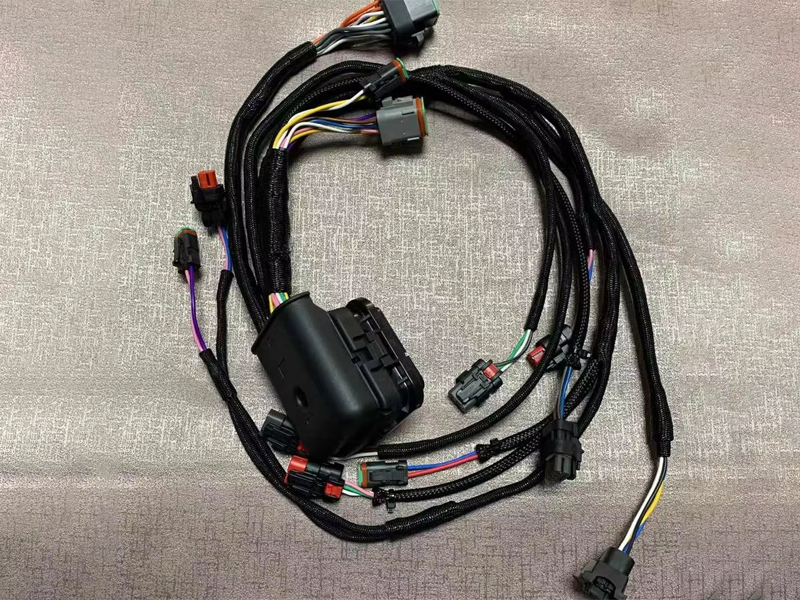
XCMG crane wiring harnesses and relays endure extreme vibration, heat, and moisture. Over time, these components degrade, causing intermittent faults or complete shutdowns. The most widespread issues include insulation chafing, terminal corrosion, relay contact welding, and electromagnetic interference. Addressing them early prevents costly breakdowns.
Constant friction against chassis edges or moving parts wears through harness sheathing. This leads to short circuits, blown fuses, or erratic sensor signals. Regular routing inspection and using spiral wraps are essential countermeasures for XCMG crane wiring harnesses and relays longevity.
Moisture ingress through cracked seals accelerates galvanic corrosion, increasing resistance. Voltage drops affect relay actuation and control signals. Dielectric grease and sealed connectors drastically reduce failures in XCMG crane wiring harnesses and relays systems.

High inrush currents from motors or solenoids can weld relay contacts, leaving functions permanently active (e.g., hoist or slew). Swapping to solid-state relays or using high-quality sealed relays improves reliability of XCMG crane wiring harnesses and relays architecture.
Engine bay and hydraulic areas cause embrittlement, leading to cracking and exposed copper. This invites intermittent grounding. Periodic thermography inspection identifies hot spots early. Maintaining XCMG crane wiring harnesses and relays demands heat-resistant sleeving and proper routing away from exhaust.
For systematic troubleshooting of XCMG crane wiring harnesses and relays, always start with a visual inspection. Look for pinched wires, melted insulation, or burnt relay housings. Then perform continuity checks on critical circuits such as the safety limit switch lines and load moment indicator.
Advanced diagnostic tools like CAN bus analyzers help decode communication errors stemming from harness issues. Many electrical gremlins in XCMG crane wiring harnesses and relays are traced back to poor grounding points – verify ground straps resistance below 0.1 ohms.
Implementing a digital logbook for each XCMG crane wiring harnesses and relays inspection helps predict failures. Vibration analysis combined with thermal imaging detects loose connections before they cascade.

Relays are the workhorses within XCMG crane wiring harnesses and relays ecosystems. Common failure modes: burnt coil due to voltage spikes, stuck armature from dust ingress, and cracked relay casing. Always use relays with correct coil suppression diodes. Upgrading to plug-in miniature relays with LED indicators eases diagnosis.
When replacing any relay inside XCMG crane wiring harnesses and relays cabinets, ensure the amperage rating matches the load (typically 30A-70A for main contactors). Loose relay sockets cause intermittent engagement of brakes or winches – re-crimping female terminals solves most problems.
A construction fleet reported erratic boom telescope operation. After scanning, the issue traced to abraded wiring inside the turret harness. The operator had intermittent loss of extend signal. Our team replaced 1.5m of damaged section within the XCMG crane wiring harnesses and relays, used high-temp split loom, and relocated the harness away from sharp edges. The crane returned to full functionality with zero recurring faults.
This case emphasizes why routine inspection of crane wiring harnesses and relays should include harness movement simulation – flexing the harness while monitoring continuity reveals hidden cracks. Investing in braided sleeving and redundant relay logic for safety-critical functions improves overall reliability.
Dust, rain, salt spray, and extreme temperatures are common enemies. Use IP67/NEMA 4X rated relay enclosures for outdoor installations. Harnesses should be secured using cushioned clamps, not zip ties under tension. For offshore or humid environments, applying corrosion inhibitor on relay terminals extends the life of XCMG crane wiring harnesses and relays systems dramatically.
Furthermore, ensure that all control boxes have proper gaskets and that drain holes are not blocked. Water pooling inside relay boxes causes electrolysis – a primary killer of crane wiring harnesses and relays. Silicone-based sealants on wire entry points add an extra layer of protection.
Modern telematics can now track resistance trends across relay contacts and harness segments. By installing IoT voltage/current sensors on critical branches, fleet managers receive alerts before failures occur. Such predictive maintenance transforms how XCMG crane wiring harnesses and relays are managed, reducing unplanned downtime by up to 45%.
Retrofit solutions like CAN-based relay modules also simplify wiring complexity, reducing the number of discrete harness connections. The result: a more robust architecture for XCMG crane wiring harnesses and relays with fewer failure points.
Professional maintenance of XCMG crane wiring harnesses and relays demands schematic reading ability and proper tools: multimeter, insulation tester, relay buddy (beeper), and terminal extraction tools. Always keep a stock of common relays (12V/24V, 5-pin, 4-pin) and harness repair kits including waterproof splices and heat shrink.
Operators should recognize early warning signs: flickering indicator lights, unusual relay buzzing, or delayed response from crane functions. Reporting these signs early for inspection saves hours of troubleshooting XCMG crane wiring harnesses and relays. Simple daily walkaround includes tugging lightly on accessible harness branches to detect loose connectors.
Documented feedback loops between operators and service crews dramatically improve the mean time to repair for XCMG crane wiring harnesses and relays issues. A two-minute pre-start electrical check (test horn, work lights, outrigger indication) prevents unexpected shutdowns.
Based on field data, XCMG recommends replacement of all primary power relays every 5 years or 8000 operating hours, whichever comes first. Harnesses exposed to extreme environments should undergo replacement of sections with visible hardening at 10,000 hours. Following these guidelines ensures XCMG crane wiring harnesses and relays maintain peak reliability. Use only genuine or approved aftermarket parts to guarantee fit and flame-retardant properties.
For high-vibration applications (pile drivers, demolition), additional vibration-damping mounts for relay panels and overbraided harness sections are strongly advised. These proactive measures extend the lifespan of XCMG crane wiring harnesses and relays and reduce total cost of ownership.