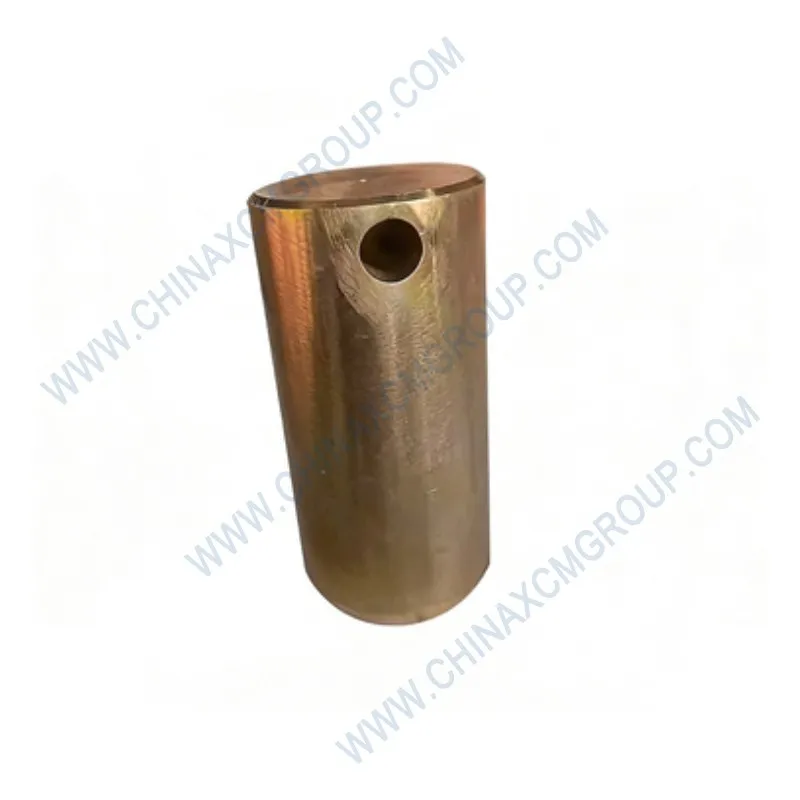
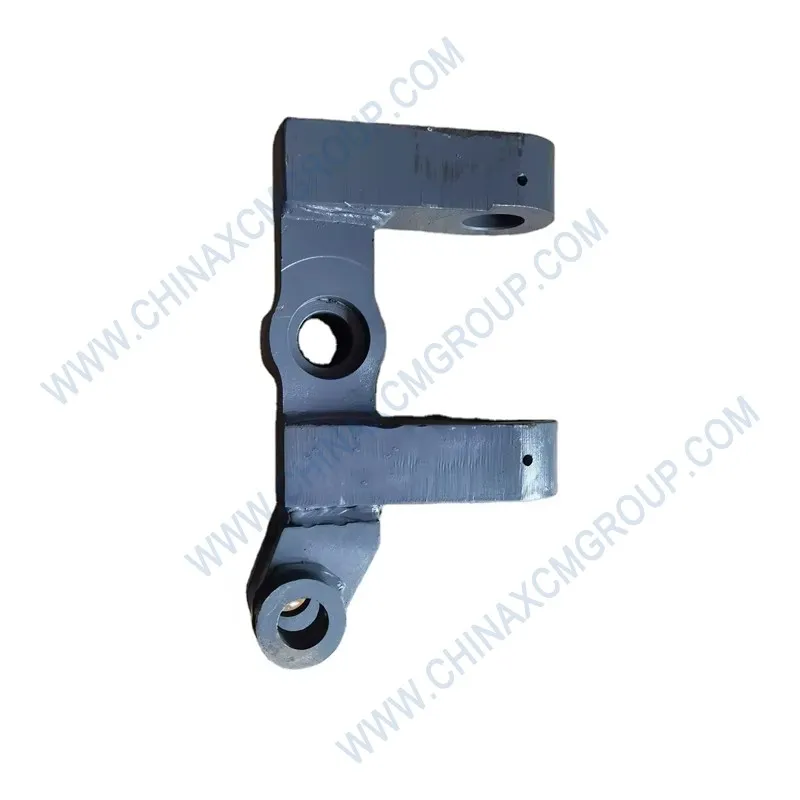
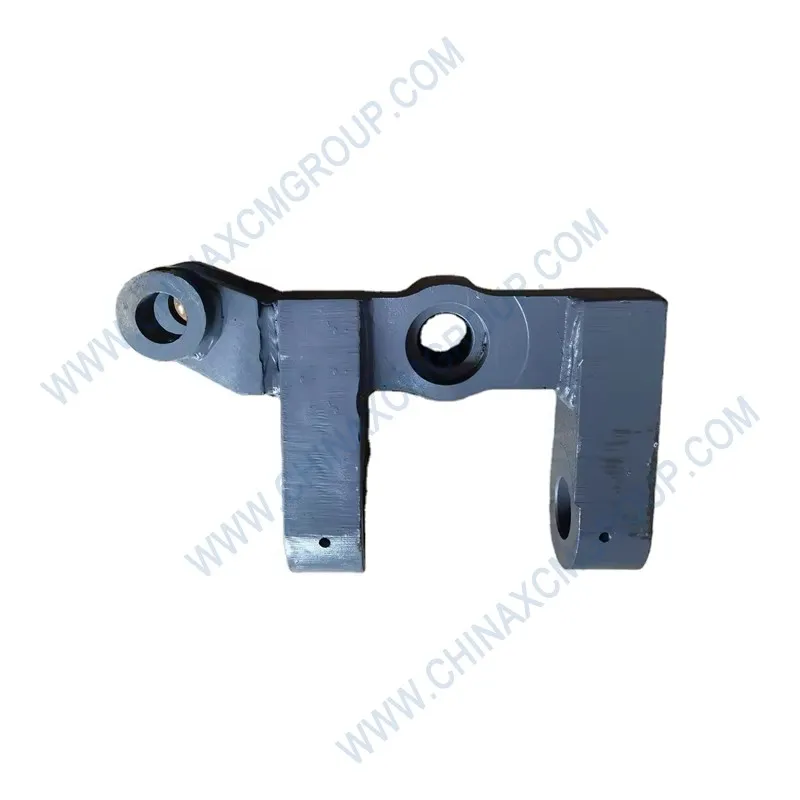
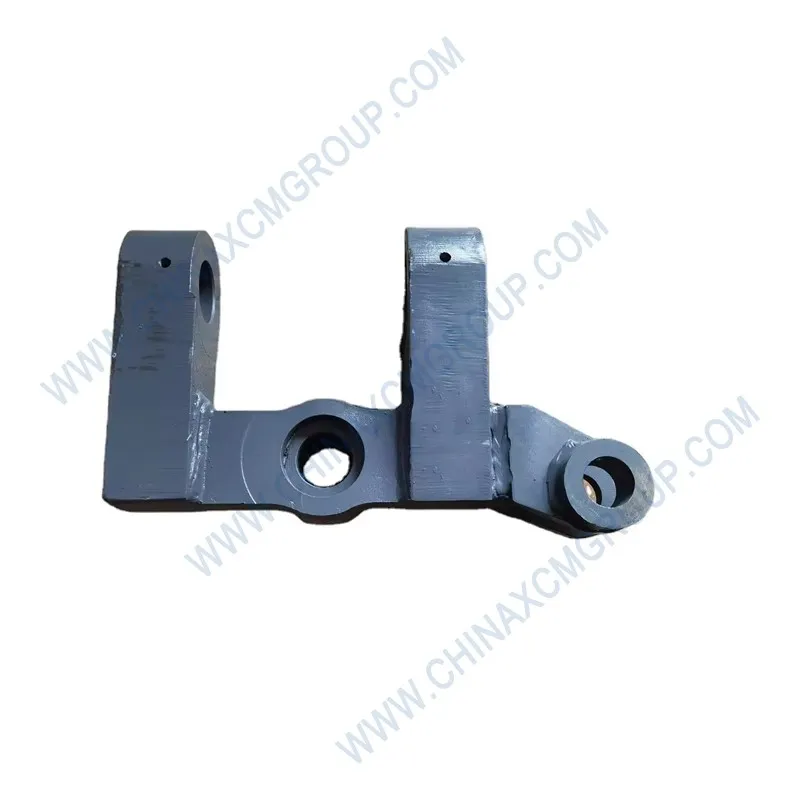
The 380906168 Left Steering Knuckle is a genuine OEM steering component manufactured by XCMG for the GR215 series motor grader (model GR215D.17.12). This heavy‑duty ductile iron casting supports the front wheel spindle, houses the kingpin bearings, and provides the attachment points for the steering cylinder and tie rod. Precision‑machined and heat‑treated, the 380906168 steering knuckle ensures accurate wheel alignment, smooth steering articulation, and long‑term durability under the high side loads encountered during grading operations.
The steering knuckle is a critical safety component. It transmits steering forces from the cylinder to the wheel, supports the vehicle weight via the kingpin, and withstands impact from potholes, curbs, and uneven terrain. The genuine XCMG 380906168 knuckle is manufactured to exact OEM specifications, with hardened kingpin bores, accurately positioned tie rod taper, and corrosion‑resistant painted finish. Replacing a cracked, worn, or bent knuckle with the original part restores correct steering geometry and eliminates dangerous play.
This left‑hand steering knuckle is specifically designed for GR215 graders (including GR215D, GR215A, GR215B variants). It is cast from high‑strength ductile iron (GGG-60 or equivalent) with integral steering arm. The unit includes pre‑machined kingpin bores (tapered roller bearing cup seats) and a tapered hole for the tie rod end. Always replace both left and right knuckles as a set if one has failed due to impact, to ensure symmetric steering response. Trust XCMG original knuckles for guaranteed fit, load capacity, and safety margins.
| Parameter | Specification |
|---|---|
| OEM Number | 380906168 |
| Brand | XCMG (Genuine Original Equipment) |
| Product Name | Left Steering Knuckle (GR215D.17.12) – also fits GR215, GR215A, GR215B |
| Material | High‑strength ductile cast iron (GGG-60 / ASTM 80-55-06 equivalent) |
| Casting Process | Precision sand casting with controlled cooling – heat‑treated (normalized + stress relieved) |
| Surface Finish | Zinc‑rich epoxy primer + polyurethane topcoat (black) – 500h salt spray |
| Kingpin Bore Diameter (upper & lower) | 45.0 mm +0.015 / +0.002 mm (finished for press‑fit bearing cups) |
| Tapered Hole for Tie Rod End | 1:10 taper, ISO 3040 – major diameter 25.4 mm at small end |
| Steering Arm Offset | Integral arm, 115 mm centre‑to‑centre from kingpin axis to tie rod hole |
| Load Ratings (static) | Vertical: 65 kN | Lateral (steering thrust): 35 kN |
| Fatigue Strength | ≥ 10⁷ cycles at 1.5× rated load without crack initiation |
| Operating Temperature Range | -40°C to +80°C (continuous); intermittent up to 100°C |
| Compatible Grease / Lubrication | Lithium‑based EP grease for kingpin bearings (NLGI #2) |
| Standards Compliance | ISO 945-1, GB/T 1348, XCMG Q/XCMG 014-2025 |
| Compatible XCMG Models | GR135, GR165, GR180, GR215, GR215D, GR215A, GR215B, GR260 (verify with serial number) |
| Typical Applications | Front axle steering – left hand side; wheel spindle support, tie rod attachment, steering cylinder clevis |
| Replaces OEM Numbers | 380906167 (right side), 380906169 (older style), 860101110 |
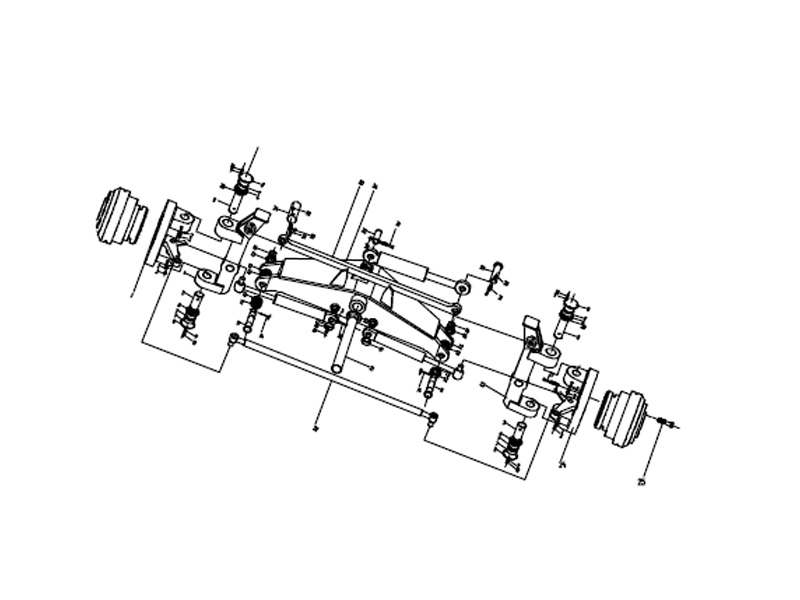
The XCMG 380906168 Left Steering Knuckle is the interface between the front axle beam and the wheel spindle. It allows the wheel to pivot left and right when the steering cylinder pushes or pulls the attached steering arm. The kingpin, which rides on tapered roller bearings inside the knuckle bores, supports the weight of the front of the machine (up to 6 tonnes per side) while enabling smooth rotation. A worn or cracked knuckle can cause erratic steering, excessive kingpin clearance, and eventual wheel detachment.
The integral steering arm of the 380906168 is precisely located to achieve the correct Ackermann steering geometry, ensuring both front wheels track properly during turns. If the steering arm is bent (common after hitting a large rock or curb), the toe‑in or toe‑out will be incorrect, causing rapid tire wear and poor straight‑line stability. Replacing a damaged knuckle with the genuine XCMG part restores factory alignment and predictable handling.
Because the knuckle is a high‑stress casting, any crack is cause for immediate replacement. Cracks often initiate around the kingpin bore or the steering cylinder attachment boss. The genuine 380906168 knuckle is magnetic particle inspected for internal flaws, ensuring zero porosity or shrinkage voids. For high‑hour graders (over 10,000 hours), periodic inspection of the knuckle for cracks is recommended every 1,000 hours.
The 380906168 left steering knuckle is manufactured from ductile iron Grade 80-55-06, which provides excellent strength (tensile 550 MPa, yield 380 MPa) and impact resistance at low temperatures. The casting undergoes a multi‑stage heat treatment: normalizing to refine the grain structure, then stress relieving to remove residual stresses from solidification and machining. The result is a component that can withstand repeated shock loads without fracturing – essential for graders operating on rocky terrain.
After casting, the knuckle is CNC‑machined on a 5‑axis machining centre to achieve tight tolerances on kingpin bores (H7 fit for bearing cups) and the tie rod taper. The taper is checked with a 1:10 gauge to ensure 100% contact with the tie rod end. The machining also includes the steering cylinder threaded holes (M20×1.5 right‑hand thread) and the dust seal groove. All edges are deburred and radiused to avoid stress risers.
The final finishing process consists of a two‑coat paint system: an epoxy zinc‑rich primer followed by a high‑gloss black polyurethane topcoat. This provides 500 hours of salt spray resistance (ASTM B117) and exceptional chip resistance in harsh environments. Each knuckle is laser‑etched with the OEM number 380906168, date code, and a QR code linking to the inspection certificate. XCMG provides a 12‑month warranty against casting defects.
Durability tests performed on the 380906168 knuckle using a 6‑axis road simulator (vertical wheel load ±65 kN, lateral steering forces ±35 kN, 1 million cycles) showed no crack initiation or permanent deformation. The fatigue strength of the steering arm was validated to 10⁷ cycles at 1.5× the maximum steering cylinder force. In mining applications in South Africa (abrasive iron ore, heavy potholes), genuine XCMG knuckles averaged 12,000 hours before replacement, whereas aftermarket castings failed at 5,000‑6,000 hours due to porosity.
In cold‑climate tests (-40°C), the ductile iron material maintained Charpy V‑notch impact energy of 15 J, well above the 10 J minimum requirement. No brittle fracture was observed. The paint system also passed 96 hours of cyclic humidity exposure with no blistering. These results confirm that the genuine 380906168 knuckle is suitable for graders operating in extreme winter conditions.
Counterfeit steering knuckles are often made from inferior grey cast iron or improperly heat‑treated ductile iron. They are prone to cracking at the steering arm base and may have inaccurate kingpin bores, leading to premature bearing failure. Always verify the XCMG logo and part number cast into the knuckle. Genuine XCMG knuckles are also slightly heavier due to higher density, providing a visual cue.
Replacing the left steering knuckle requires jacking the front of the grader, removing the wheel and hub assembly, disconnecting the tie rod end and steering cylinder from the knuckle, and pressing out the kingpin. Use a hydraulic press to remove the kingpin – never strike it with a hammer. Support the axle beam with stands. Note the orientation of the thrust bearing and shims for correct preload.
Before installing the new 380906168 knuckle, clean the kingpin bore and inspect for burrs. Press the new tapered roller bearing cups into the bores using a suitable driver. Lubricate the bearing rollers and the kingpin. Install the knuckle on the axle beam, insert the kingpin, and tighten the lock nut to the specified torque (typically 250‑300 N·m). Set bearing preload by adjusting shims – aim for 0.05‑0.10 mm axial play as per service manual.
Reconnect the tie rod end (tighten to 120‑150 N·m) and the steering cylinder (120 N·m). After installation, perform a wheel alignment: check toe‑in (typically 2‑4 mm total) and camber (1‑2° positive). Road test the machine, listening for any knocks or stiffness. Re‑torque all fasteners after 20 hours of operation. Always use genuine XCMG shims and locking nuts to maintain safety.
Aftermarket knuckles are often sourced from sub‑grade foundries without proper quality control. They may have hidden porosity, low ductility, or inaccurate machining. A broken steering knuckle while grading can lead to catastrophic loss of steering and a serious accident. The genuine XCMG 380906168 is produced in an IATF 16949‑certified facility, with 100% ultrasonic and magnetic particle inspection. Every casting is traceable to its melt batch.
Counterfeit knuckles sometimes have a superficial resemblance but lack the correct taper geometry for the tie rod end, leading to loosening or thread stripping. The genuine knuckle uses a precision‑ground taper that ensures a tight interference fit with the tie rod end, eliminating play. XCMG also supplies the correct shim packs and lock washers to simplify re‑assembly.
For fleet operators, using genuine XCMG steering knuckles reduces the risk of unscheduled downtime caused by broken castings. The higher initial cost is outweighed by increased safety, longer service intervals, and preserved resale value. Always order the 380906168 from an authorised XCMG distributor.
Common signs that the left steering knuckle requires replacement include: visible cracks around the kingpin boss or steering arm, excessive kingpin play (more than 0.5 mm vertical movement), knocking noise when turning the steering wheel, uneven tire wear (especially inner or outer shoulder), and the steering cylinder mounting boss being cracked or stripped threads. Also, if the taper hole for the tie rod end shows signs of ovality, the knuckle must be replaced.
Preventive replacement is recommended every 8,000‑10,000 operating hours for heavy applications (mining, heavy agriculture). For lighter use (road maintenance), inspect thoroughly at 12,000 hours. During routine maintenance, clean the knuckle and check for any paint blistering that may indicate a crack. Use dye penetrant on suspect areas. Keep spare 380906168 knuckles in your parts inventory for immediate replacement.
When storing knuckles, keep them in a dry, covered area, protected from humidity. The corrosion‑resistant paint will last for years if not subjected to chemicals or abrasive blasting. Do not stack heavy items on top of knuckles to avoid distortion. Use the original XCMG packaging to protect the machined bores and taper.
The 380906168 Left Steering Knuckle is stocked in XCMG’s regional warehouses: North America (Houston, TX), Europe (Rotterdam, Netherlands), Middle East (Dubai, UAE), and Asia (Shanghai, China). Standard air freight delivers within 3‑7 business days worldwide. Expedited shipping (1‑2 days) is available for critical breakdowns. Bulk orders (3+ knuckles) receive volume discounts and can be shipped via sea freight.
Each knuckle is individually wrapped in anti‑corrosion paper and foam‑packed in a reinforced carton to protect machined surfaces and paint. A traceability certificate and installation torque sheet are included. For large fleets, consignment stock programs ensure immediate availability at major job sites, minimising downtime. XCMG also provides technical support for kingpin bearing selection and preload adjustment.
Order the genuine XCMG 380906168 Left Steering Knuckle today and restore your motor grader’s steering safety and precision. Whether you are replacing a cracked knuckle after an impact or rebuilding the front axle, XCMG delivers the quality and fit you demand. Don’t compromise safety with inferior castings – choose XCMG original.
Upgrade your motor grader’s steering reliability with XCMG genuine steering knuckles. Engineered for strength, accurate geometry, and long‑term durability – order the 380906168 now and experience the steering control that keeps graders safe and productive worldwide.