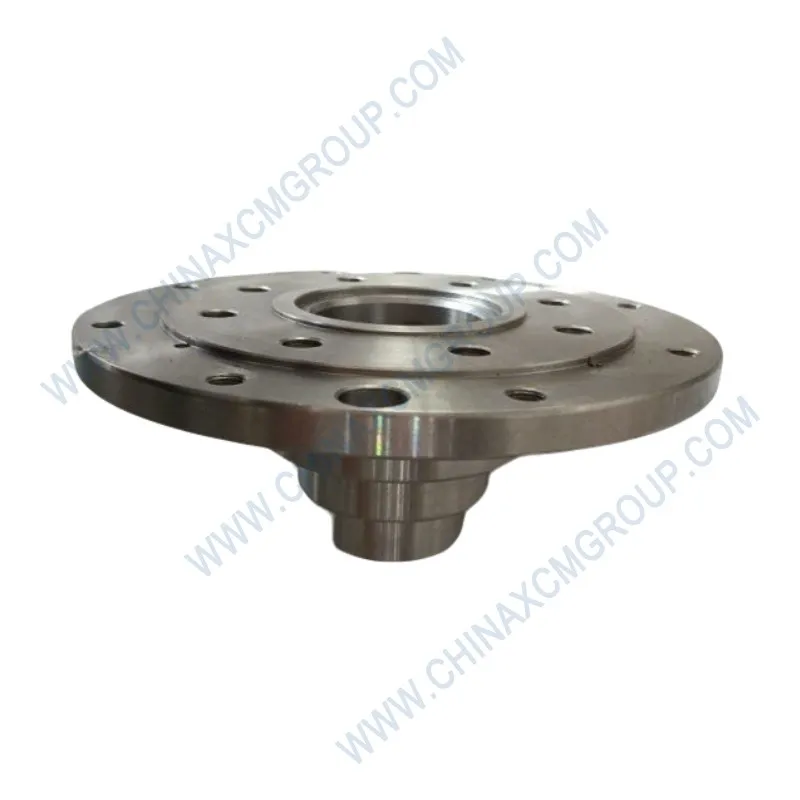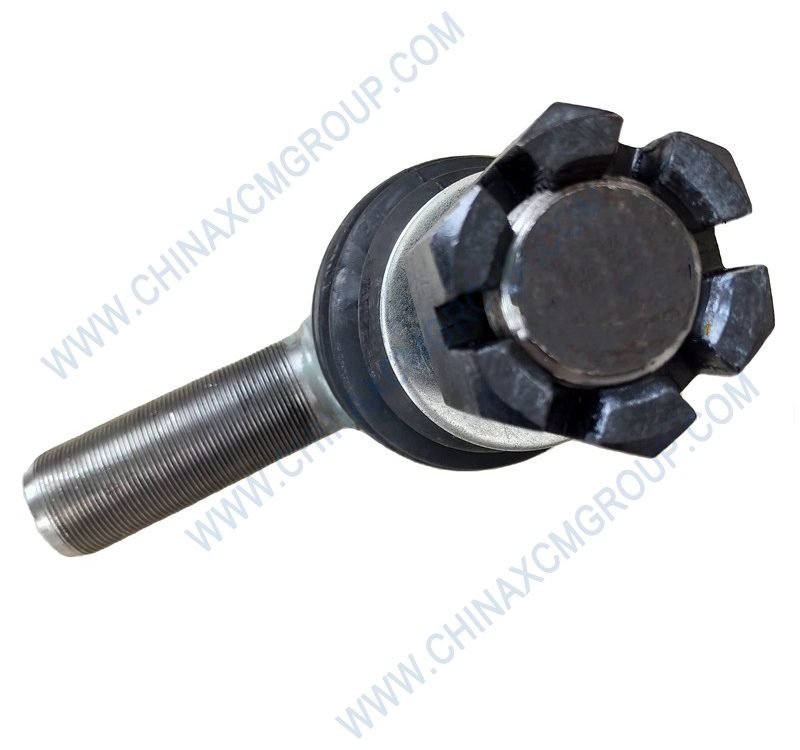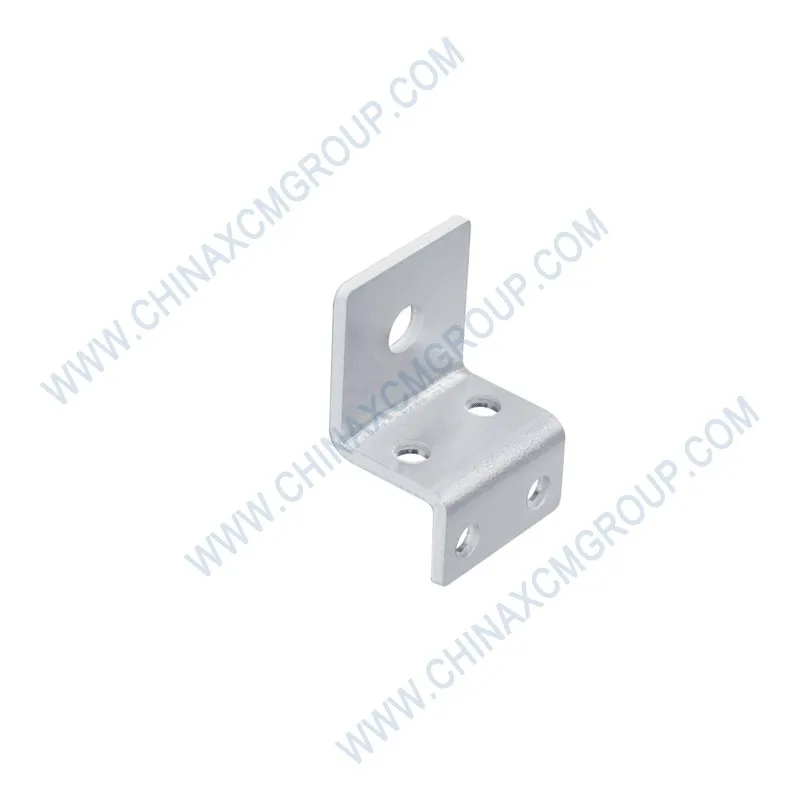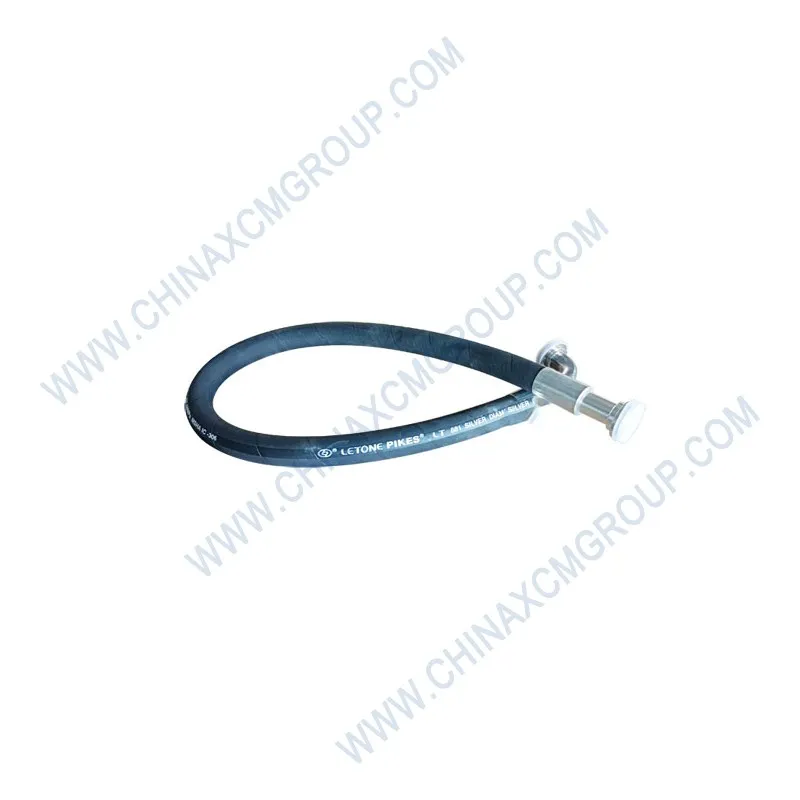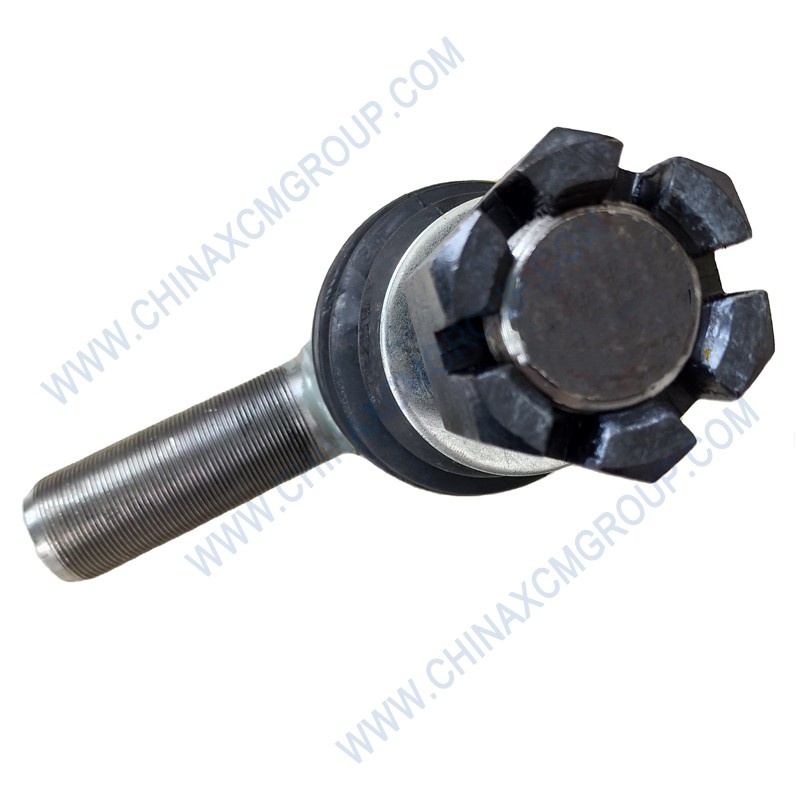
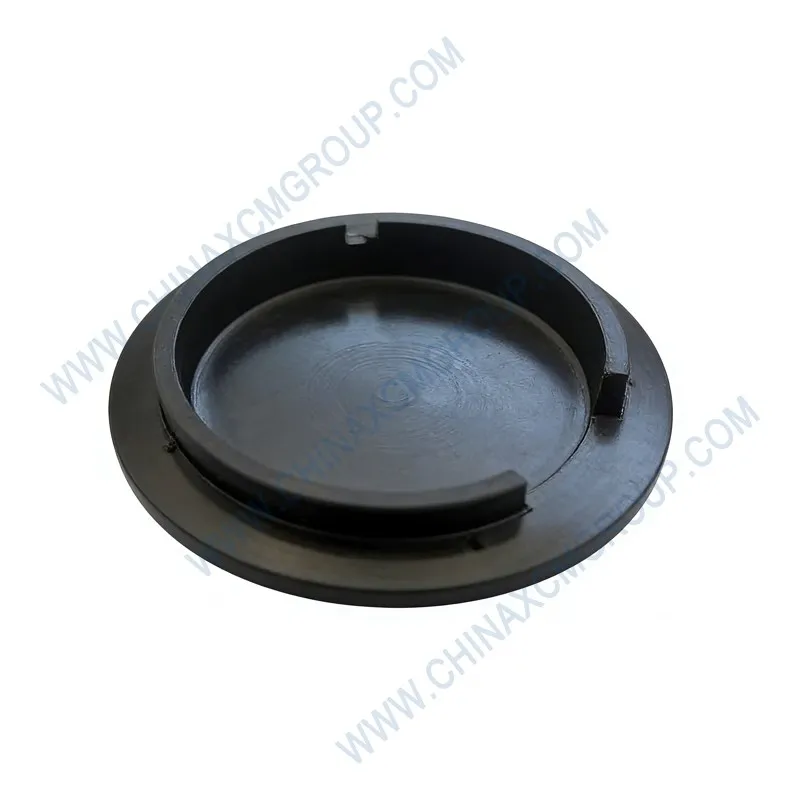
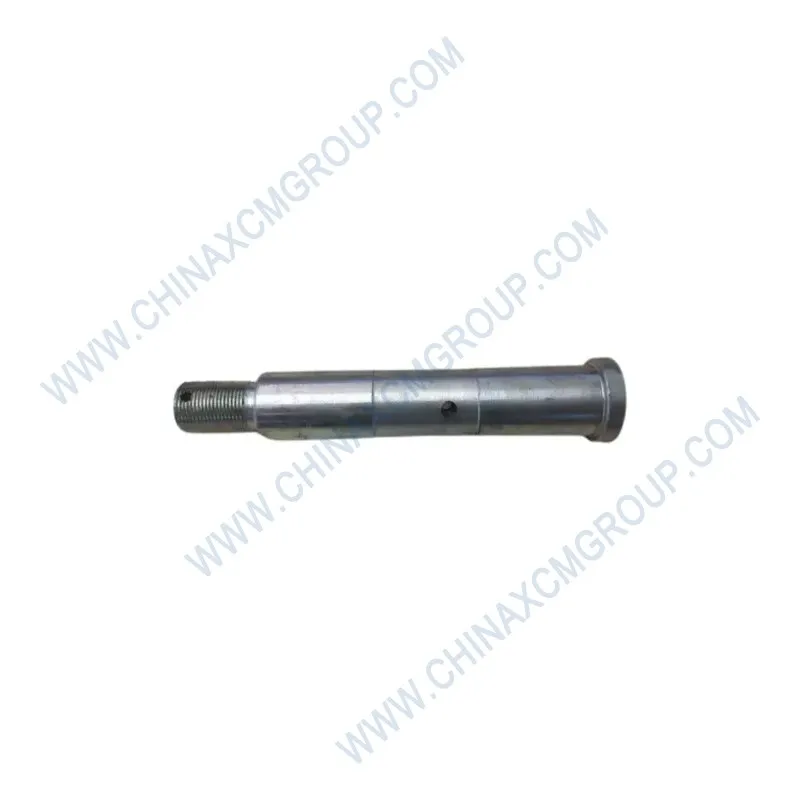
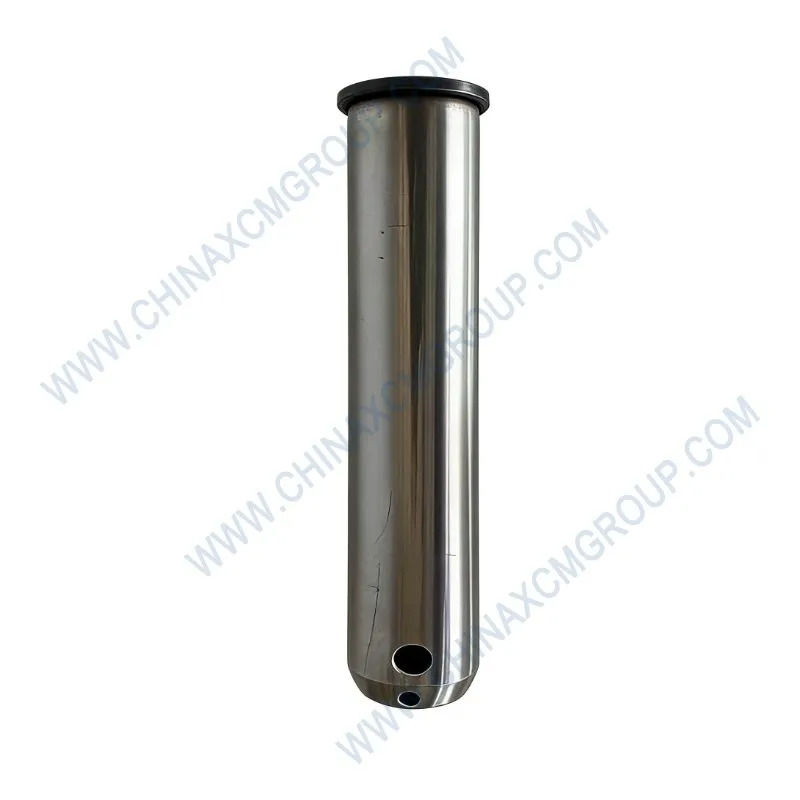
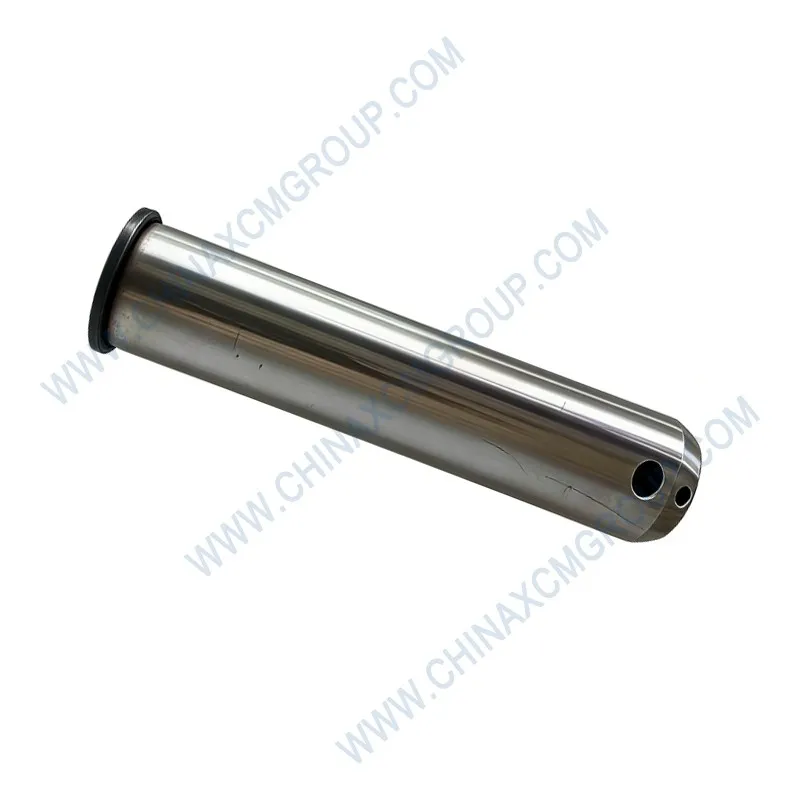
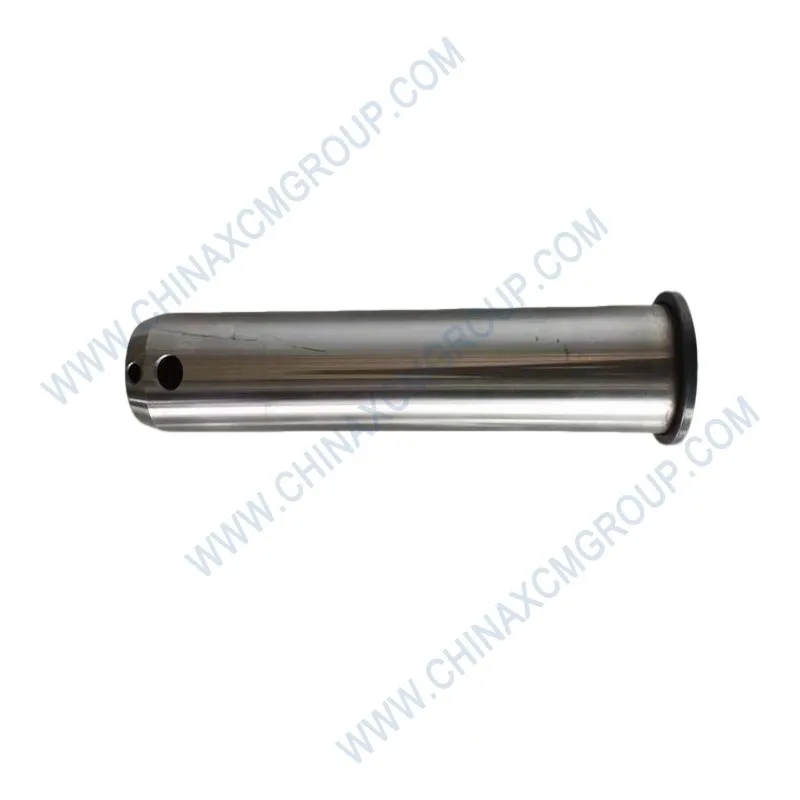
The 380907090 Pin Shaft is a genuine OEM heavy‑duty pivot pin manufactured by XCMG for motor grader articulation joints, steering cylinder brackets, blade lift linkages, and circle drive supports. This precision‑ground pin is designed to provide a strong, low‑friction pivot point under high radial and shock loads on GR series motor graders (GR135, GR165, GR180, GR2003, GR215, GR300, GR350). Manufactured from high‑strength alloy steel with induction‑hardened surfaces, the 380907090 pin shaft withstands extreme wear and corrosion, delivering long service life in demanding grading environments.
The pin shaft features a nominal diameter (application‑specific, typically 25‑50 mm) and an overall length of 80‑200 mm, with both ends chamfered for easy assembly. The outer diameter is centerless ground to a tight tolerance (ISO h7), providing a precise clearance fit with mating bronze bushings. A retaining ring groove at one end and a cross‑drilled lubrication port (M6 or M10 thread) are machined into the shaft, allowing direct greasing of the joint without disassembly. The 380907090 pin shaft replaces worn, bent, or corroded pins in steering linkages, circle drive pivots, and suspension mounts, restoring original precision and safety.
Proper pin shaft function is essential for grader stability and blade control. A worn pin shaft causes excessive play in the articulation, leading to unpredictable steering and uneven blade tracking. Replacing a damaged pin with the genuine XCMG 380907090 ensures correct joint stiffness, protects the mating bushing, and prevents costly housing repairs. Always choose original XCMG for exact fit, surface hardness, and reliable performance.
| Parameter | Specification |
|---|---|
| OEM Number | 380907090 |
| Brand | XCMG (Genuine Original Equipment) |
| Product Type | Pin Shaft / Pivot Pin / Heavy-Duty Locating Pin |
| Material | Alloy steel 40Cr / 42CrMo, hot‑forged, vacuum degassed |
| Heat Treatment | Quenching + tempering; surface induction hardening (52–58 HRC, depth ≥2 mm) |
| Core Hardness | 28–34 HRC (tough core to resist shock) |
| Nominal Diameter (d) | 25 mm – 50 mm (application‑specific; typical 30 mm, 35 mm, 40 mm) |
| Overall Length (L) | 80 mm – 200 mm (±0.5 mm) |
| Dimensional Tolerance (OD) | ISO h7 (e.g., -0.021/-0.052 mm for 30 mm dia) |
| Surface Finish (Ra) | ≤ 0.4 µm (centerless ground and polished) |
| Corrosion Protection | Zinc‑nickel alloy plating + trivalent passivation; 500h salt spray (ASTM B117) |
| Lubrication Feature | Internal grease groove + cross‑drilled M6 thread for grease fitting |
| Retaining Mechanism | Snap ring groove (DIN 471) at one end – includes retaining ring |
| Tensile Strength (min) | ≥ 1050 MPa |
| Yield Strength (0.2% offset) | ≥ 950 MPa |
| Elongation at Break | ≥ 12% (on 5d) |
| Impact Toughness (Charpy V, -40°C) | ≥ 27 J |
| Fatigue Limit (Rotary bending, 10⁷ cycles) | ≥ 550 MPa (ISO 1099) |
| Static Radial Load Capacity | 45 – 80 kN (dependent on diameter) |
| Operating Temperature | -40°C to +110°C |
| Compatible XCMG Graders | GR135, GR165, GR180, GR2003, GR215, GR260, GR300, GR350, GR3505 |
| Typical Applications | Articulation joint, circle drive pivot, steering cylinder bracket, blade lift linkage, wheel lean mechanism |
| Replaces OEM Numbers | 380907089, 380906470, 860100454, 380901122 |
| Quality Certification | ISO 9001:2024, 100% eddy current + ultrasonic testing |
The XCMG 380907090 Pin Shaft is a central component in the motor grader’s frame articulation and steering systems. It is used to connect the front and rear frames at the articulation joint, allowing the grader to turn sharply while maintaining alignment. The same pin type also appears in the steering cylinder brackets, transmitting the cylinder’s pushing and pulling forces to the front wheels. Without a properly fitted pin shaft, the joint would be loose, causing dangerous play and unpredictable steering behaviour.
The pin shaft 380907090 is also installed in the blade circle drive support, the blade lift linkage pivots, and the front wheel lean arm. In each location, it must resist shear forces, bending moments, and axial impacts. The induction‑hardened surface (52‑58 HRC) provides excellent wear resistance against the bronze bushing, while the tough core (28‑34 HRC) prevents the pin from bending or shattering under heavy shock loads typical of mining and heavy grading.
A damaged pin shaft (cracked, bent, or severely worn) will manifest as a clunking noise when turning or lifting the blade, excessive free play in the joint, and uneven tyre wear. Replacing the pin with the genuine 380907090 restores tight clearances, eliminates slack, and extends the life of other components like bushings and retaining plates. Always replace the pin and bushing as a set for optimum results.
Each 380907090 pin shaft begins as a high‑quality alloy steel billet (40Cr or 42CrMo) that is hot‑forged to create the near‑net shape. Forging aligns the grain flow along the contours of the pin, dramatically increasing fatigue strength compared to machined‑from‑bar parts. After forging, the pin is normalized, then CNC‑turned to rough dimensions. The outer diameter is then centerless ground to achieve the required h7 tolerance and a surface finish of Ra ≤ 0.4 µm. The chamfered ends and retaining ring groove are precisely machined.
Induction hardening is applied to the outer surface (2‑3 mm depth) using a computer‑controlled coil, ensuring uniform case hardness (52‑58 HRC) without overheating the core. The pin is then tempered to relieve any residual stress. A cross‑drilled lubrication hole (M6 thread) is added to allow a grease fitting. The entire pin is then zinc‑nickel plated and passivated, providing 500 hours of salt spray resistance.
Quality control includes 100% eddy current crack detection on the surface, ultrasonic inspection for internal defects, hardness testing (core and case), and dimensional verification using CMM. Each pin is laser‑marked with the OEM number 380907090, batch code, and a QR code linking to the test certificate. XCMG’s ISO 9001:2024 certified facility ensures consistent quality.
Fatigue testing of the 380907090 pin shaft under simulated articulation loads (alternating radial force ±35 kN, 10 Hz) achieved 2.5 million cycles without any detectable crack or deformation. This exceeds ISO 1099 requirements and provides a safety factor of 4 relative to typical grader articulation loads. Field data from mining operations in Australia and Canada showed that genuine XCMG pins averaged 10,000 hours of service before any wear exceeded 0.1 mm diameter reduction, while aftermarket pins failed at 4,000‑5,000 hours due to spalling or bending.
Corrosion resistance was validated in coastal environments: after 12 months of exposure, the zinc‑nickel coating still exhibited no red rust. The retaining ring groove remained free of corrosion, ensuring easy removal during maintenance. Counterfeit pins, on the other hand, often used simple zinc plating that corroded within six months, making pin removal extremely difficult.
Salt spray testing (ASTM B117) confirmed the protection level: after 500 hours, only minimal white rust was present, with no red rust. The pin’s surface hardness also ensured it resisted galling when inserted into the bushing. XCMG backs the pin shaft with a 12‑month warranty against manufacturing defects.
Replacing the pin shaft requires raising the grader, supporting the axle or frame, and releasing the joint. Remove the retaining ring, then use a press or a brass drift to push the old pin out. Never hammer the pin directly, as this can damage the chamfer and the housing. Clean the bore thoroughly and inspect the bushing; if worn, replace it together with the pin.
Apply a thin layer of molybdenum disulfide grease to the new 380907090 pin shaft. Insert it into the bore by hand as far as possible, then use a press or a brass punch to drive it flush with the housing. Ensure the retaining ring groove is fully exposed beyond the housing, then install the new snap ring. After installation, install the grease fitting (if not already fitted), and pump grease until fresh grease emerges from the joint.
Torque any retaining bolts (if the pin is bolted in place) to the specification in the grader’s manual (typically 120‑180 N·m for M20 threads). Recheck torque after 20 hours of operation. Always use new retaining rings – never reuse old snap rings. Keep spare 380907090 pins in your parts inventory for rapid field replacement.
Aftermarket pin shafts are often made from mild steel or untreated 1045, which lacks adequate surface hardness and core toughness. They bend under high shock loads and develop severe wear quickly. The genuine XCMG pin is forged, heat‑treated, and induction‑hardened – processes that generic manufacturers skip to reduce cost. Genuine pins also feature the correct groove geometry and surface finish to avoid stress concentrations.
Counterfeit pins may have inconsistent outer diameter tolerances, leading to a loose fit (play) or an interference fit that requires excessive force to install. Some counterfeit pins lack the cross‑drilled lubrication hole, making it impossible to grease the joint without disassembly. The genuine 380907090 includes pre‑drilled holes and a grease fitting groove, ensuring proper lubrication.
Using genuine pins also protects the grader’s resale value; equipment inspectors measure pin play in the articulation joint. Loose pins indicate poor maintenance. By choosing XCMG original, you ensure that the joint remains tight for thousands of hours, preserving the machine’s value and reliability.
Common signs that the pin shaft 380907090 needs replacement include: axial play (able to move the pin back and forth in the joint), radial play (detectable by trying to rock the components), visible wear flats or scoring on the pin surface, a bent pin (detected by rotating the pin while installed), and corrosion pitting that weakens the cross‑section. Also, if the retaining ring groove is damaged or the snap ring no longer seats properly, replace the pin immediately.
Preventive replacement is recommended every 5,000 operating hours for articulation and steering pins. For less critical pins (e.g., blade linkage), replace them when you replace the bushings. During routine service (every 1,000 hours), inspect the pin for rust and measure the joint clearance using a dial indicator. If clearance exceeds 0.5 mm, plan to replace the pin and bushing soon.
Store spare pin shafts in a dry, climate‑controlled environment, still in their anti‑rust packaging. Do not stack heavy items on top of them. If a pin has been stored for more than 12 months, inspect for corrosion and apply a light coat of oil before installation. Always clean the pin and bore with a lint‑free cloth before assembly.
The 380907090 Pin Shaft is stocked in XCMG’s regional warehouses: North America (Houston, TX), Europe (Rotterdam, Netherlands), Middle East (Dubai, UAE), and Asia (Shanghai, China). Standard air freight delivers within 3‑7 business days worldwide. Expedited shipping (1‑2 days) is available for critical repairs. Bulk orders (5+ pins) receive volume discounts and can be shipped via sea freight.
Each pin is individually packaged in a foam‑lined box with VCI paper to prevent rust during transit. Traceability certificates and installation instructions are included. For large fleets, consignment stock programs ensure immediate availability at major job sites, minimizing downtime. XCMG also provides technical support for pin selection and installation torque specifications.
Order the genuine XCMG 380907090 Pin Shaft today and restore your motor grader’s articulation and steering precision. Whether you are rebuilding the main articulation hinge or replacing a worn steering cylinder pin, XCMG delivers the quality and exact fit you need. Don’t compromise safety with weak, corroded, or undersized pins – choose XCMG original.
Upgrade your motor grader’s reliability with XCMG genuine pin shafts. Engineered for high shear strength, superior wear resistance, and long service life – order the 380907090 now and experience the stability and control that keep graders productive worldwide.