Selecting the optimal XCMG slewing bearing grease directly determines service life, rotational precision, and equipment uptime. The wrong lubricant leads to premature wear, corrosion, and costly breakdowns. This guide decodes the science behind the perfect “food” for your XCMG slewing ring — from extreme pressure additives to NLGI consistency grades.
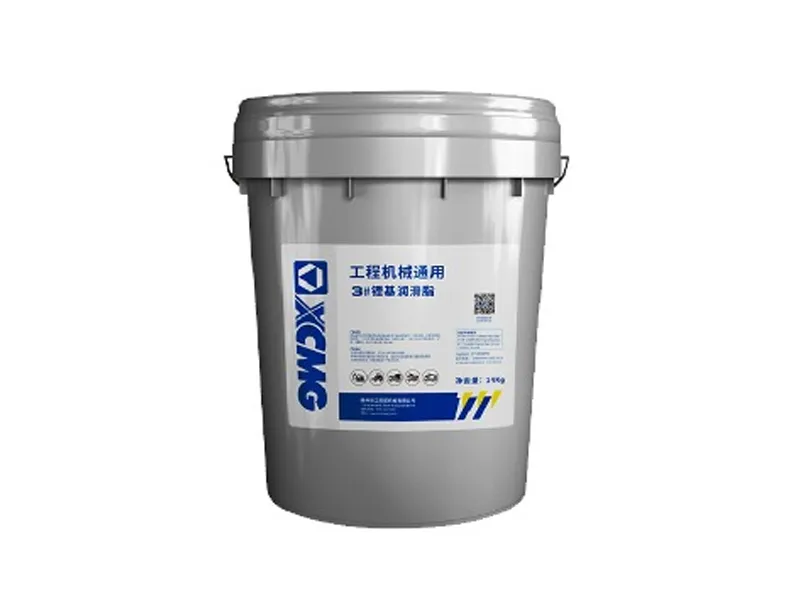
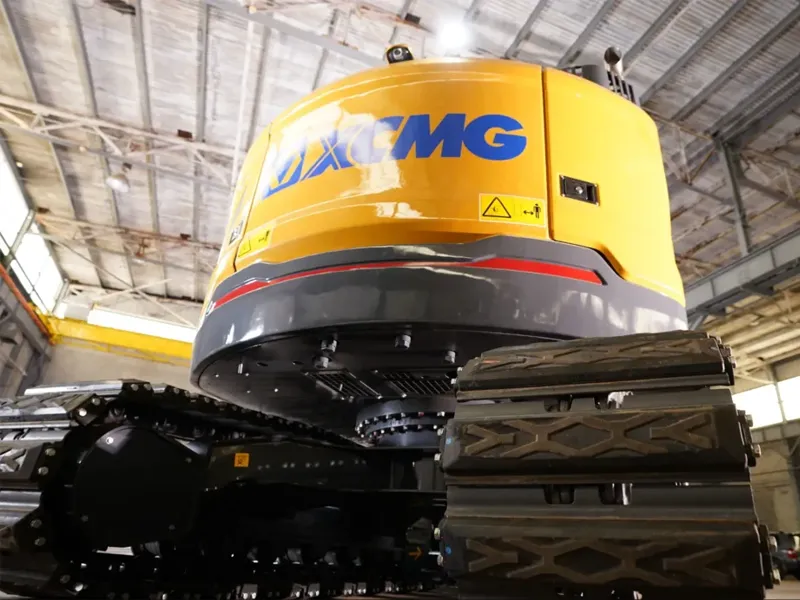
Heavy-duty construction machinery from XCMG demands uncompromising maintenance routines. At the heart of every excavator, crane, or drilling rig lies the slewing bearing — a critical component that enables 360° rotation under immense loads. Choosing the proper XCMG slewing bearing grease is not optional; it is the single most influential factor to avoid metal-to-metal contact and ensure decades of reliable operation. Incorrect grease leads to frictional wear, increased operating temperatures, and eventual seizure. In this comprehensive guide, we provide engineering-backed insights to select the perfect lubricant ration for your XCMG equipment.
Slewing bearings operate under oscillating motion, heavy axial/radial loads, and frequent exposure to dust, moisture, and extreme temperatures. Standard greases fail quickly. XCMG slewing bearing grease is engineered with extreme-pressure (EP) additives, high-viscosity base oils, and advanced thickeners to maintain a durable lubricating film even during momentary high-stress events. Field studies show that using certified grease extends bearing life by over 300% compared to generic alternatives.
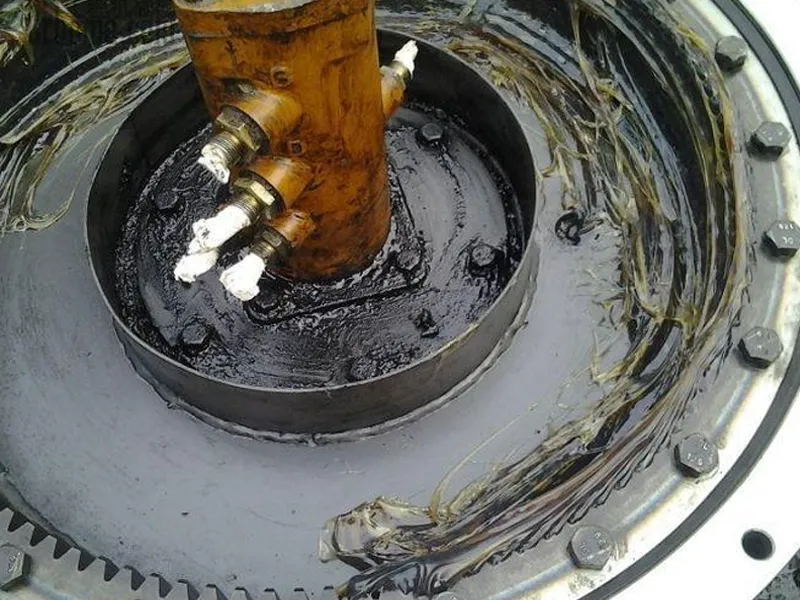
ISO VG 220 to 460 grades are typical for XCMG slewing applications. Higher viscosity ensures film strength under shock loads, while lower viscosity improves low-temperature pumpability. The right XCMG slewing bearing grease balances both for seasonal versatility.
Lithium-complex and polyurea thickeners are preferred due to high dropping points (>260°C) and mechanical stability. They resist shear degradation, ensuring grease remains in the raceway even under oscillation.
Molybdenum disulfide (MoS2) or calcium sulfonate additives provide sacrificial protection during boundary lubrication. XCMG-certified greases contain optimized EP packages that prevent scoring on gear teeth and bearing balls.
Slewing bearings often operate in rainy or humid conditions. Quality XCMG slewing bearing grease shows excellent water washout resistance (ASTM D1264) and provides rust protection for uncoated raceways.
NLGI (National Lubricating Grease Institute) grade defines consistency. For most XCMG slewing bearings, NLGI 1 or 2 is recommended. NLGI 2 offers good stability for normal climates, while NLGI 1 provides easier pumping in cold weather or centralized lubrication systems. Always check your XCMG manual: using too hard a grease can starve the bearing; too soft may leak past seals. The table below outlines typical choices.
| NLGI Grade | Penetration (0.1 mm) | Recommended Use | XCMG Equipment Examples |
|---|---|---|---|
| NLGI 1 | 310–340 | Low temp / long grease lines | Arctic cranes, large excavators with central lube |
| NLGI 2 | 265–295 | All-purpose moderate climate | XCT truck cranes, XE excavators, rotary drills |
| NLGI 1.5 | 280–310 | Compromise for year-round use | Mining shovels, port equipment |
Proper application is as vital as the grease itself. Follow this procedure when replenishing XCMG slewing bearing grease:
Remove old, contaminated grease from zerks and seals. Use lint-free cloths; avoid high-pressure water near seals.
Slowly rotate the superstructure while greasing. Pump until fresh grease emerges from the seal lip (approximately 10–15 strokes per fitting).
Every 150–250 operating hours for standard duty; reduce interval to 75 hours for dusty/abrasive environments. Refer to XCMG manual.
Pro tip: Use a calibrated grease meter to avoid under- or over-greasing. Over-greasing can cause seal damage and heat generation. Under-greasing accelerates fatigue. The correct XCMG slewing bearing grease amount per cycle: 0.5–2.0 grams per centimeter of pitch diameter.
Even premium XCMG slewing bearing grease cannot compensate for application errors. Avoid mixing incompatible thickeners (e.g., lithium with polyurea) — this causes severe hardening or oil separation. Do not ignore regreasing intervals; extended intervals allow contaminants to migrate into raceways. Also, never substitute with multipurpose chassis grease; it lacks the film strength for oscillating loads. Finally, store grease drums indoors; extreme temperature cycling degrades additives.
XCMG equipment operates globally from Siberia to Sahara. The grease must perform across wide spans. For arctic conditions, a synthetic base oil with low pour point (-40°C) maintains pumpability. For high heat (cement plants, steel mills), choose a grease with high dropping point above 260°C and oxidation stability (DOT 100hrs max pressure drop). Mid-range XCMG slewing bearing grease with semi-synthetic oil covers -20°C to 150°C, suitable for most temperate zones. Always review your operation’s ambient extremes before purchase.
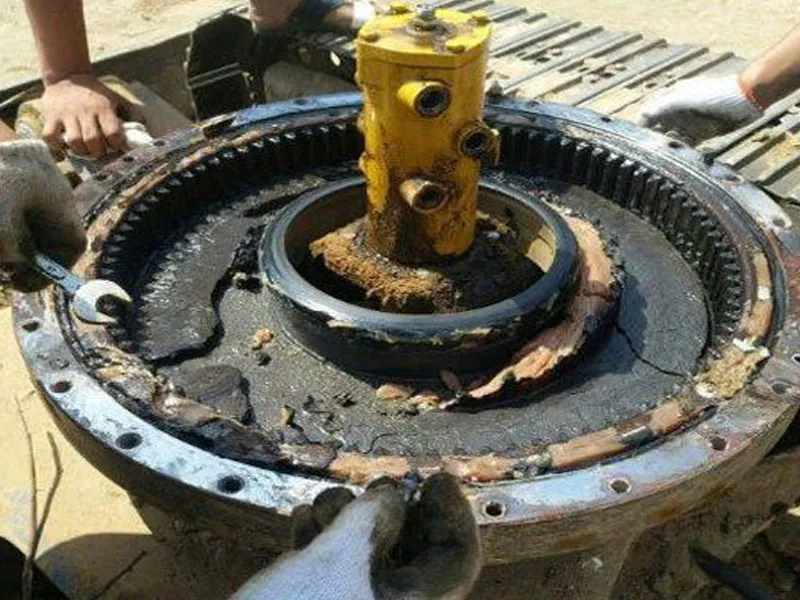
Original XCMG manuals reference specific grease codes that meet DIN 51825 or ISO 12924 standards. The factory fill often uses lithium-complex grease with EP additives. When replenishing XCMG slewing bearing grease, use a product that matches the thickener type. For conversions (e.g., switching to polyurea), perform a complete flush of old grease through repeated regreasing cycles. A compatibility chart can prevent gelling; always consult your local XCMG distributor if uncertain.
For environmentally sensitive areas (hydroelectric dams, nature reserves), XCMG offers biodegradable ester-based XCMG slewing bearing grease with low ecotoxicity. These meet OECD 301B ready biodegradability (>60% in 28 days) while maintaining wear protection. Note that biodegradable greases have shorter relubrication intervals. Balance sustainability and performance based on local regulations.
One of the most overlooked metrics is total cost of ownership. While premium XCMG slewing bearing grease might cost 20–30% more upfront, its extended relubrication intervals and reduced downtime generate ROI within months. A typical 200-ton excavator consumes ~2.8 kg of grease per 250 hours. Using inferior grease may double the consumption due to leakage and oxidation. Regular oil analysis can further optimize consumption rates and detect early wear metals (iron, copper).
Grease degrades with contamination or improper storage. Keep drums indoors, away from UV radiation, and always seal tightly after use. Use a dedicated pump for XCMG slewing bearing grease to avoid cross-contamination with other lubricants. First-in-first-out (FIFO) stock rotation ensures you use fresh grease. Check for oil separation (bleeding) – if >10% separation after 24 hours at room temperature, discard the batch. Always inspect for water droplets or solid particles before filling grease gun.
Q: Can I use the same grease for both slewing bearing and gearbox?
No. Gearbox requires fluid oil (ISO VG 150–320) while slewing ring needs semi-fluid or NLGI 2 grease. Use only dedicated XCMG slewing bearing grease for the bearing.
Q: How do I know if my current grease is failing?
Signs include excessive wear debris on the seal lip, increased operating noise (grinding), higher rotational resistance, or grease turning black/hardened. Perform a monthly visual inspection.
Q: What about centrally lubricated systems on XCMG large cranes?
Centralized systems require pumpability rating (e.g., DIN 51825 KP2N-30). Ensure the NLGI grade is 1 or 1.5, and low-temperature torque meets OEM specs. XCMG slewing bearing grease for automatic lube systems must have good mechanical stability.
Many XCMG operators ask which solid additive is best. MoS₂ provides low-friction film under extreme loads, making it ideal for oscillating movements. Graphite excels in high-temperature (>300°C) but is less effective below 100°C. Calcium sulfonate complex greases offer exceptional water resistance and rust protection. The top-tier XCMG slewing bearing grease often combines lithium complex with micro MoS₂ for both impact resistance and corrosion protection. Always follow machine recommendations — overusing solid additives can sometimes clog fine clearances.
Precision lubrication transforms equipment performance. Choosing the correct XCMG slewing bearing grease is the most cost-effective maintenance decision you can make to maximize uptime and component longevity. Invest in premium lubricants, follow OEM protocols, and monitor performance regularly.