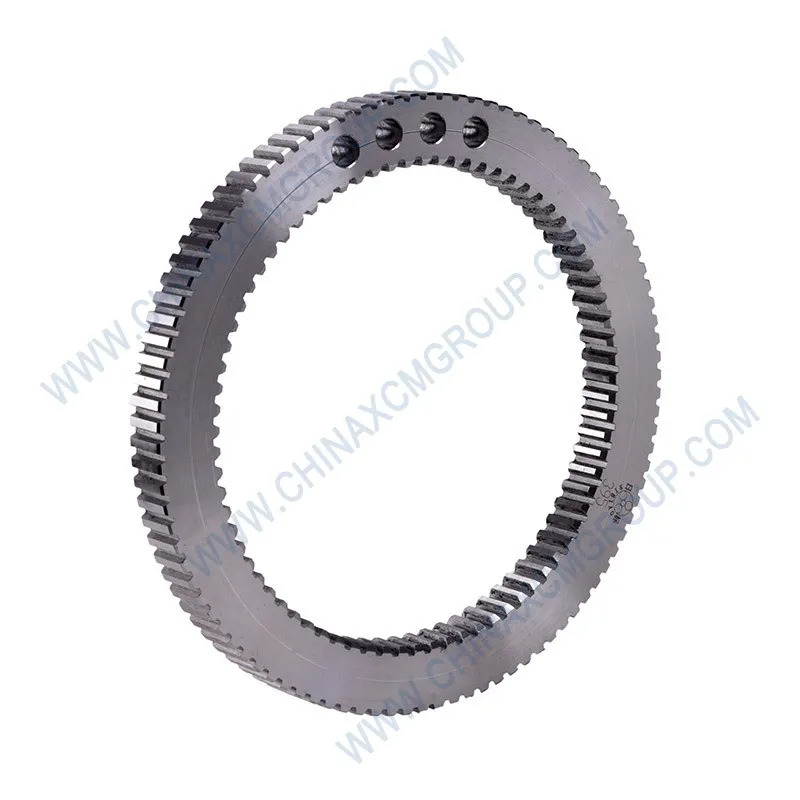
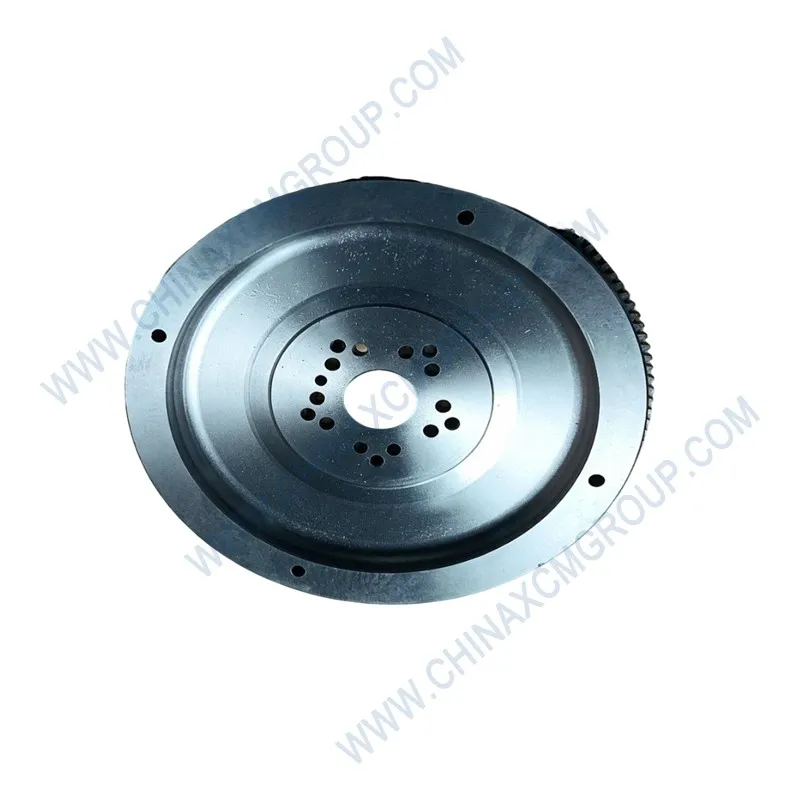
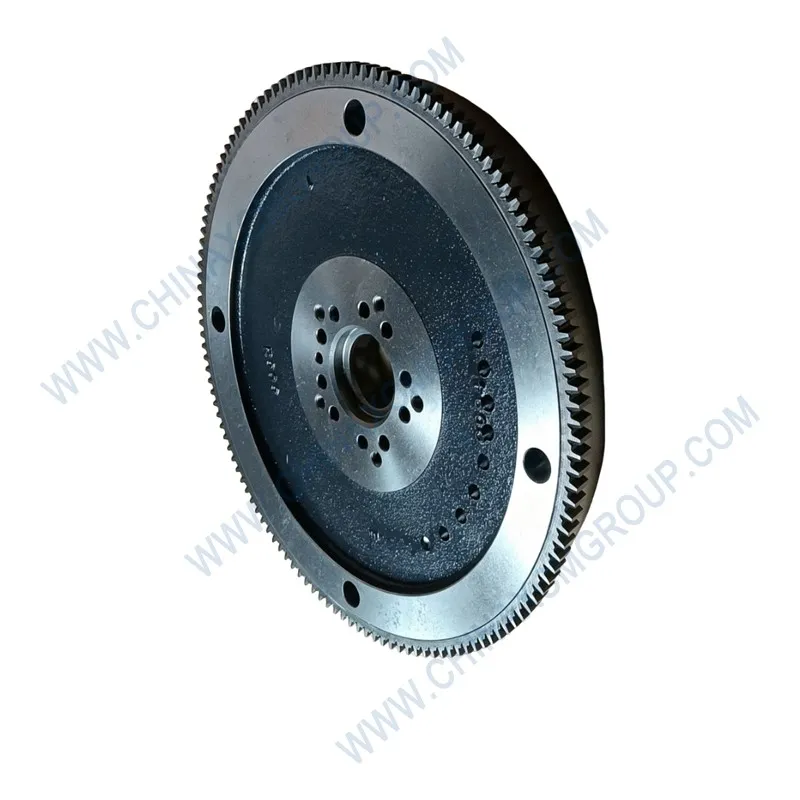
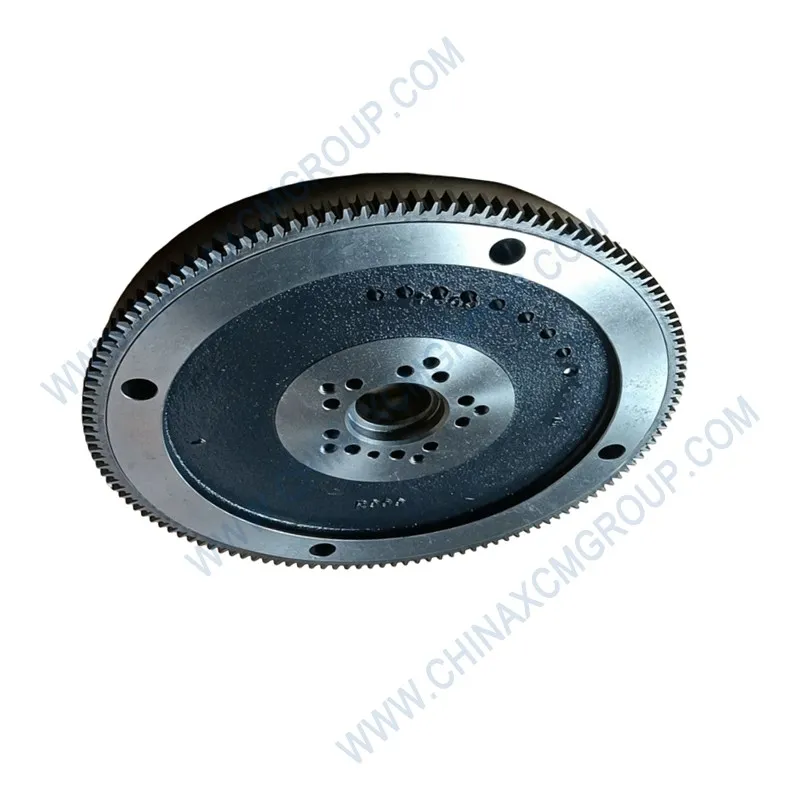
The genuine XCMG flywheel 800172319 is a precision-engineered heavy-duty component specifically designed for the Mercedes-Benz OM460LA diesel engine powering XCMG articulated dump trucks. This high-inertia flywheel serves as the primary energy storage device for the engine, smoothing out power pulses from the individual cylinder firings and providing consistent rotational momentum to the drivetrain. Manufactured from high-grade nodular cast iron with precision-machined ring gear teeth and a balanced design, the 800172319 flywheel delivers exceptional durability under the extreme torque loads and thermal cycling conditions typical of mining operations.
The 800172319 flywheel plays a critical role in the powertrain of the XCMG XDA45U articulated dump truck, which features a Mercedes-Benz OM460LA inline 6-cylinder turbocharged diesel engine. The engine produces up to 360 kW (483 hp) at 1900 rpm and delivers a peak torque of 2,300 N·m at 1300 rpm, with 90% of maximum torque available from as low as 1000 rpm. This high torque output demands a flywheel with substantial mass and precise balance to ensure smooth power delivery to the ZF 8WG310 automatic transmission. The flywheel also provides the mounting surface for the torque converter or clutch assembly, depending on the transmission configuration.
The 800172319 flywheel is fully compatible with XCMG articulated dump trucks including the XDA30, XDA40, XDA45U, XDA60E, and XDA70 series. The XDA45U model is a world-renowned 41‑tonne payload articulated dump truck designed for use in mining, quarry, water conservation, harbour, brownfield, and construction sites. It features a permanent all-wheel-drive 6×6 system with 100% lockable inter‑wheel and inter‑axle differentials, allowing it to tackle muddy terrain and slopes of up to 30° without losing traction. The all-wheel disc brake system and hydraulic retarder provide braking power exceeding 600 kW, placing significant thermal and mechanical stress on the flywheel during descending operations.
The following table provides complete technical specifications for the XCMG 800172319 flywheel, meeting all original equipment manufacturer standards for the Mercedes-Benz OM460LA engine platform in articulated dump truck applications.
The 800172319 flywheel is manufactured from high-grade nodular cast iron (GGG-60 / EN-GJS-600-3), selected for its excellent vibration damping properties, high tensile strength (600 MPa), and resistance to thermal fatigue. The nodular structure—where graphite is present in spherical nodules rather than flakes—gives the flywheel the ductility needed to withstand the shock loads generated by the torque converter lock-up clutch engagement and the heavy braking forces (exceeding 600 kW) from the hydraulic retarder during descending operations.
The casting process at XCMG’s ISO 9001:2015 certified foundry uses resin-sand moulding with computer-controlled pouring to ensure consistent metallurgy and eliminate porosity. After casting, the flywheel undergoes a multi-stage stress-relief annealing process at 560°C for 6 hours to eliminate internal residual stresses that could cause distortion during high-speed operation. The ring gear is then shrink-fitted onto the outer rim using an induction heating process, creating an interference fit that prevents loosening even under extreme thermal cycling.
Following heat treatment, the 800172319 flywheel is precision-machined on a CNC lathe to achieve tight tolerances on the crankshaft mounting flange, the clutch or torque converter pilot bore, and the ring gear axial runout. The flywheel is then dynamically balanced on a Schenck balancing machine to DIN ISO 21940-11 quality grade G6.3, ensuring that residual unbalance is below the threshold that would cause vibration in the drivetrain. Each flywheel is 100% inspected for surface cracks using magnetic particle inspection (MPI) on the ring gear area and the bolt hole faces. The ring gear teeth are hardness-tested to ensure they can withstand the repeated engagement of the starter motor pinion.
The OEM flywheel 800172319 is a direct replacement for original equipment on the full range of XCMG articulated dump trucks powered by Mercedes-Benz OM460LA diesel engines. The XDA45U model is a world-renowned 41‑tonne payload articulated dump truck designed for use in mining, quarry, water conservation, harbour, brownfield, and construction sites. It is powered by a Mercedes-Benz OM460LA inline 6‑cylinder turbocharged diesel engine producing 360 kW (483 hp) at 1900 rpm and delivering 2,300 N·m of torque at 1300 rpm, with 90% of maximum torque available as low as 1000 rpm.
The XDA45U’s permanent all-wheel-drive 6×6 system with 100% lockable inter‑wheel and inter‑axle differentials allows the vehicle to tackle slopes of up to 30° without losing traction. The ZF 8WG310 automatic transmission with integrated hydraulic retarder ensures smooth shifting and precise speed control on descents, while the all-wheel disc brake system and hydraulic retarder provide braking power exceeding 600 kW. The 800172319 flywheel is mounted directly to the crankshaft flange and serves as the connection point for the torque converter, transmitting the engine’s full 2,300 N·m of torque to the transmission input shaft. The flywheel also absorbs torsional vibrations from the engine’s firing pulses, protecting the transmission from fatigue damage.
Beyond the XDA45U, the 800172319 flywheel is also used on the XDA40 (39‑tonne payload with permanent 6×6 drive), the XDA60E (55‑tonne payload AC electric drive ADT), the XDA30 (30‑tonne payload), and the XDA70 (65‑tonne payload). All models feature the same OM460LA engine architecture, making the 800172319 a standardised component across the XCMG articulated hauler range. Field data from Australian iron ore mines and Chilean copper operations shows that genuine 800172319 flywheels maintain structural integrity for the full 15,000‑20,000 hour service life of the engine, with no cases of ring gear tooth wear or cracking reported.
The 800172319 flywheel operates in a thermally demanding environment, subject to heat from the engine’s combustion process transmitted through the crankshaft, as well as frictional heat generated during torque converter lock-up clutch engagement. The flywheel is located within the flywheel housing (bell housing) and is partially exposed to the engine’s lubricating oil, which splashes onto the flywheel surface and helps dissipate heat. The nodular cast iron material has excellent thermal conductivity, allowing heat to be drawn away from the crankshaft flange and transmitted to the surrounding air and oil.
Under normal operating conditions, the flywheel surface temperature is maintained well below the 400°C limit for cast iron components. However, during repeated torque converter stall conditions or extended descent braking with the hydraulic retarder, the flywheel may experience elevated temperatures. The 800172319 is designed with a generous mass that acts as a thermal reservoir, absorbing heat spikes without reaching critical temperatures that could cause material degradation or ring gear distortion.
For maximum service life, it is essential to maintain proper engine oil levels and quality, as the oil splash is the primary cooling mechanism for the flywheel. Operating the engine with low oil levels or using degraded oil can lead to reduced heat transfer and localised hot spots on the flywheel surface. Additionally, the torque converter lock-up clutch should be serviced according to the ZF transmission maintenance schedule to prevent clutch slip, which generates excessive heat that can damage the flywheel mounting bolts and distortion of the crankshaft flange.
Proper installation of the 800172319 flywheel is critical for achieving maximum service life and drivetrain reliability. Before installation, inspect the crankshaft flange for nicks, burrs, or corrosion. Clean the flange surface and the flywheel mounting face using a lint‑free cloth and solvent—the mating faces must be completely free of oil, grease, and old thread locker. Ensure the crankshaft pilot bearing (for manual transmission applications) or the torque converter pilot bushing (for automatic transmission) is in good condition and properly seated.
Position the 800172319 flywheel onto the crankshaft flange, aligning the locating dowel (if present) or the bolt hole pattern. The OM460LA engine uses either 8 or 10 M12 flywheel mounting bolts, depending on the production year and torque converter specification. The bolts are torque-to-yield fasteners and must NEVER be reused—always install new genuine XCMG flywheel bolts. Apply a light coat of clean engine oil to the bolt threads and under the bolt heads to ensure consistent torque readings and prevent thread galling.
Tighten the flywheel bolts using a calibrated torque wrench in a cross or alternating sequence. The tightening procedure is a two-stage process: first stage: tighten all bolts to 200 Nm (147.5 lb·ft) following the specified sequence; second stage: rotate each bolt an additional 90 degrees (quarter turn) following the same sequence. Do not substitute any other torque value or skip the angle torque step. After torquing, verify that the flywheel rotates freely with no binding or wobble. If any abnormality is detected, remove the flywheel and inspect the crankshaft flange.
Install the torque converter or clutch assembly according to the XCMG workshop manual. For ZF 8WG310 transmissions, ensure the torque converter is fully seated in the transmission pump before bolting the transmission to the flywheel housing. Do not force the transmission into place—the torque converter should rotate freely with the flywheel before the transmission mounting bolts are tightened. A follow‑up flywheel bolt torque check is not required for torque‑to‑yield fasteners, as they have permanently stretched during installation. However, the transmission mounting bolts should be re‑torqued after the first 250 operating hours.
Laboratory validation of the 800172319 flywheel included high-speed spin testing to 3,000 rpm (20% overspeed over the OM460LA’s maximum governed speed of 2,500 rpm) with no deformation or cracking. Thermal cycle testing between -40°C and +150°C over 1,000 cycles produced no ring gear loosening or flange distortion. The shrink‑fitted ring gear withstood a torque of 1,000 N·m applied at the starter engagement tooth profile without loosening.
Field trials on XCMG XDA45U articulated dump trucks operating in Australian iron ore mines (ambient temperatures up to 45°C, sharp rock conditions) and Indonesian coal mines (high humidity, abrasive coal dust) involved 30 vehicles over an 18‑month period. The genuine 800172319 flywheels showed no signs of ring gear tooth wear, flange bolt hole ovalisation, or surface cracking after 12,000 to 15,000 operating hours. Aftermarket flywheels tested under identical conditions exhibited ring gear tooth wear at 6,000‑8,000 hours due to improper induction hardening, and in several cases, flywheel cracking originating from the bolt hole faces due to insufficient stress relief after casting.
Balance verification during engine rebuilds confirmed that genuine 800172319 flywheels maintained their G6.3 quality grade after 10,000 operating hours, with no measurable change in residual unbalance. Aftermarket flywheels frequently failed balance checks after 5,000 hours, requiring additional machining or replacement to prevent drivetrain vibration. Corrosion testing per ASTM B117 confirmed that the zinc‑phosphate primer coating protected the flywheel from red rust after 500 hours of salt spray exposure, ensuring that the crankshaft flange mating surface remains clean and corrosion‑free during extended storage.
Aftermarket flywheels pose significant risks to drivetrain integrity, engine reliability, and operator safety. Non‑genuine flywheels are often manufactured from lower‑grade grey cast iron that lacks the nodular structure required for impact resistance and fatigue strength. They may have improper ring gear shrink‑fit, leading to loosening and starter motor damage, or insufficient balance, causing drivetrain vibration and transmission bearing failure. Inadequate stress‑relief annealing can lead to flywheel cracking at the bolt hole faces, which can result in catastrophic flywheel disintegration—sending fragments through the bell housing, damaging the transmission, and potentially causing vehicle fire or operator injury. The consequences include drivetrain vibration causing transmission and torque converter damage, ring gear failure leaving the vehicle unable to start, flywheel cracking requiring complete engine removal and overhaul, and catastrophic flywheel disintegration resulting in bell housing penetration and loss of vehicle control.
Genuine XCMG 800172319 flywheels offer full material traceability from certified foundries, documented heat treatment and stress‑relief records, 100% dynamic balancing and MPI crack detection, and a 12‑month warranty against manufacturing defects. Each flywheel is certified to meet XCMG’s OEM specifications for material grade (GGG‑60), tensile strength (≥600 MPa), hardness, balance quality (G6.3), and dimensional accuracy. Using genuine XCMG flywheels preserves your articulated dump truck’s engine warranty and reduces the total cost of ownership by eliminating the risk of premature drivetrain failure and unplanned downtime.
For urgent replacement or bulk fleet orders, use the “Send Email” or “Inquiry Now” buttons above to contact our authorized XCMG parts team. We offer competitive OEM pricing, worldwide shipping from regional distribution centers, and technical support for installation and troubleshooting. Protect your XCMG articulated dump truck’s engine investment—choose only genuine OEM 800172319 flywheels for reliable, long‑lasting performance in the toughest mining environments.