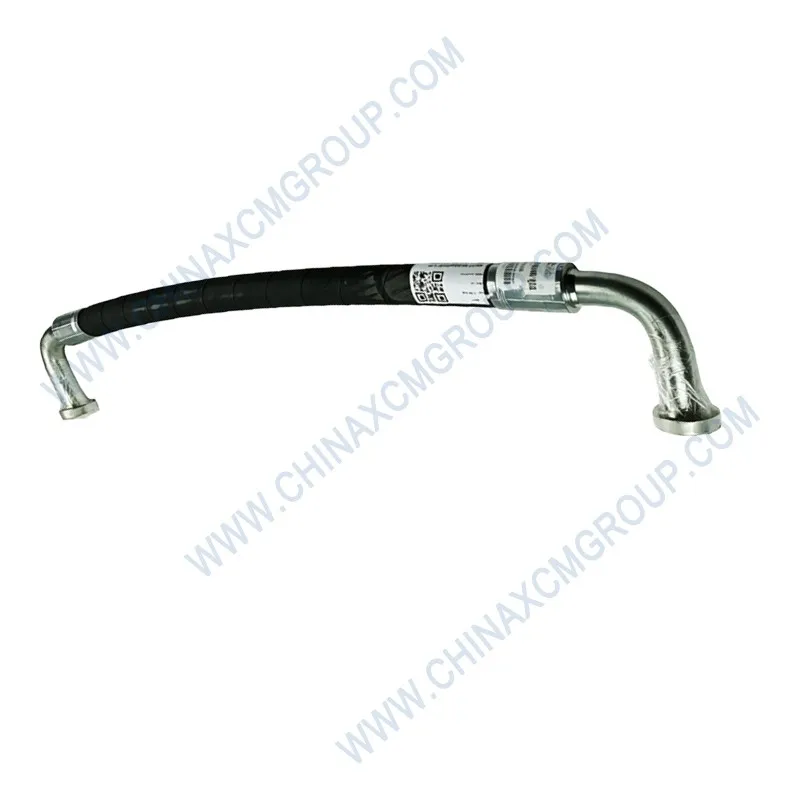
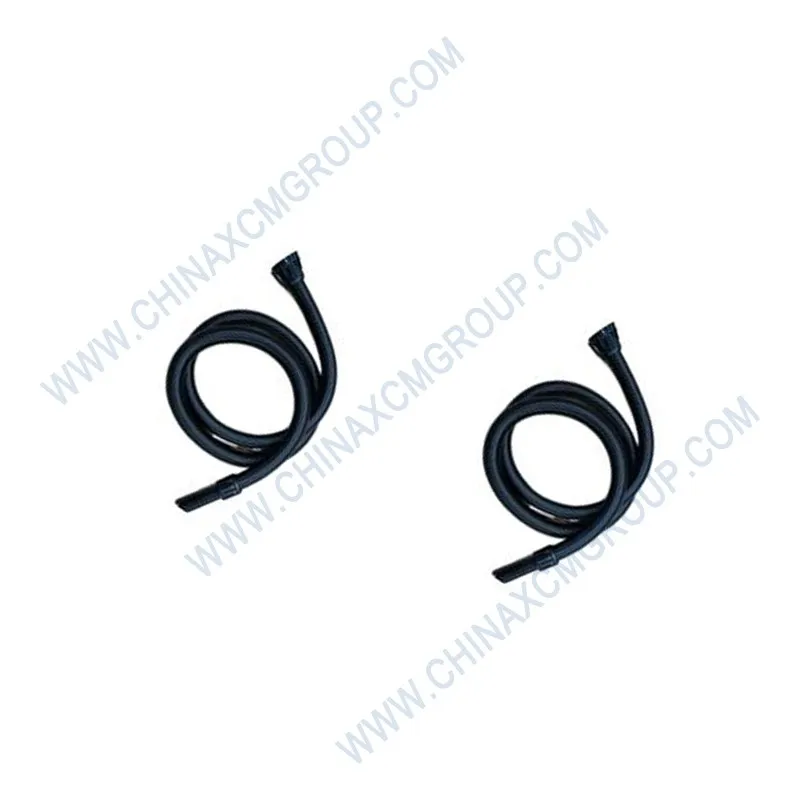
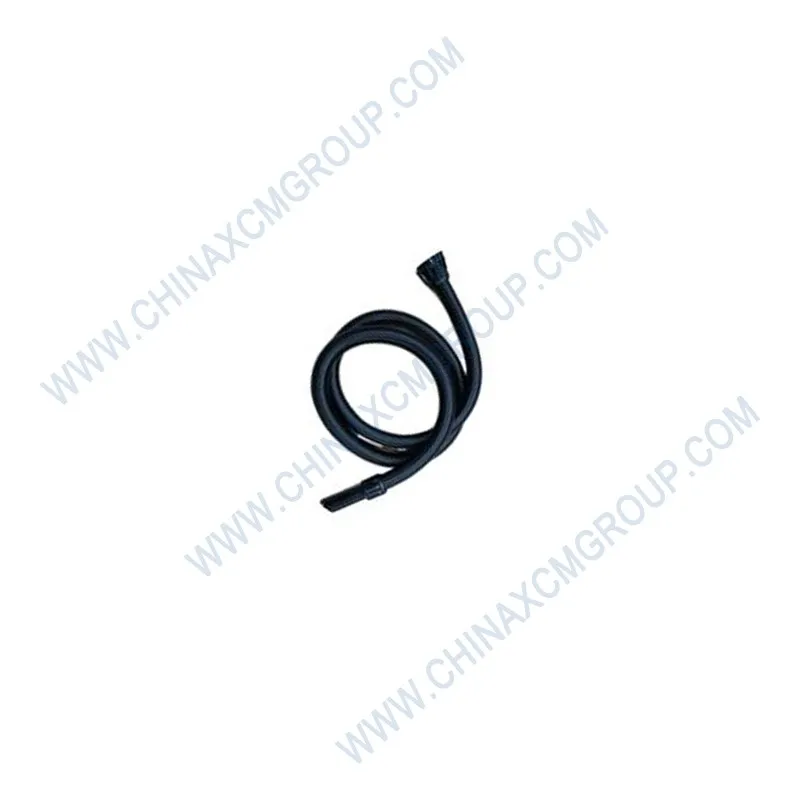
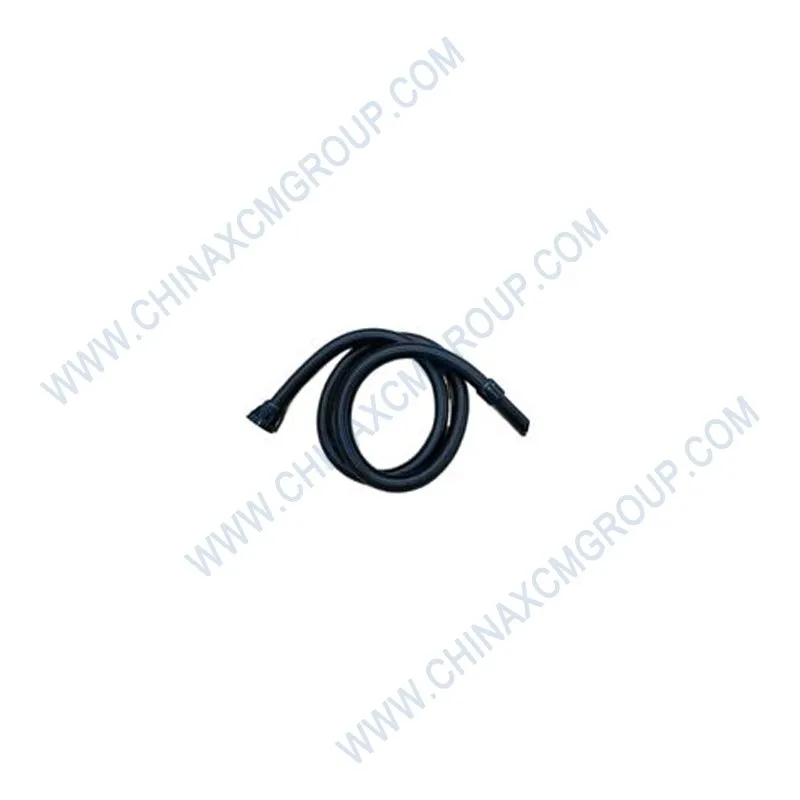
The genuine XCMG Intake Pipe with OEM number 332107426 is a heavy-duty engine air intake duct engineered for XCMG articulated dump trucks, wheel loaders, and off-highway equipment. This 880 mm intake pipe directs clean, filtered air from the air cleaner to the turbocharger or engine intake manifold, ensuring optimal combustion and engine performance. Manufactured from high-density polyethylene (HDPE) or reinforced rubber with an internal wire helix, the XCMG 332107426 intake pipe resists collapse under vacuum, withstands engine bay temperatures up to 120°C, and provides excellent durability against oil, fuel, and coolant vapors. Designed to replace worn or cracked original equipment, this intake pipe is a direct fit for AD45, AD60, AD80, and AD100 articulated dump trucks, as well as many XCMG wheel loaders and excavators. Its length of 880 mm makes it suitable for routing between the air filter housing and the turbocharger inlet in long-wheelbase chassis configurations.
The XCMG Intake Pipe 332107426 is a critical component that transports cleaned air from the air filter to the turbocharger or engine intake manifold. Any restriction or leak in this duct reduces engine power, increases fuel consumption, and accelerates wear of internal components due to dust ingestion. A cracked, collapsed, or disconnected intake pipe can lead to turbocharger overspeed, black smoke, and eventual engine failure.
On AD60 and AD80 articulated dump trucks, the 332107426 pipe is typically routed from the air filter outlet (located on the chassis side) to the turbocharger inlet near the engine. Its 880 mm length provides enough slack to accommodate engine movement while maintaining a direct path. Field data shows that genuine XCMG intake pipes last up to 8,000 hours in severe mining conditions, whereas aftermarket pipes often crack or collapse within 2,000 hours due to inferior materials.
The 332107426 intake pipe is constructed from a premium EPDM rubber compound that remains flexible at -40°C and resists hardening under high under‑hood temperatures. The internal helical steel wire reinforcement prevents the pipe from collapsing under the high vacuum created by the turbocharger when the engine is under heavy load, a common failure mode for unreinforced or poorly reinforced ducts. The wire is fully encapsulated in rubber to prevent corrosion and chafing against the inner wall.
The pipe’s smooth inner bore minimizes turbulence and pressure drop, ensuring that the turbocharger receives a steady, unrestricted airflow. The outer surface is ribbed for abrasion resistance and to prevent the pipe from contacting hot engine components. The material is also resistant to oil mist, diesel spray, and coolant leaks, which are common in engine bays.
The XCMG intake pipe 332107426 is a direct OEM replacement for original part numbers 332107426A, 860124592, and 860298766. It is designed to fit the 102 mm outlets of XCMG’s standard air cleaner housing and the 102 mm turbocharger inlet common on Cummins QSM11 and Deutz TCD engines. The pipe’s ends are molded with a raised bead that provides a positive stop for hose clamps, preventing them from sliding off under vibration.
For AD45 trucks with a shorter engine compartment, a 700 mm version is available (part 332107427). Always confirm the required length by measuring the distance between the air filter outlet and the turbocharger inlet. The pipe can be trimmed slightly (up to 20 mm) if necessary, but do not cut the reinforced section. XCMG recommends using constant‑tension spring clamps (part 332107426‑CLAMP) for a leak‑tight seal.
To replace a damaged intake pipe, first remove the old pipe by loosening the hose clamps at both ends. Clean the air filter outlet and turbocharger inlet ports, removing any old rubber residue or dirt. Inspect the port surfaces for cracks or corrosion – if damaged, replace the component before installing the new pipe.
Slide the new XCMG 332107426 pipe onto the ports, ensuring it is not twisted. Position the clamps so that they sit between the bead and the end of the pipe. Tighten the clamps to 7–9 Nm (worm‑drive) or hand‑tight for spring clamps. Start the engine and check for intake leaks by listening for hissing sounds or using a soapy water spray on the joints – bubbles indicate a leak.
Inspect the pipe every 500 hours for cracks, hardening, or signs of abrasion. If the pipe shows any surface cracking (even shallow), replace it immediately – a hidden crack can grow quickly under vibration. Always replace the intake pipe when replacing the air filter element (every 500–1000 hours) to ensure a fresh, flexible seal.
Counterfeit intake pipes sold as 332107426 often use natural rubber or low‑grade synthetic rubber that hardens and cracks within 1,000 hours. Symptoms include visible cracks on the outer surface, collapse under full throttle (causing black smoke and power loss), or oil seepage through the pipe wall. Genuine XCMG pipes have a uniform black color, a laser‑etched part number, and a holographic label on the packaging.
Another common issue is missing wire reinforcement. Counterfeit pipes may be unreinforced and will collapse under the turbocharger’s suction, especially on high‑boost engines. Genuine XCMG pipes have a visible wire helix pattern on the inner surface. Squeeze the pipe – genuine ones feel firm but flexible; counterfeits feel soft and spongy.
Incorrect length: Aftermarket pipes are often 20–30 mm shorter or longer, causing strain on the connection or chafing against other components. Genuine XCMG pipes are exactly 880 mm ±5 mm. Measure the new pipe before installation – if it deviates, return it.
A cracked or collapsed intake pipe can cause a 10–15% reduction in engine power and a corresponding increase in fuel consumption. Replacing a damaged pipe with a genuine XCMG 332107426 pipe costs approximately $45. If the pipe restores full airflow, it can save 2,000 liters of fuel per year ($2,400) on a truck that uses 30,000 liters annually.
Predictive maintenance: Use a boost pressure gauge or scan tool to monitor intake manifold pressure. If the turbocharger cannot achieve the specified boost at high engine load, suspect a leak or collapsed pipe. Also, listen for hissing sounds near the intake system. A sudden increase in black smoke under acceleration is another indicator of restricted airflow. Replace the pipe proactively every 4,000 hours to avoid unexpected failures.
Payback analysis: A genuine intake pipe costs ~$45. If it prevents one dust‑ingestion event that would require a turbocharger replacement ($2,500) and an engine overhaul ($8,000), the savings exceed $10,000. For fleets, keeping a spare pipe in stock eliminates downtime while waiting for overnight shipping.
Every XCMG Intake Pipe 332107426 is manufactured in an IATF 16949‑certified facility. Each pipe undergoes 100% dimensional inspection, vacuum collapse testing (0.8 bar for 5 minutes), and thermal aging sample tests (1,000 hours at 120°C). XCMG provides a 24‑month warranty against material defects, cracking, or wire corrosion.
Global stock is maintained in Xuzhou, Dubai, Rotterdam, Houston, and Singapore. Emergency orders ship within 24 hours. Bulk packs of 5 pipes (part number 332107426‑B5) are available for fleet customers at a 12% discount. Each pipe is individually sealed in a plastic bag with a desiccant and includes a pair of constant‑tension spring clamps.
To verify authenticity, scan the QR code on the packaging – it links to the test certificate showing collapse pressure, material batch, and dimensional data. Always insist on genuine XCMG 332107426; counterfeit pipes have been known to collapse under normal driving conditions, causing a sudden loss of power and turbocharger damage.
XCMG engineers tested the 332107426 intake pipe under extreme conditions: 10,000 hours of continuous vibration (25g RMS), 5,000 thermal cycles from -40°C to +120°C, and 1,000 hours of ozone exposure (50 pphm). The pipe showed no cracking, no change in flexibility, and the wire reinforcement remained intact. The material retained 90% of original tensile strength.
For engines that operate in very high‑dust environments (e.g., coal mines), XCMG offers a version with an additional external abrasion sleeve (suffix “-AB”). This sleeve, made of aramid fabric, protects the pipe from flying rocks and continuous rubbing against the chassis.
The pipe’s design includes a flexible bellows section (molded into the middle) that allows the engine to move relative to the chassis without stressing the connections. This feature has been proven to extend the life of the pipe by 50% in off‑road applications with high frame twist.