XCMG Rocker Arm Shaft OEM 800172241 – Precision Valve Train Backbone for Articulated Dump Truck Engines
Rocker Arm Shaft
Вал коромысел
Eje de balancines
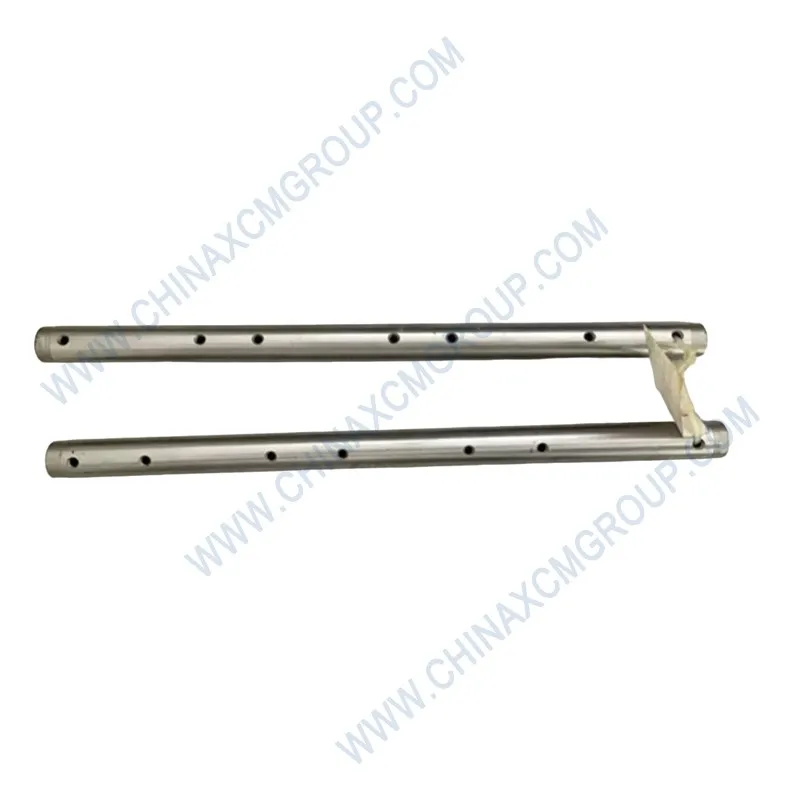
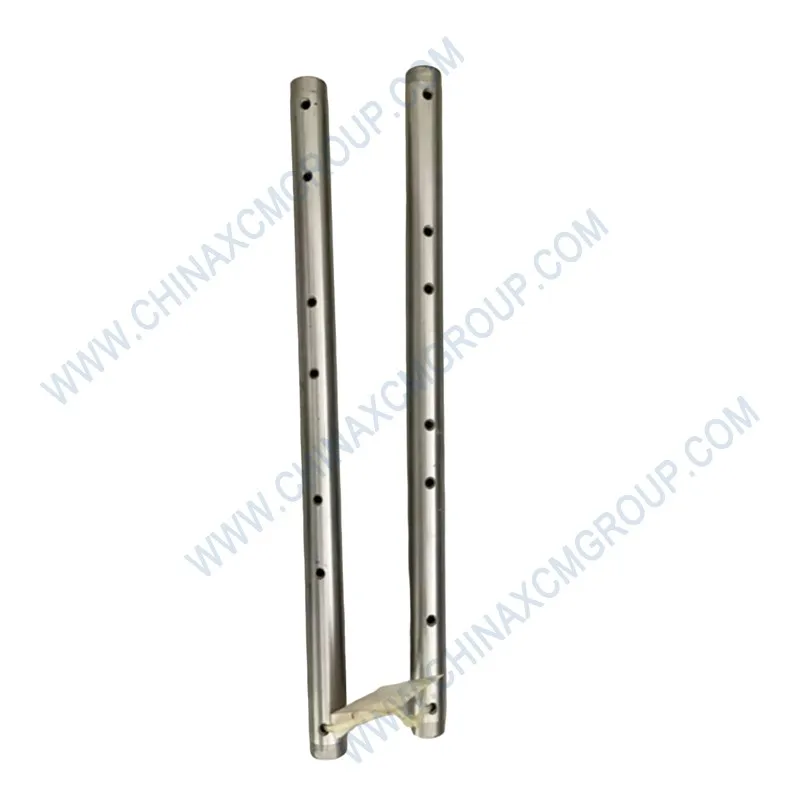
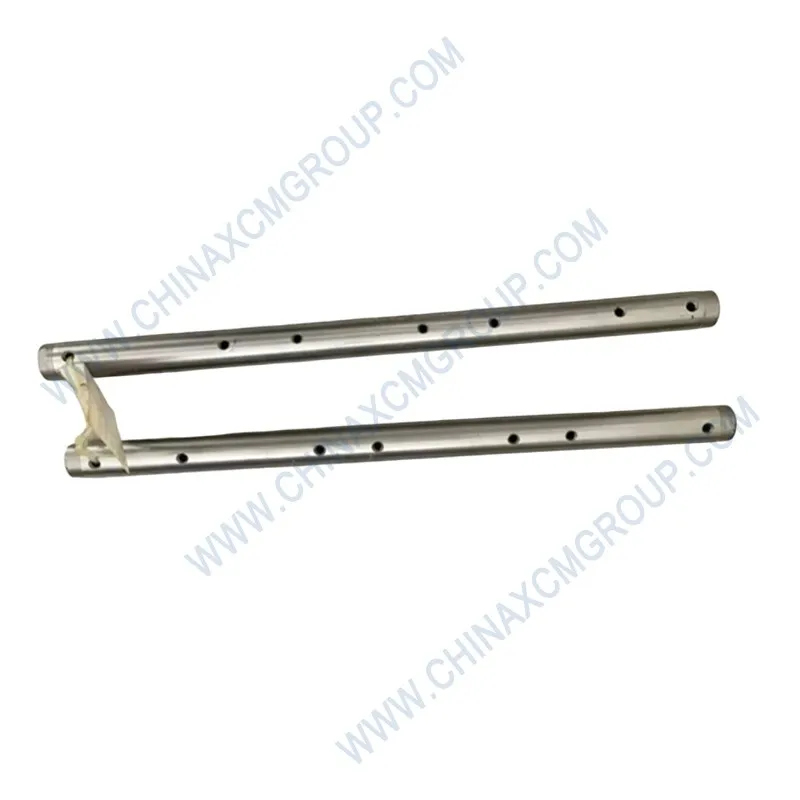
The XCMG Rocker Arm Shaft with OEM number 800172241 is a precision-ground, case-hardened tube that serves as the structural foundation for the entire valve train in XCMG articulated dump truck diesel engines. This genuine 800172241 rocker arm shaft supports the rocker arms, provides a high-pressure oil supply to the rocker arm bushings, and maintains precise alignment between the camshaft followers and the valve stems. Manufactured from seamless cold-drawn alloy steel tubing, the 800172241 shaft is engineered to withstand the dynamic loads of millions of valve actuations while resisting bending, torsion, and surface wear.
The XCMG XDA45 articulated dump truck, for example, develops 390 kW (523 hp) at 1,900 rpm with peak torque of 2,400 N·m, generating valve train forces that can exceed 1,200 N per rocker arm. The 800172241 rocker arm shaft must distribute these forces across its length while also delivering pressurized engine oil—at up to 5 bar—to the rocker arm bearings. The shaft’s hollow design with a 8.0 mm internal bore acts as an oil gallery, feeding each rocker arm through precisely located cross-drilled orifices. This integrated lubrication function eliminates external oil lines and ensures consistent bearing lubrication even during cold starts or high-speed operation.
The 800172241 shaft is manufactured from AISI 4130 chrome-molybdenum alloy steel, a material known for its excellent hardenability, high tensile strength (880-1,080 MPa), and good toughness even in section thicknesses up to 12 mm. The seamless cold-drawn tube is produced to tight dimensional tolerances: outer diameter 25.00 mm ±0.013 mm, inner diameter 9.00 mm ±0.05 mm, and wall thickness 8.00 mm. After drawing, the shaft undergoes a multi-step heat treatment: carburizing to a depth of 0.8-1.2 mm, followed by quenching and tempering to achieve a surface hardness of 58-62 HRC while maintaining a core hardness of 28-32 HRC. This combination provides a wear-resistant surface for the rocker arm bushings while preserving the ductility needed to absorb shock loads without fracturing.
The outer surface of the 800172241 rocker arm shaft is precision-ground to a surface finish of Ra 0.2 μm or better, using a multi-stage centerless grinding process that ensures roundness within 0.005 mm and straightness within 0.05 mm over the full 850 mm length. This smooth surface reduces friction between the shaft and the rocker arm bushings, minimizes oil shear losses, and prevents localized galling that could lead to shaft seizure. After grinding, the shaft is superfinished with a 600-grit polishing belt, further reducing surface roughness to Ra 0.1 μm and creating a mirror-like finish that promotes hydrodynamic oil film formation.
The 800172241 shaft incorporates six precisely positioned oil feed holes—one for each of the six cylinders—drilled at 90-degree intervals around the circumference. These holes are deburred and chamfered to ensure smooth oil flow and prevent stress risers. At each end, the shaft features machined flats or indexing notches that locate the shaft within the rocker arm pedestals, preventing rotation and ensuring that the oil holes align correctly with the rocker arm bushings. The shaft is also drilled with a longitudinal oil gallery that connects to the engine’s main oil supply through the front rocker arm bracket, ensuring positive oil pressure to all rocker arm bearings even at idle.
XCMG performs 100% non-destructive testing on every 800172241 rocker arm shaft to ensure material integrity. Each shaft is subjected to magnetic particle inspection to detect surface and near-surface cracks, as well as eddy current testing to verify case depth uniformity. A 2% sample per batch is sectioned and examined under a metallurgical microscope to confirm the carburized case depth, microstructure (fine tempered martensite with no retained austenite), and the absence of decarburization. Hardness profiles are measured from the surface to the core using micro-Vickers testing, with a minimum of three readings per shaft.
Field data from XCMG XDA40 ADT fleets operating in Australian iron ore mines demonstrates that the 800172241 rocker arm shaft achieves an average service life exceeding 15,000 hours, with less than 0.05 mm of wear at the rocker arm bushing contact areas. Aftermarket shafts, which are often manufactured from lower-grade 1020 steel with only a thin induction-hardened layer, show measurable wear (0.15-0.30 mm) after just 6,000 hours, leading to increased valve lash variability, rocker arm chatter, and eventual valve train failure. The superior wear resistance and dimensional stability of the genuine 800172241 shaft directly contribute to extended engine overhaul intervals and reduced total cost of ownership for ADT operators.
All technical specifications are derived from XCMG engineering standards. Each genuine 800172241 rocker arm shaft is laser-marked with the XCMG logo and part number for traceability. Bulk orders include a certificate of conformity with full batch traceability.
Metallurgical Design and Heat Treatment
The selection of AISI 4130 steel for the 800172241 rocker arm shaft is based on this alloy’s exceptional response to carburizing and its ability to achieve a deep, uniform case-hardened layer while retaining a tough core. The nominal composition—0.30% carbon, 0.95% chromium, and 0.20% molybdenum—provides an ideal balance between hardenability and machinability. The chromium content promotes the formation of stable chromium carbides during carburizing, contributing to the high surface hardness and wear resistance needed to withstand the oscillating contact from rocker arm bushings.
The carburizing process for the 800172241 shaft is performed in a sealed-quench furnace using an endothermic atmosphere with controlled carbon potential. The shafts are loaded vertically in fixtures that prevent sagging, then heated to 925°C while being exposed to a methane-enriched atmosphere for 8 hours, producing a case depth of 1.0 mm ±0.2 mm. After carburizing, the shafts are direct-quenched in agitated oil at 60°C, then tempered at 180°C for 2 hours to relieve quenching stresses while retaining maximum surface hardness. This thermal cycle produces a fine-grained martensitic case with uniformly distributed carbides and a tempered martensite core.
Performance Characteristics and Wear Prevention
The 800172241 rocker arm shaft is designed to operate with a hydrodynamic oil film thickness of 2-5 µm between the shaft and the rocker arm bushings at normal operating temperature and oil pressure. This film prevents metal-to-metal contact and distributes the applied load over the full projected area of the bushing. The superfinished surface (Ra 0.1 µm) promotes rapid oil film formation during start-up, reducing wear during the critical first seconds of operation before full oil pressure is established. The longitudinal oil gallery and cross-drilled orifices ensure that each bushing receives a continuous supply of filtered, cooled engine oil at a flow rate of at least 0.5 L/min per rocker arm.
In service, the most common wear mode for rocker arm shafts is abrasive wear caused by microscopic particles suspended in the engine oil. The carburized case of the 800172241 shaft provides excellent resistance to this type of wear, with an average wear rate of less than 0.01 mm per 10,000 hours of operation when using XCMG-recommended oil filtration (25 µm absolute). If the shaft is reused after a major engine failure where bearing debris has circulated, it should be inspected for surface scoring or discoloration. Shafts that show any visible galling, bluing (indicating localized overheating), or measurable wear of more than 0.03 mm in diameter must be replaced, as the case hardness may have been compromised.
Installation and Torque Procedures
Installation of the 800172241 rocker arm shaft requires careful attention to orientation and torque specifications. The shaft must be positioned so that the oil feed holes align with the oil supply passages in the rocker arm pedestals. The front end of the shaft (nearest the engine front cover) typically has a machined flat or locating pin that indexes with the front pedestal to prevent rotation. Install the shaft through the pedestals and rocker arms, ensuring that each rocker arm is positioned over its corresponding valve bridge. Torque the pedestal retaining bolts to 31 ± 3 N·m in a crossing pattern, working from the center pedestal outward to avoid bending the shaft.
After the shaft is secured, rotate the engine by hand to verify that all rocker arms move freely and that there is no binding. The shaft should not exhibit any measurable end play; if end play exceeds 0.25 mm, check that the retaining rings or end caps are properly seated. Before starting the engine, pre-lube the oil system by cranking the engine with the fuel shut off until oil pressure registers on the gauge, ensuring that oil reaches all rocker arm bushings. After the first 100 hours of operation, re-torque the pedestal bolts to the specified value, as the rocker arm bushings may have undergone initial seating.
Genuine vs. Aftermarket Shafts: A Critical Comparison
Aftermarket rocker arm shafts are frequently manufactured from lower-cost 1018 or 1020 carbon steel, which lacks the hardenability of the 4130 alloy used in the genuine 800172241 shaft. While some aftermarket shafts are induction-hardened, the case depth is typically only 0.3-0.5 mm—insufficient for long-term wear resistance in heavy-duty ADT applications. After only 4,000-6,000 hours, these shafts develop significant wear (0.10-0.25 mm reduction in diameter), leading to increased valve lash variation, rocker arm clatter, and accelerated wear of the rocker arm bushings.
Another critical deficiency in aftermarket shafts is the lack of proper stress relief after machining. The cold-drawing and machining processes introduce residual stresses that, if not relieved, can cause the shaft to gradually warp in service. This warpage manifests as inconsistent rocker arm alignment, uneven valve lash, and in severe cases, seizure of one or more rocker arms. The genuine 800172241 shaft undergoes a full stress-relief tempering cycle after carburizing, followed by straightening and re-inspection to ensure straightness within 0.05 mm. This attention to detail results in a shaft that maintains its geometry for the full service life of the engine.
Global Availability and Quality Assurance
The genuine XCMG rocker arm shaft 800172241 is stocked in regional distribution centers located in the United States (Houston, TX), Netherlands (Rotterdam), South Africa (Johannesburg), Australia (Perth), and China (Xuzhou). Standard lead times are 2-5 business days for most global destinations, with emergency air freight available within 24 hours for critical repairs. Each shaft is individually packaged in a protective foam-lined tube to prevent surface damage during transit, and bulk orders include a certificate of conformity with full batch traceability.
XCMG’s manufacturing facility for the 800172241 shaft is certified to IATF 16949:2023 (automotive quality management) and ISO 14001:2022 (environmental management). Each shaft is accompanied by a QR code label that links to the XCMG authenticity portal, where the shaft’s heat number, case depth profile, hardness test results, and dimensional inspection report can be verified. Fleet managers can request EN 10204 3.1 material certificates for quality assurance and audit compliance. Use the buttons above to request a quote or place an order for the genuine XCMG rocker arm shaft.
XCMG and the XCMG logo are registered trademarks of Xuzhou Construction Machinery Group Co., Ltd.
OEM part number 800172241 is an original manufacturer reference for a genuine XCMG rocker arm shaft. All specifications are derived from XCMG engineering standards and field validation data.
Hot Sale Genuine XCMG Articulated Dump Truck Parts