

“This is the most precious gift I’ve ever received. Many thanks to XCMG and the Foundation.” In every family benefiting from the water cellar, the beneficiaries would hold our hands and keep expressing their thanks to the project staff. After two years, the logo of XCMG on the water cellar was still visible, fully demonstrating their cherish and love for the water cellar. From their words and eyes, we could really feel their gratitude and appreciation indeed.

41 water cellars of the first phase were completed in 2017. Two years have passed, and all families here are still using them.

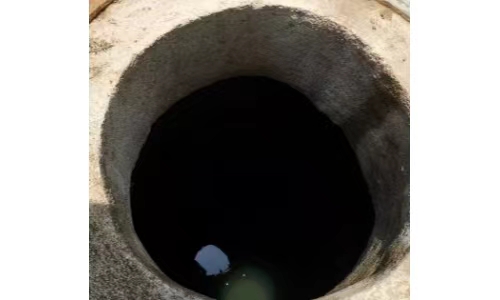
Underground water cellar built by XCMG, with a storing capacity of 30 cubic meters, can meet the water demand of a family of five people for half a year
The water cellar was built underground beside Abebayehu’s house. When the rainy season comes, the rainwater will gather in the eaves along the tin roof of his house, and then flow into the water storage tank through the pipes, providing relatively clean water for the family during the dry season.

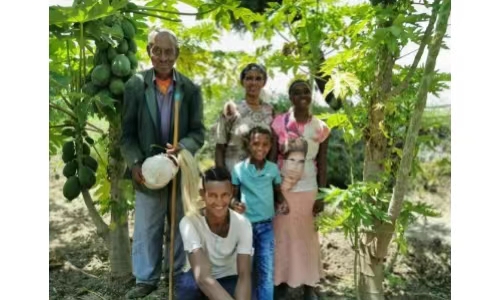
A group photo of the Abebayehu family in front of the fruit-bearing papaya tree
The hostess of No. 22 cellar family, said, “There is a pond in this community, where people go to get water in the dry season. My daughter and I have to clean up our buckets and hang them on donkeys every morning before dawn. Otherwise, we have to wait a long time. We are lining to get water. It takes a whole day to go back and forth, so we can hardly do anything when we come back. Now, there’s no need to do that any more. We have more time to do housework and take care of livestock. My daughter can also go to school at ease.”
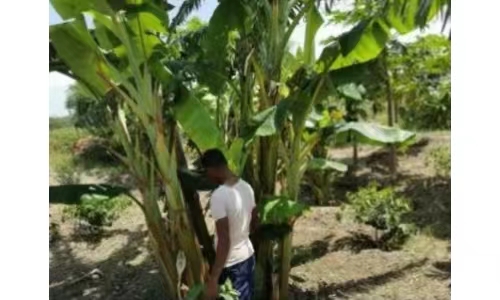

Coffee and coffee vanilla planted by the Abebayehu family
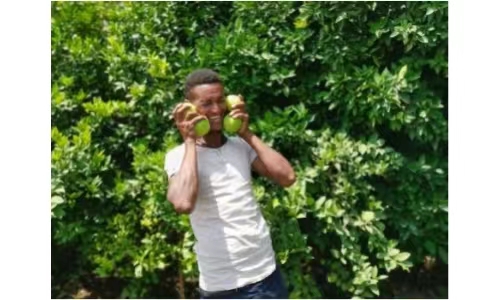
When standing in his backyard, we were surprised to see fields of green wheat and peppers, orange, lemon, papaya trees, banana trees, coffee, herbs and vegetables. Two years ago, the land was still deserted.
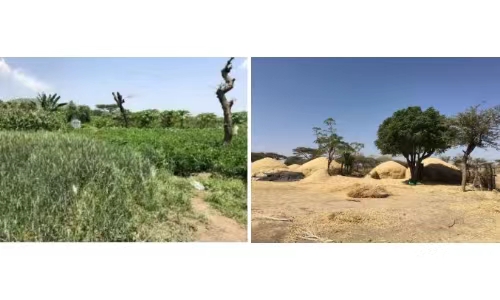
Backyard of the Abebayehu family at present VS Backyard of the Abebayehu family two years ago
Besides us, other beneficiary families were also touched. For example, Besheva, the hostess of No. 22 cellar family, said that she saw how the Abebayehu family used the cellar. Inspired by this, in addition to the original two donkeys, Besheva raised 20 goats and 2 cows from last year, and planted some edible vegetables for the family’s daily use this year. “Our cellar is on the ground. It doesn’t hold as much water as Abebayehu’s, so we don’t raise that much poultry. But we’ve earned more than 10,000 birr from selling milk and lambs.”

Lamb raised by the Abebayehu family
Debiwei, the 56-year-old hostess of No. 19 water cellar family, said, “Now we can easily feed our livestock (4 cows, 4 goats and 1 donkey), and grow papayas and vegetables in the yard to feed our family. I know the Abbayehu family is also doing well, and even the government officials visited his house before. I told my son to learn from them. “

Lamb raised by the Debiwei family
We can’t help but wondering that if a project wants to help beneficiaries, the best way is to help them get involved, make them realize that their quality of life can be improved through efforts, and teach them skills for changing their future, rather than waiting for others to help them. This change in thinking is most valuable, and reflects the significance of introduction of sustainable development concept by XCMG into global public welfare projects.