
The SANY Vs XCMG debate has become one of the most common conversations among contractors, equipment dealers, and procurement teams sourcing Chinese construction machinery. Both brands rank among the world’s top construction equipment manufacturers. According to the 2026 Top 50 global construction equipment manufacturers ranking, XCMG Group holds the third position worldwide with approximately $14.2 billion in revenue, while SANY Heavy Industry ranks sixth with around $12.6 billion[reference:0]. Together with other Chinese OEMs, XCMG and SANY have captured roughly 28% of global market share, challenging Caterpillar’s long-standing leadership[reference:1]. For buyers across Africa, Southeast Asia, the Middle East, and Latin America, the practical question is not which brand is universally better, but which brand fits a specific project, fleet strategy, and support environment. This guide presents five actionable tips to help decision-makers navigate the SANY Vs XCMG choice with confidence. For the latest industry news and updates, visit China XCMG Group News.
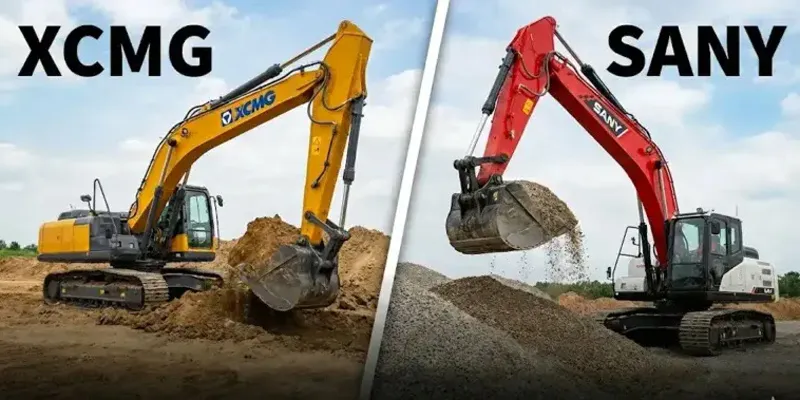
The first step in any SANY Vs XCMG evaluation is to map each brand’s product portfolio against your actual work requirements. Both manufacturers offer broad equipment ranges, but their historical strengths differ.
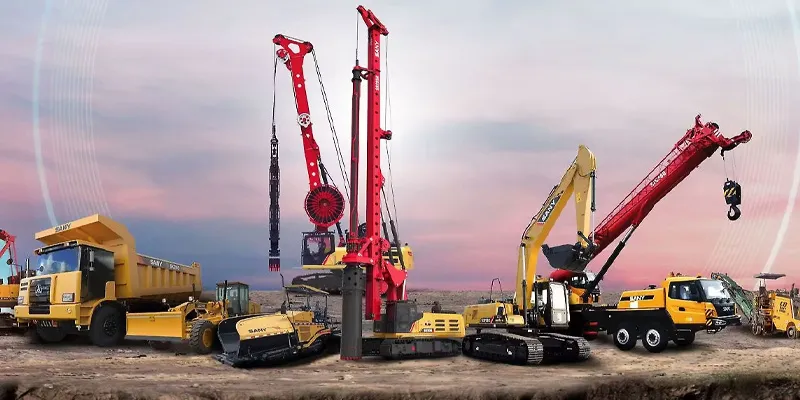
SANY’s product range is organised into five major categories: concrete machinery, excavating machinery, hoisting machinery, pile driving machinery, and road construction machinery[reference:2]. The company is particularly renowned for its concrete pump trucks, trailer pumps, and truck-mounted concrete pumps, where it holds a dominant global position. SANY’s excavator lineup, from compact 1.6-ton units to large 50-ton class machines, has gained significant market acceptance, especially in Southeast Asia where localized production has helped SANY achieve a 22% market share in Indonesia[reference:3]. For projects centred on concrete works, high-rise construction, or bridge building, SANY’s integrated concrete equipment ecosystem offers a compelling advantage.
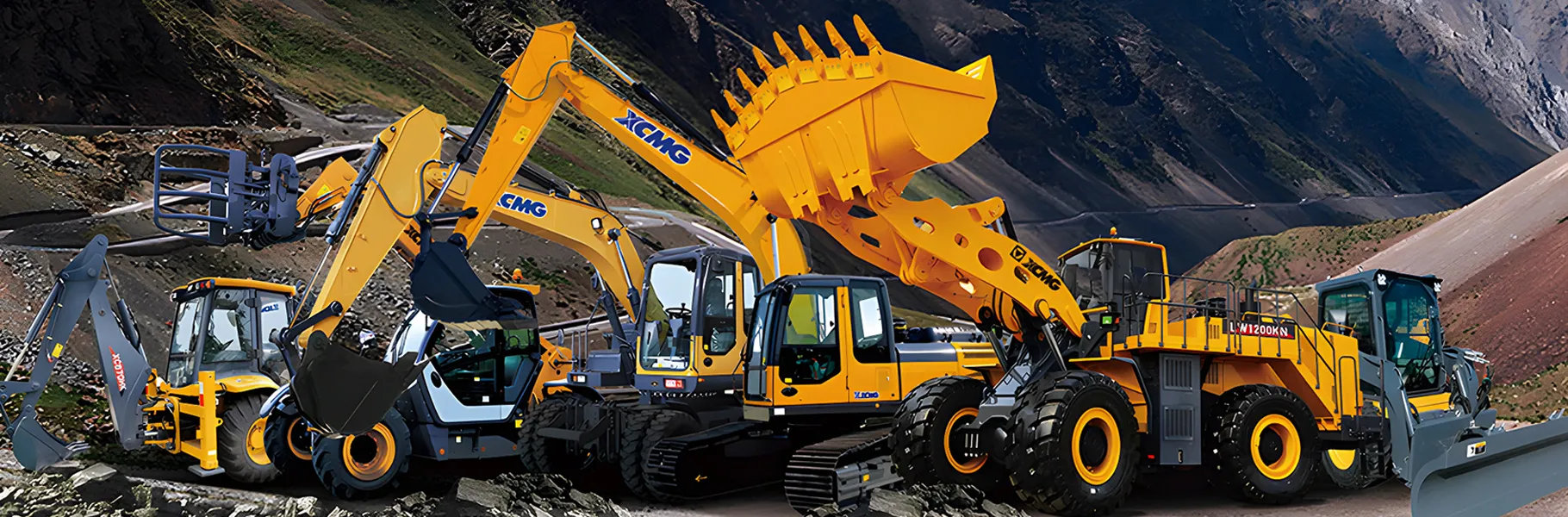
XCMG’s portfolio spans cranes, excavators, loaders, road machinery, and mining equipment, with a particularly deep bench in lifting machinery[reference:4]. The company produces truck cranes, rough-terrain cranes, all-terrain cranes, and crawler cranes, including the XGC88000 – the world’s largest crawler crane by lifting capacity. XCMG’s G-series excavators and XC9 series loaders have been deployed in bulk shipments to global infrastructure projects[reference:5]. For large-scale infrastructure, mining, and heavy lifting operations, XCMG’s breadth in cranes and earthmoving equipment makes it a natural single-brand fleet solution.
Contractors who plan to build a wider construction machinery fleet around one Chinese brand often find XCMG advantageous because its product categories cover more fleet needs – cranes, loaders, rollers, graders, and excavators from a single source[reference:6]. Conversely, buyers who prioritise excavator brand recognition and familiar model options in their local market may lean toward SANY, particularly where local operators and technicians already have experience with SANY equipment[reference:7]. The key is to begin with the work, not the brand: identify the machine classes, attachments, and duty cycles required, then compare exact models from each brand for that specific application.
Performance and fuel efficiency directly influence operating economics and are critical differentiators in the SANY Vs XCMG decision. Both brands have made substantial progress in engine technology, hydraulic system design, and electronic control, but real-world data reveals meaningful differences.
In the 20–22-ton excavator class, which is one of the most competitive segments for both brands, field data from Southeast Asian job sites provides useful benchmarks. SANY’s SY215C is reported to consume approximately 11–13 litres per hour under heavy continuous load, while XCMG’s XE215DA averages 9–11 litres per hour in comparable conditions[reference:8]. XCMG’s XE215DA achieves this through a separate pump independent control system and an imported main pump, delivering a 7% efficiency increase and a 10% fuel consumption reduction compared with the previous XE215D model, with comprehensive fuel consumption below 12 L/h[reference:9]. SANY’s SY215C features AOCT self-optimizing control technology that optimizes the hydraulic spool and increases main pump displacement to achieve fuel economy[reference:10].
For high-hour mining or quarry applications, even a 1–2 litre per hour difference translates to substantial annual savings. However, buyers should also consider cycle times and productivity: a machine that consumes slightly more fuel but moves more material per hour may deliver lower cost per tonne. Request fuel consumption data at the specific load factor and duty cycle that matches your job, not just the headline number.
Both brands now incorporate advanced hydraulic systems, electronic load sensing, and multiple working modes. XCMG’s new energy equipment, such as the XE270E electric excavator, demonstrates a unit operating energy consumption of 22.3 kWh/h with fast charging technology that is ahead of SANY’s equivalent in charging time[reference:11]. SANY counters with strong performance in concrete equipment and cranes, where its STC250 truck crane delivers reliable lifting capacity and quality assembly. For general earthmoving, both brands offer competitive digging forces and cycle times in their respective weight classes.
Downtime costs money. A brand that cannot deliver a critical part within 48 hours can derail a project schedule and erode profitability. Spare parts availability and after-sales support are therefore decisive factors in the SANY Vs XCMG evaluation, especially for buyers operating outside China.
SANY has invested heavily in its global service footprint. The company operates more than 900 overseas service sites and employs over 3,500 service engineers, forming what it calls a global “Rapid Response Corps” that provides 24/7 support[reference:12]. Its “No More Waiting” service philosophy is built around an efficient warehousing and distribution system, with 900+ warehouses worldwide ensuring localized parts availability[reference:13]. The MySANY digital platform allows customers to view parts pricing, order status, and delivery tracking in real time, streamlining the service request process and reducing equipment downtime[reference:14]. SANY has also established industrial parks and central warehouses in key markets – for example, in South Africa, it has built a local industrial park and central warehouse to support spare parts supply[reference:15].
XCMG’s global service brand, XCMG TrueCare, provides a comprehensive support framework. The company has established a global service guarantee system covering 14 overseas regions, more than 50 subsidiaries, 300+ dealers, and over 2,000 service outlets. It employs 1,000+ XCMG service experts and 10,000+ localized service engineers, supported by 20+ service standardization systems[reference:16]. Its four-level spare parts network – Xuzhou general warehouse, regional centre warehouses, national warehouses, and dealer/project warehouses – ensures consistent and rapid response across regions[reference:17]. XCMG operates a unified national customer service hotline, 400-110-9999, available 24 hours a day, 365 days a year, and prepares monthly service indicator reports covering metrics such as 24-hour completion rate, customer satisfaction rate, and on-site spare parts availability rate[reference:18].
Rather than relying on brand claims, verify the specific service route for your destination. Ask each supplier for the location of the nearest parts warehouse for your machine model, typical lead times for common wear parts (filters, hydraulic hoses, undercarriage components), and the name and response time of the local service contact. For both SANY and XCMG, parts availability for the major Chinese brands has improved significantly in recent years, but remote locations and specialist components may still require air freight[reference:19]. A well-supported mid-range model can be a better purchase than a more impressive machine that cannot be diagnosed or supplied with parts locally[reference:20].
The headline purchase price is only one component of the total cost of ownership. In the SANY Vs XCMG comparison, buyers must evaluate acquisition cost, warranty terms, parts pricing, and long-term operating expenses as an integrated equation.
On price, Chinese brands including XCMG and SANY remain 20–50% cheaper than comparable Caterpillar, Komatsu, or Volvo CE machines[reference:21]. Between the two brands, pricing is often closely matched for equivalent models, but regional configurations and dealer margins can create differences. For a 25-ton truck crane, indicative pricing for the SANY STC250 ranges from approximately $55,000 to $65,000 depending on configuration and emission standard, while the XCMG XCT25 is quoted around $63,000 for new units with a 1-year warranty[reference:22][reference:23]. For a 21-ton excavator, XCMG’s XE215DA is listed with a leasing overpayment of approximately 20%, slightly better than SANY’s SY215C at around 22%[reference:24].
Warranty terms vary by product line and market. For 20-ton excavators, both brands typically offer a 24-month or 3,000-hour warranty from official dealers, whichever comes first[reference:25]. For cranes, XCMG’s XCT25L5_S is offered with a 1-year warranty on core components, while some SANY crane listings show 6-month or 2,000-working-hour coverage for core parts[reference:26][reference:27]. Buyers should examine the specific warranty document for each quoted model, paying attention to what is excluded, the claims process, and whether local dealer support is included.
Beyond purchase price and warranty, long-term cost is shaped by fuel consumption, maintenance intervals, parts pricing, and resale value. XCMG’s lower fuel consumption in the 21-ton excavator class can yield meaningful savings over 10,000 operating hours. SANY’s strong brand recognition in certain markets may support better resale value for used equipment. Both brands have improved parts availability and reduced the historic price premium on OEM components, but aftermarket and third-party parts remain viable cost-control options for high-wear items[reference:28]. Build a 5-year total cost model that includes fuel, lubricants, filters, undercarriage replacement, hydraulic components, and resale value to make a fully informed decision.
The final tip in the SANY Vs XCMG decision framework is to align each brand’s demonstrated strengths with your specific project type, market conditions, and fleet strategy.
SANY may be the stronger choice when your local market has established operator and service familiarity with SANY equipment, when your project centres on concrete works and you value an integrated concrete machinery ecosystem, or when excavator brand recognition matters for resale and operator acceptance[reference:29]. SANY’s global service tour has connected with customers in over 180 countries and regions, and its localized training centres in Indonesia and France focus on developing regional expertise[reference:30][reference:31]. In markets where SANY has invested in industrial parks and central warehouses, parts and service access can be particularly strong.
XCMG may be the better fit when you are building a wider construction machinery fleet around a single Chinese brand and need cranes, loaders, rollers, graders, and excavators from one source[reference:32]. Its deep expertise in lifting machinery, including the world’s largest crawler crane, makes it a natural choice for large-scale infrastructure and heavy-lifting projects. XCMG’s TrueCare service framework and four-level spare parts network provide structured support across 14 overseas regions. For mining and quarry operations requiring heavy-duty excavators and loaders, XCMG’s G-series and XC9 series offer competitive performance with strong parts logistics.
Brand strength varies significantly by country and region. In Southeast Asia, SANY has reduced costs through localized production and achieved a 22% market share in Indonesia[reference:33]. XCMG holds over 15% market share in the Asia-Pacific zero-emission heavy machinery segment and leads in battery-powered surface mining truck deployments globally[reference:34][reference:35]. For buyers in Africa, both brands have established distribution networks, but the depth of local parts inventory and technician availability should be verified by contacting existing fleet operators in the region.
| Comparison Factor | SANY | XCMG |
|---|---|---|
| Global Ranking (2026) | 6th worldwide | 3rd worldwide |
| Core Strengths | Concrete pumps, excavators, cranes | Cranes, loaders, mining equipment |
| 21-Ton Excavator Fuel (L/h) | 11–13 (SY215C) | 9–11 (XE215DA) |
| Overseas Service Sites | 900+ | 2,000+ |
| Service Engineers | 3,500+ | 10,000+ |
| Parts Warehouses | 900+ | Four-level network |
| 25T Crane Price (USD) | $55,000–$65,000 | $63,000 (new) |
| Excavator Warranty | 24 months / 3,000 h | 24 months / 3,000 h |
| Best Fit For | Concrete works, local familiarity | Fleet breadth, heavy lifting |
Data compiled from brand reports, industry rankings, and field data. Actual specifications and pricing vary by region and configuration.
There is no universal winner in the SANY Vs XCMG comparison. The right choice depends entirely on the machine class, jobsite conditions, support plan, and the specific model being quoted[reference:36]. A well-configured and well-supported mid-range model from either brand can outperform a poorly matched machine from the other, regardless of brand reputation.
To make the best decision, start with your work requirements: the machine class, operating reach, bucket capacity, ground pressure, and duty cycle. Then check the configuration and market version offered – engine, emissions, controller, attachments, and documentation. Verify the support route: dealer and service access, diagnostics availability, manuals, and technical response. Confirm parts logistics with part numbers, stock locations, and emergency shipping options. Finally, compare the commercial terms: configuration, warranty, Incoterms, port of shipment, inspection evidence, and included spares.
For buyers building a multi-category fleet, XCMG’s broader product portfolio and extensive service network may offer operational simplicity. For those focused on concrete equipment or operating in markets with strong SANY brand recognition, SANY may deliver better local support and resale value. In either case, the most reliable approach is to compare exact models side by side, request pre-shipment inspection evidence, and verify the parts and service plan for your specific destination. For the latest industry news and brand updates, visit China XCMG Group News.