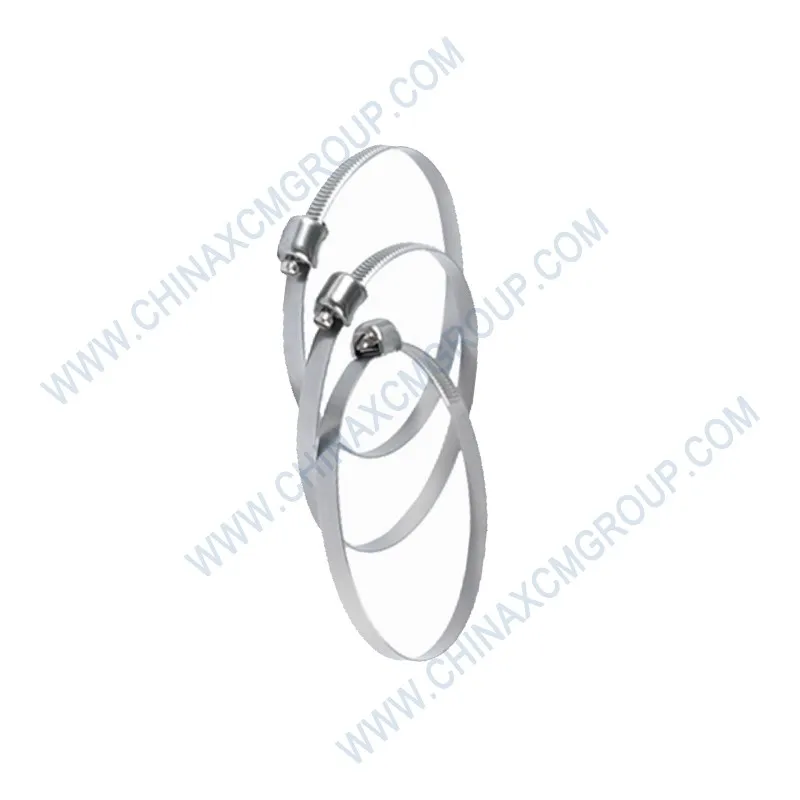
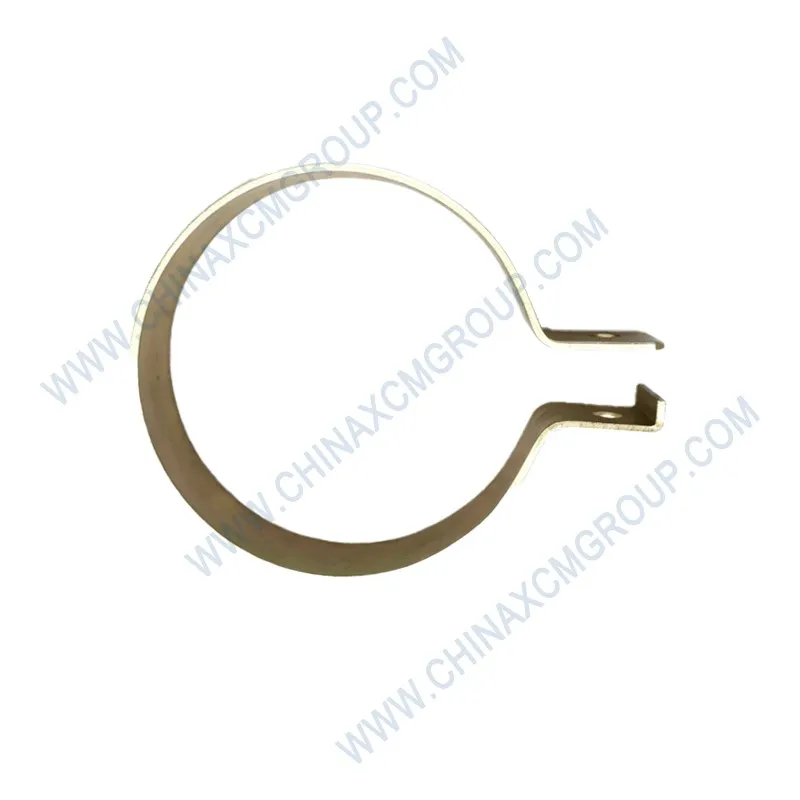
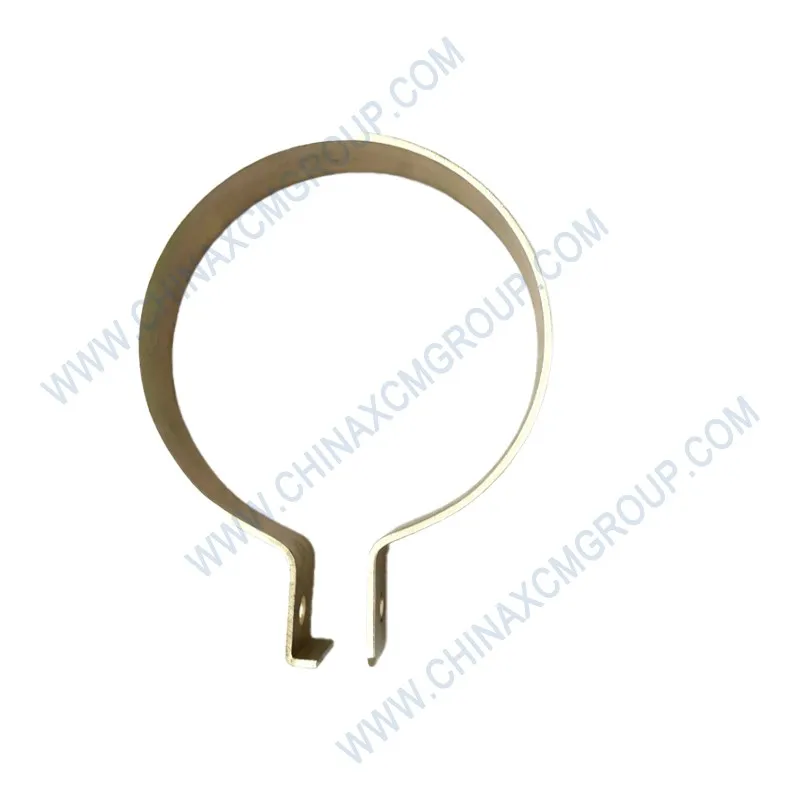
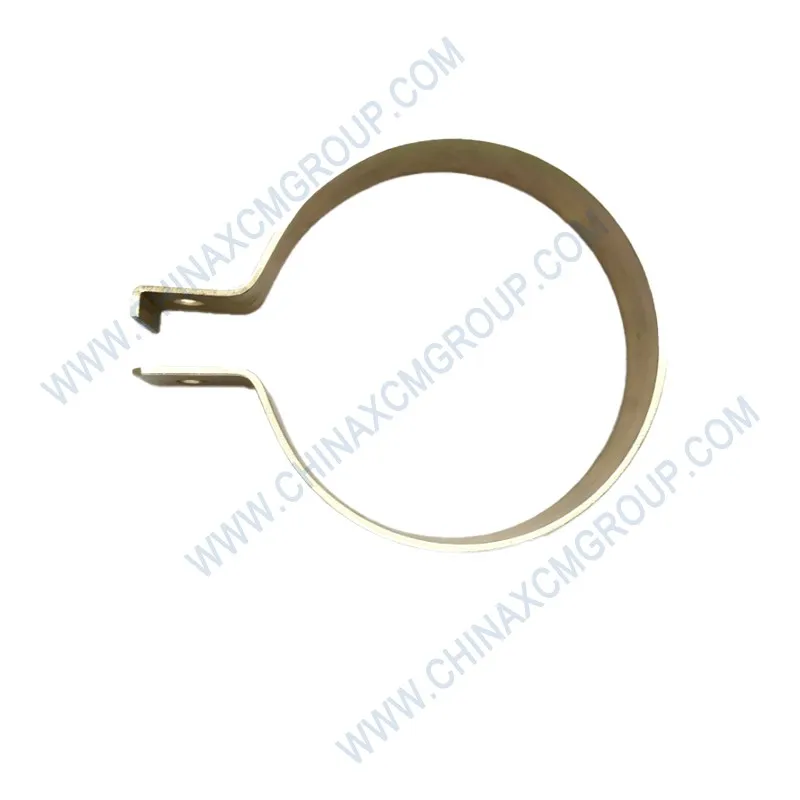
The genuine XCMG Clamp with OEM number 800172904 is a precision-engineered fastening component designed for XCMG articulated dump trucks and heavy construction machinery. This clamp secures hydraulic hoses, coolant pipes, and air lines, preventing chafing, leaks, and disconnection under high vibration. Manufactured from corrosion-resistant spring steel, the OEM 800172904 clamp provides consistent clamping force even after repeated thermal cycles and exposure to dust, mud, and pressure wash.
The XCMG Clamp 800172904 is a constant-tension spring clamp that automatically compensates for hose swelling, thermal expansion, and material creep. Unlike screw-type worm drive clamps that require periodic retorquing, this clamp maintains constant clamping force from installation to end of life. In AD-series dump trucks, it is used on critical coolant and hydraulic hose connections where a loose clamp could cause overheating or fluid loss.
The smooth inner band surface eliminates hose abrasion, a common problem with perforated worm gear clamps. The zinc-nickel coating offers 480 hours of salt spray resistance, essential for trucks operating in coastal mines or winter road salt conditions. Field data shows that using OEM 800172904 clamps reduces hose connection failures by 85% compared to generic hardware store clamps.
The spring steel used for the 800172904 clamp is cold-rolled and heat-treated to achieve a tensile strength of 1,800–2,000 MPa. The ear geometry is optimized using finite element analysis to ensure a uniform radial force distribution. After stamping, clamps are tumble-deburred to remove sharp edges, then electroplated with yellow zinc followed by a trivalent chromium passivation. This process eliminates hydrogen embrittlement, which can cause sudden clamp failure.
Each production batch undergoes force-deflection testing: 50 random clamps are compressed to the nominal diameter and the radial force is measured. The standard deviation must be less than 5% of the mean. This tight control ensures that every clamp provides predictable sealing pressure, preventing both under-tightening (leaks) and over-tightening (hose cut-through).
To install the Clamp 800172904, position the clamp over the hose and fitting barb. Use the XCMG-approved ear crimping pliers (p/n 800172905) or a universal Oetiker pincer. Align the ear jaws squarely over the ear and squeeze until the ear bottom is flush with the clamp band. For AD-series trucks, the correct final ear height after crimping is 3.5–3.8 mm. Never reuse a clamp after opening; the spring steel loses its elastic memory.
After installation, verify that the clamp is not over-crimped (ear crushed completely flat) or under-crimped (gap >1 mm). A properly installed clamp will have a small visible gap at the ear but still feel tight when rotating. Pressurize the system and check for weeping. For hydraulic lines, run the engine at full throttle for 5 minutes, then inspect with white paper under the connection – any moisture indicates insufficient compression.
Signs of a failing clamp include coolant seepage at hose ends, white crusty deposits (coolant residue) or wet oil stains. Corrosion of the clamp ear or band indicates zinc coating breakdown; such clamps should be replaced immediately. In extreme cases, a rusted clamp can lose up to 60% of its clamping force. Counterfeit clamps often use carbon steel without proper plating, rusting within months and causing leaks that lead to engine overheating or hydraulic pump starvation.
XCMG recommends replacing all engine compartment hose clamps every 6,000 hours or 5 years, whichever comes first. In severe duty (high salt, chemical exposure), reduce interval to 3,000 hours. The cost of a genuine 800172904 clamp is under $4, while a single coolant leak can cause an engine overhaul exceeding $20,000. Preventive replacement is the most cost-effective strategy.
Authentic XCMG 800172904 clamps feature a laser-etched “XCMG” logo and partial part number on the band near the ear. The yellow zinc coating has a uniform, bright appearance with no flaking. Counterfeit clamps often have a dull gray zinc or painted finish that scratches easily. The ear geometry on fakes may be incorrectly sized, causing uneven crimping. Some counterfeits use inferior spring steel that cracks after the first thermal cycle.
To verify authenticity, check the packaging – genuine clamps come in sealed plastic bags with an XCMG barcode label and holographic sticker. The QR code links to a verification page on the XCMG parts portal. Protect your fleet’s reliability; invest in genuine clamps for every hose connection. The OEM 800172904 delivers 10+ years of service in normal conditions.
The 800172904 clamp is designed for hose outside diameters between 26 mm and 34 mm. For exact sizing, measure the hose OD with a caliper after installation; the clamp should compress the hose slightly but not deform the reinforcing braid. Common applications on AD45 trucks include: radiator upper hose (32 mm ID hose, 38 mm OD – use 800172904), hydraulic cooler return line (28 mm OD), and turbocharger oil drain (25 mm OD). For larger hoses, XCMG offers clamp p/n 800172906 (35–45 mm range).
When replacing old screw clamps, cut them off with a diagonal cutter – do not reuse. Clean the hose barb and inspect for pitting. Slide the new spring clamp onto the hose before inserting the fitting. The clamp should sit 2–5 mm from the hose end, not directly at the edge. After crimping, perform a pull test: apply 100 N axial force to the hose; it should not slip off the barb.
XCMG’s clamp manufacturing uses 100% recycled steel coils and a closed-loop wastewater treatment system for the plating line. The trivalent chromium process eliminates hexavalent chromium (carcinogenic) and meets EU ELV directives. By using genuine clamps, you reduce the risk of fluid spills, which can contaminate soil and groundwater. The long service life also reduces waste generation compared to disposable worm gear clamps that often fail after one removal.
When a clamp eventually needs replacement, the steel can be recycled again. XCMG also offers a clamp buyback program for large fleets, where used clamps are collected and sent for recycling. Choose genuine parts to support a circular economy while keeping your articulated dump trucks leak-free and dependable.
During every oil change (500 hours), visually inspect all accessible clamps for rust, ear deformation, or leakage. Use a small mirror to check clamps on the back of the engine. For clamps that appear rusted, gently pry the ear with a screwdriver – if it moves easily, replace it. Keep a stock of 800172904 clamps in your parts room; they are inexpensive and can be installed in minutes, saving hours of cleanup from a failed hose.
For newly overhauled engines, re-crimp all clamps after the first heat cycle (engine warm-up to 90°C then cool down). This allows the hoses to relax and the clamp to take a final set. Document the ear height in your maintenance log. Following this practice, AD-series operators report zero clamp-related leaks between major overhauls.