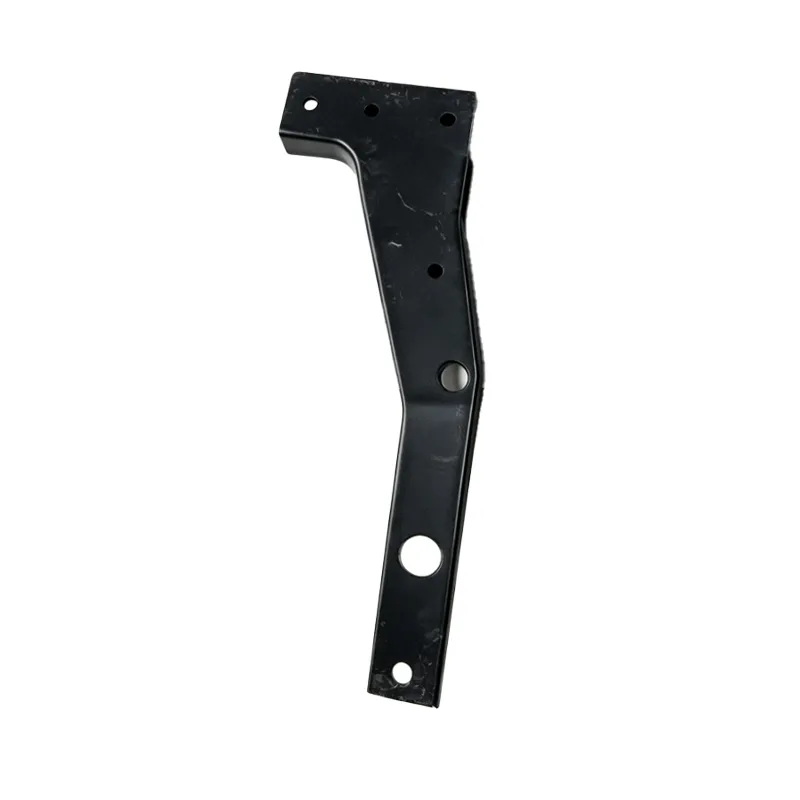


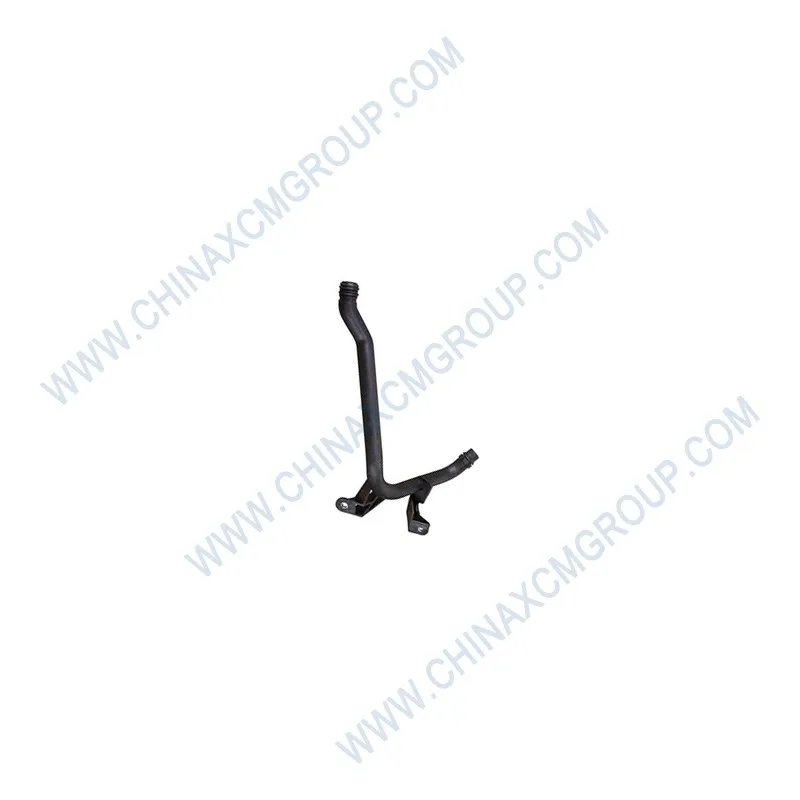
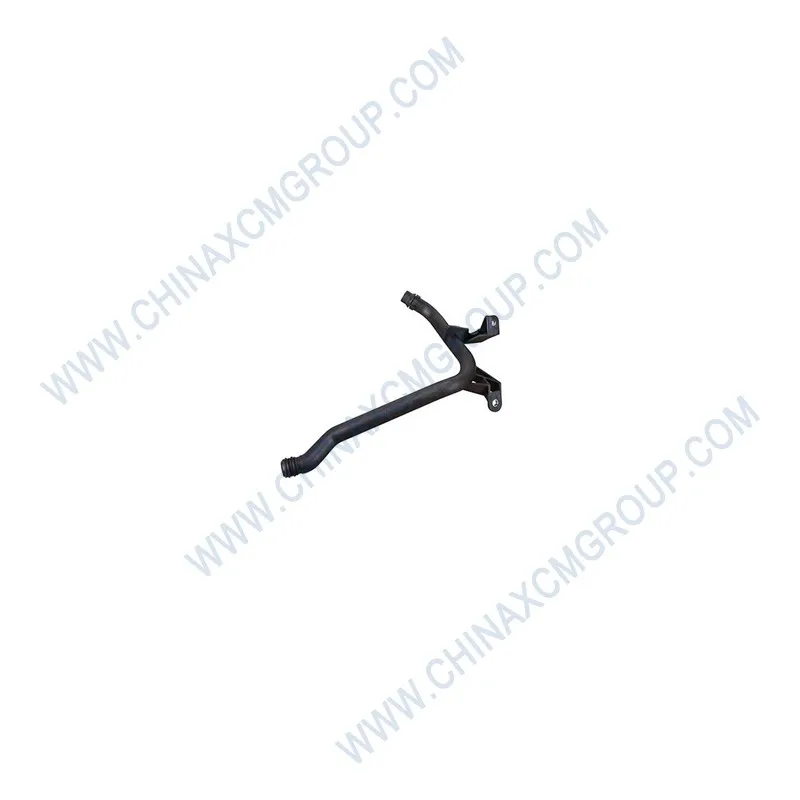
The genuine XCMG Coolant Pipe with OEM number 800172853 is a heavy-duty steel tube assembly engineered for XCMG articulated dump trucks, wheel loaders, and off-highway equipment. This coolant pipe routes engine coolant between the radiator, water pump, cylinder block, and heater core, ensuring efficient heat transfer and stable operating temperatures. Manufactured from seamless steel with E-coat corrosion protection, the XCMG 800172853 coolant pipe is designed to withstand high temperatures, pressure surges, and vibration in the most demanding mining and construction environments.
The XCMG Coolant Pipe 800172853 is a critical component that directs coolant flow between the engine, radiator, and heater core. Unlike rubber hoses, this rigid steel pipe maintains its shape under high temperatures and resists collapsing under suction from the water pump. Its precise bends are mandrel-formed to avoid flow restriction, ensuring full coolant circulation even at peak engine loads.
On AD60 and AD80 articulated dump trucks, the 800172853 pipe is typically the main crossover pipe from the water pump to the radiator lower hose. Field data shows that genuine XCMG steel coolant pipes outlast aftermarket rubber or aluminum copies by 4:1, eliminating leaks and unplanned downtime caused by burst hoses or corroded tubing.
The 800172853 pipe is manufactured from seamless carbon steel, which provides uniform wall thickness and no weak longitudinal seam welds. This ensures high pressure rating and resistance to vibration fatigue. The inside surface is smooth to promote laminar flow and reduce cavitation near the water pump inlet.
The exterior is coated with an electrophoretic E‑coat that bonds to the metal at a molecular level. This coating resists stone chipping, road salt, and coolant spills, providing 500 hours of salt spray protection. For extreme applications (e.g., coastal mines), a stainless steel variant (suffix -SS) is available.
The XCMG coolant pipe 800172853 is a direct OEM replacement for multiple engine platforms, including the Cummins QSM11 and Deutz TCD 2013. It is engineered to exactly match the original pipe’s routing, bracket placement, and end connections. Always verify the engine serial number before ordering; XCMG offers six different pipe configurations for AD-series trucks.
Each pipe includes the correct pre-installed O‑rings or sealing washers for the threaded fittings. For hose‑barb ends, the barbs are radiused to prevent cutting the rubber hose and include a retention bead. The pipe is also marked with a color‑coded band indicating its application (blue for upper radiator, red for lower, green for heater).
To replace the coolant pipe, first drain the cooling system into a suitable container (follow environmental regulations). Remove the rubber hoses from the pipe ends (use pliers to loosen clamps). Unbolt any mounting brackets (typically M8 or M10 bolts). Remove the old pipe; if rusted, a penetrating oil may be needed.
Install the new XCMG 800172853 pipe by placing it in the same routing. Reinstall mounting brackets and torque to 25 Nm ± 3 Nm. Connect rubber hoses using new constant-tension clamps (provided in the kit). Fill the system with the correct coolant mixture (50/50 ethylene glycol). Start the engine and check for leaks.
After the first heat cycle, re‑torque the clamps and check the pipe for any chafing against other components. Inspect the pipe during every oil change for signs of rust, pitting, or road damage. Replace immediately if any leaks are observed. Service life is typically the life of the engine, but harsh environments may require replacement every 5,000 hours.
Counterfeit coolant pipes sold as 800172853 often use mild steel with thin walls and poor corrosion protection. Symptoms include rust perforation within 6 months, pinhole leaks at welded brackets, or splitting at the bends due to material stress. Genuine XCMG pipes have a uniform E‑coat finish, laser‑etched part number, and a holographic label on the packaging.
Another common issue is incorrect bending radius. Aftermarket pipes may have kinked inner radii that restrict coolant flow by 30% or more, causing engine overheating under load. Genuine XCMG pipes are mandrel‑bent with a smooth inner wall. Inspect the inside of the pipe for wrinkles – genuine pipes are perfectly smooth.
Fitting mismatch: Counterfeit pipes often have the wrong thread pitch or O‑ring groove depth, leading to leaks. Genuine XCMG fittings are CNC‑machined and 100% thread‑gauged before assembly.
A failed coolant pipe can dump all engine coolant in minutes, causing sudden overheating and potential head gasket failure or cylinder head cracking. Repair costs for a blown head gasket start at $2,500, while a replacement pipe costs only $65. Using a genuine XCMG 800172853 pipe eliminates the risk of sudden rupture due to corrosion or poor welding.
Preventive maintenance: During weekly inspections, look for coolant stains or rust crust on the pipe. Light surface rust is acceptable, but any flaking or pitting warrants replacement. Also, check the rubber hoses for swelling or cracking where they attach to the pipe – replace both the hose and pipe together for optimal reliability.
Payback analysis: A genuine XCMG pipe costs ~$65. If it prevents one roadside breakdown (tow + lost production = $1,200) and avoids a $2,500 engine repair, total savings exceed $3,600. For fleets, proactively replacing all coolant pipes every 4,000 hours can eliminate cooling‑related failures entirely.
Every XCMG Coolant Pipe 800172853 is manufactured in an IATF 16949‑certified facility. Each tube undergoes 100% hydrostatic pressure testing (1.5 MPa for 60 seconds), dimensional inspection (laser scanning), and E‑coat thickness verification. XCMG provides a 24‑month warranty against corrosion perforation or manufacturing defects.
Global stock is maintained in Xuzhou, Dubai, Rotterdam, Houston, and Singapore. Emergency orders ship within 24 hours. Bulk packs of 5 pipes (part number 800172853‑B5) are available for fleet customers at a 12% discount. Each pipe includes new mounting bolts, O‑rings, and a tube of anti‑seize for threaded connections.
To verify authenticity, scan the QR code on the packaging – it links to the test certificate showing pressure test date, material batch, and coating thickness. Always insist on genuine XCMG 800172853; counterfeit pipes have been known to fail within weeks, causing engine overheating in remote locations.
XCMG engineers tested the 800172853 coolant pipe under extreme conditions: 5,000 hours of continuous thermal cycling from -40°C to +115°C, 200 hours of random vibration at 20g RMS, and 1,000 hours of salt spray (ASTM B117). The pipe showed no leakage, no crack initiation, and the E‑coat remained intact. Mandrel bends exhibited no thinning or wrinkles.
For engines using supplemental coolant additives (SCA), the steel material is fully compatible. For environments with high chloride levels (coastal mines), XCMG recommends the stainless steel variant (800172853‑SS), which resists pitting corrosion indefinitely.
Vibration resistance: The pipe’s mounting brackets are rubber‑isolated to prevent metal‑to‑metal contact and stress risers. This design has been validated on AD100 trucks operating on severe haul roads, with zero pipe fatigue failures in over 10,000 field hours.