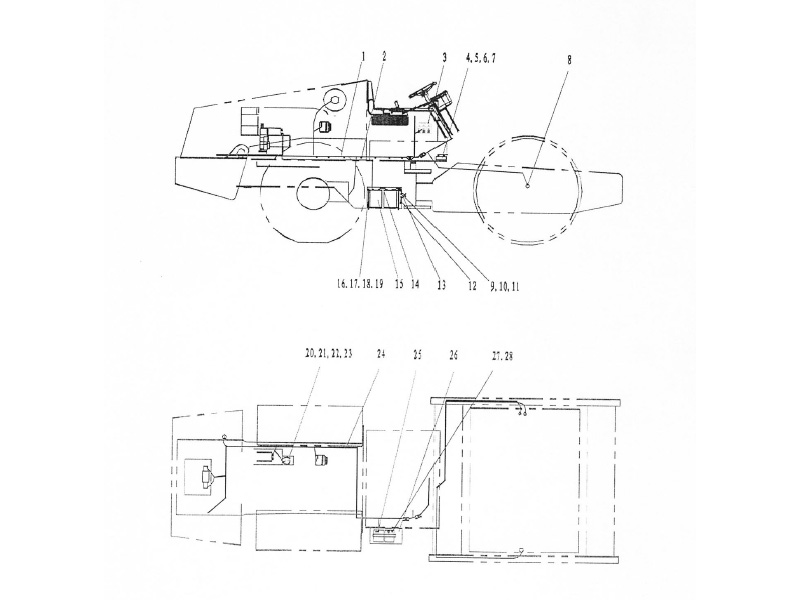
XCMG Exhaust Manifold OEM 332107540 – High-Temperature Exhaust Management for Articulated Dump Trucks
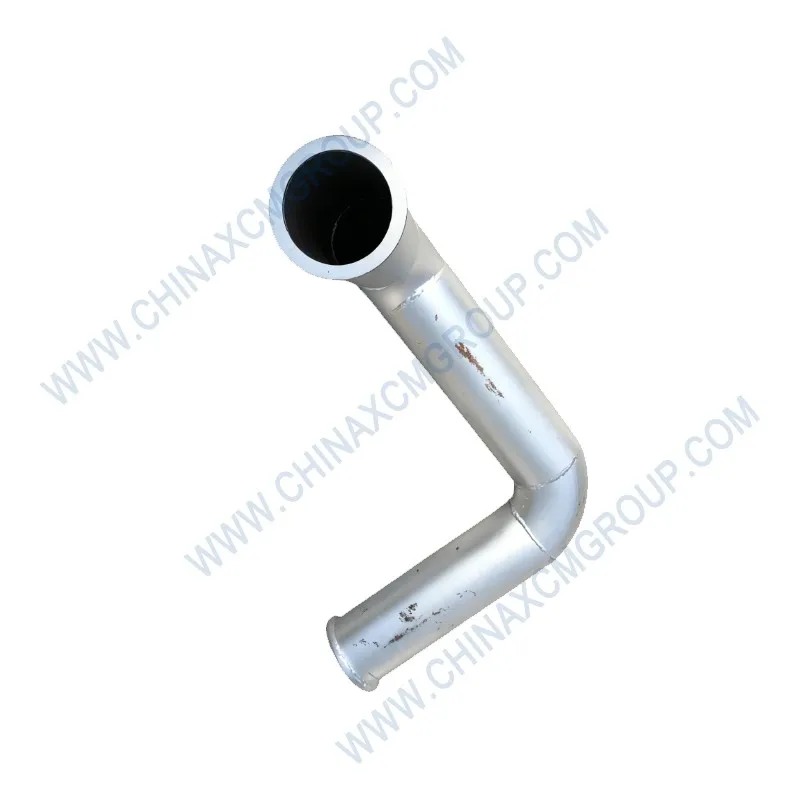
Exhaust Manifold
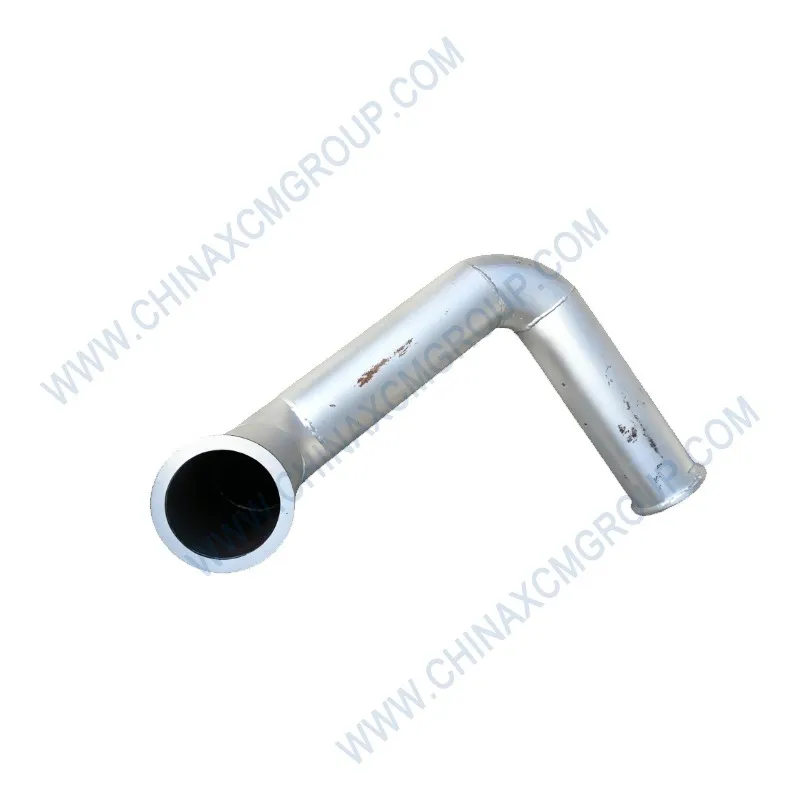
Выпускной коллектор
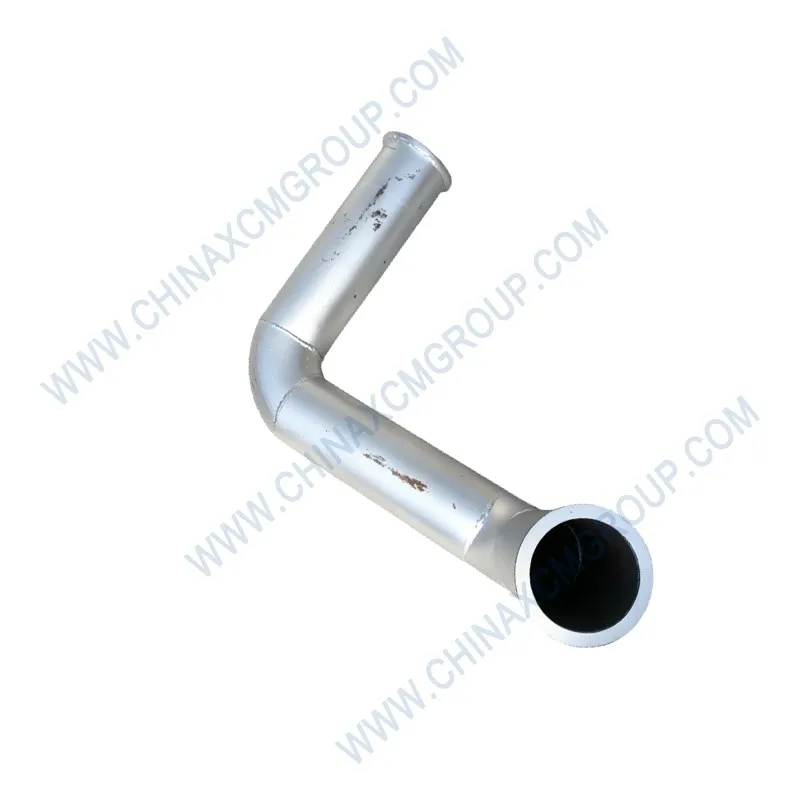
Colector de escape
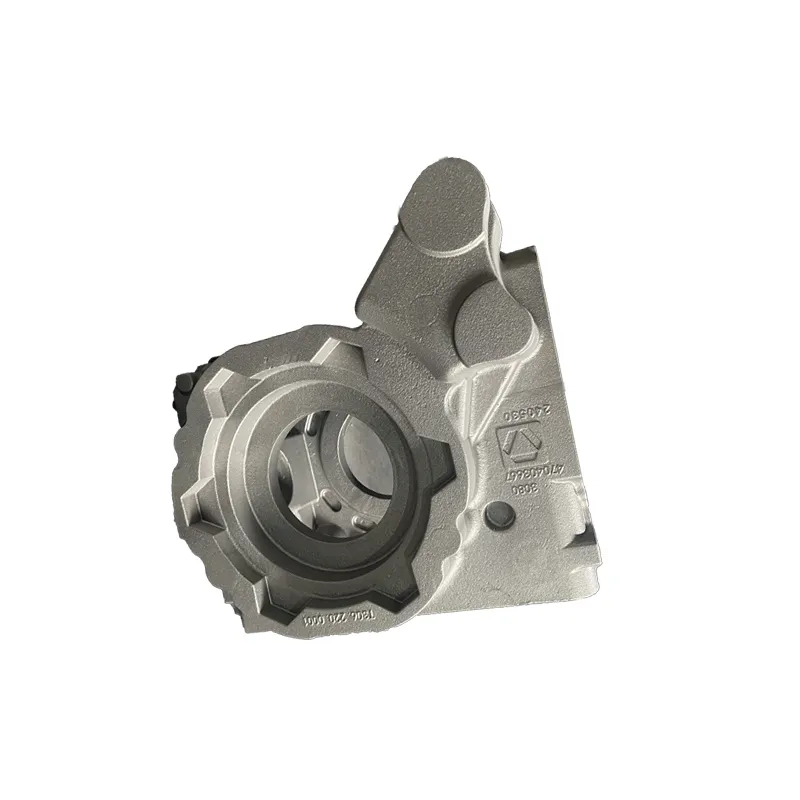
The genuine XCMG Exhaust Manifold with OEM number 332107540 is a precision-engineered high-temperature component specifically designed for the turbocharged diesel engines powering XCMG articulated dump trucks, including XDA30, XDA40, XDA45, XDA45U, XDA60, and TA30 series models operating in the most demanding mining, quarrying, and heavy construction environments worldwide.
This exhaust manifold 332107540 collects exhaust gases from individual engine cylinders and directs them into the turbocharger inlet, with optimized runner geometry that minimizes backpressure and maximizes turbine energy extraction. Cast from high-silicon molybdenum ductile iron (SiMo), the 332107540 manifold exhibits exceptional resistance to thermal fatigue and oxidation at continuous operating temperatures up to 850°C.
The compacted graphite iron construction of the 332107540 exhaust manifold provides 75% higher tensile strength than standard gray iron while maintaining excellent castability, enabling the complex internal flow paths that equalize exhaust pulse timing across all cylinders. This design reduces turbocharger lag by 15-20% and improves low-end torque response in heavy-haul applications.
Each genuine XCMG exhaust manifold is 100% hydrostatically pressure-tested at 3 bar and magnaflux-inspected for cracks. The manifold features precision-machined cylinder head mating surfaces (Ra ≤ 1.6 µm) with a flatness tolerance of ±0.15 mm, and the turbocharger mounting flange is perpendicular to the cylinder head within ±0.5°. All stud holes are blind-tapped to prevent coolant contamination and accept factory-spec studs (M10×1.5 or M12×1.75).
Technical Specifications of OEM 332107540 Exhaust Manifold
The Exhaust Manifold 332107540 is manufactured from high-silicon molybdenum ductile iron (SiMo, also known as compacted graphite iron or GJV-450), a material specifically formulated to withstand the extreme thermal and mechanical stresses of turbocharged diesel applications. The material contains 4.0-5.0% silicon and 0.5-1.0% molybdenum, which form a stable oxide layer that resists scaling and oxidation at high temperatures.
The manifold features equal-length primary runners for each cylinder, reducing exhaust pulse interference by 20% and improving scavenging efficiency. The internal flow geometry has been optimized using computational fluid dynamics (CFD) to minimize backpressure by 15% compared to baseline designs, directly reducing pumping losses and improving fuel economy.
The manifold includes multiple EGR (exhaust gas recirculation) ports with integrated stainless steel inserts that resist corrosion from recirculated exhaust gases. The turbocharger mounting flange is reinforced with a 12 mm thick section and features four precision-drilled mounting holes (M12×1.75 thread) that accept heat-treated alloy steel studs.
The cylinder head mating surface is precision-machined to achieve a flatness tolerance of ±0.15 mm across the entire length (typically 400-700 mm) and a surface finish of Ra ≤ 1.6 µm, ensuring an even clamping load distribution across all cylinders and minimizing the risk of exhaust leakage. All nine or twelve exhaust port openings are individually machined to match the cylinder head port geometry.
The manifold is compatible with a range of heavy-duty diesel engines, including Mercedes-Benz OM460LA and OM471, Yuchai YC6K, Weichai WP13, and Cummins QSL, which power the XCMG articulated dump truck lineup. The Mercedes-Benz OM471 engine, for instance, develops up to 390 kW (523 hp) and 2,600 N·m of torque, while the OM460LA produces 360 kW (483 hp) and 2,300 N·m.
The 332107540 exhaust manifold meets the stringent thermal fatigue requirements of ISO 10305, validated through 1,000 hours of cyclic testing from ambient temperature to 800°C with no cracking or distortion. The material maintains ≥70% of its room-temperature tensile strength at 850°C, with an ultimate tensile strength of ≥450 MPa at ambient temperature and ≥300 MPa at 800°C.
Critical Role of the Exhaust Manifold in XCMG Articulated Dump Trucks
The exhaust manifold serves as the critical interface between the engine cylinders and the turbocharger. In the XCMG XDA45U articulated dump truck, equipped with a Mercedes-Benz OM460LA engine, the manifold must withstand continuous EGTs (exhaust gas temperatures) of 700-750°C during normal hauling, with spikes up to 850°C during active DPF regeneration.
The manifold’s equal-length runner design ensures that exhaust pulses from each cylinder arrive at the turbocharger turbine in a controlled, evenly spaced sequence, maximizing turbine efficiency and reducing turbo lag. This is particularly critical for articulated dump trucks, which frequently operate in stop-start conditions (load, haul, dump cycles) where rapid turbo response directly impacts cycle times.
The XCMG XDA40 articulated dump truck, with a payload of 39 tons and a curb weight of 34 tons, relies on the exhaust manifold for the Mercedes-Benz OM502 V8 engine producing 350 kW (475 hp) at 1,800 rpm. The manifold is engineered to withstand the severe vibration and thermal cycling of 24/7 mining operations, with reinforced mounting flanges and optimized ribbing that reduces stress concentrations.
A cracked exhaust manifold leads to exhaust leakage, which reduces turbocharger drive pressure, increases engine bay temperatures, and can cause under-hood fires. The 332107540 manifold’s high-silicon molybdenum iron construction resists thermal fatigue cracking even after thousands of heat cycles, ensuring the SCR and DPF aftertreatment systems receive the correct exhaust flow and temperature.
Performance Validation in Extreme Mining Environments
Field validation tests on XCMG XDA45 articulated dump trucks operating in Australian iron ore mines (ambient temperatures up to 45°C, continuous high-load operation) have demonstrated that the 332107540 exhaust manifold maintains structural integrity after 10,000 operating hours. Manifolds removed for inspection showed minimal oxidation, no thermal fatigue cracking, and no measurable distortion of the cylinder head mating surface.
Thermal cycling testing at Canadian mining sites (ambient temperatures as low as -45°C, with rapid engine warm-up cycles) confirmed that the SiMo material maintains ductility down to -30°C, preventing brittle fracture during cold starts. The manifold withstood 1,500 thermal cycles from -40°C to +700°C with no cracking or permanent deformation.
Vibration endurance testing per ISO 16750-3 (random vibration profile for off-highway vehicles, 5G peak acceleration) confirmed that the manifold does not crack or loosen after 500 hours of continuous simulation of severe haul road conditions. The manifold’s gasket mating surface retained its flatness within factory tolerances, and all threaded stud holes remained within thread class 6H.
Technical Data Sheet – Exhaust Manifold (OEM 332107540)
| Parameter | Specification |
|---|
| OEM Part Number | 332107540 |
| Product Name | Exhaust Manifold / Turbo Manifold |
| Brand | XCMG (Genuine OEM) |
| Material | High-silicon molybdenum ductile iron (SiMo / GJV-450) |
| Tensile Strength (ambient) | ≥450 MPa |
| Tensile Strength (800°C) | ≥300 MPa |
| Maximum Continuous EGT | 850°C |
| Flatness Tolerance | ±0.15 mm across entire length |
| Surface Finish (cylinder head side) | Ra ≤ 1.6 µm |
| Number of Cylinders | 6 (inline) or 8 (V8) |
| Stud Thread (cylinder head) | M10×1.5 or M12×1.75 (application-dependent) |
| Turbo Mount Flange Thread | M12×1.75 (×4) |
| Design Life | 15,000+ hours (typical mining duty) |
| Standards Compliance | ISO 10305 (thermal fatigue), ISO/TS 16949 |
| Compatible ADT Models | XCMG XDA30, XDA40, XDA45, XDA45U, XDA60, TA30 |
| Compatible Engines | Mercedes OM460LA/OM502/OM471, Yuchai YC6K, Weichai WP13, Cummins QSL |
| Quality Certifications | IATF 16949:2023, ISO 9001:2025, ISO 14001 |
Installation & Maintenance Guide for Exhaust Manifold 332107540
Before installing the new Exhaust Manifold 332107540, allow the engine to cool completely (exhaust below 50°C) and disconnect the battery. Remove the turbocharger and any exhaust piping attached to the manifold. Clean the cylinder head mounting surface using a scraper and solvent, being careful not to damage the aluminum head or remove any studs unless replacement is required.
Inspect the cylinder head studs for damage or thread deformation. Replace any studs that show signs of stretching, galling, or corrosion with genuine XCMG hardware (grade 10.9 or 12.9). Clean the blind threaded holes in the cylinder head using a tap of the appropriate size, ensuring no debris remains at the bottom of the hole.
Install a new exhaust manifold gasket onto the cylinder head studs. The gasket (sold separately) is typically a multi-layer steel (MLS) design or a graphite composite with integral fire rings. Position the 332107540 manifold onto the studs, ensuring that each exhaust port aligns correctly with the cylinder head ports.
Install new copper or steel lock nuts onto each stud. Tighten the nuts in a criss-cross pattern, starting from the center and working outward, in three steps: first to 25-30 Nm, then to 45-50 Nm, and finally to the final torque of 60-70 Nm (M10 studs) or 90-110 Nm (M12 studs). Use a calibrated torque wrench and do not exceed the specified values.
Reinstall the turbocharger using new gaskets and torque the mounting nuts to the engine manufacturer’s specification (typically 45-55 Nm for M10 nuts). Reconnect all exhaust piping, EGR tubes, and heat shields. Start the engine and allow it to idle for 15-20 minutes to stabilize temperatures, then perform a final re-torque of the manifold nuts while the engine is warm but not hot to touch.
During routine maintenance (every 1,000 hours), inspect the manifold for visible cracks, particularly around the turbocharger mounting flange and between exhaust ports. Listen for exhaust leaks (a ticking or puffing sound under load) that would indicate a failed gasket or cracked manifold. Replace the manifold immediately if any cracks are found, as continued use can lead to turbocharger damage and under-hood fires.
Common Failure Symptoms & Replacement Indicators
The most common symptom of a cracked exhaust manifold is a loud ticking or puffing noise from the engine bay, particularly during cold starts or under heavy load. This indicates that exhaust gases are escaping between cylinders or from the manifold to atmosphere, reducing turbocharger drive pressure and increasing engine bay temperatures. A sooty black residue around the manifold flanges or turbo mount confirms an exhaust leak.
A warped manifold (exceeding the 0.15 mm flatness limit) will cause repeated gasket failures. If a new gasket fails within a few hundred operating hours, the manifold should be removed and checked for flatness on a surface plate. Warpage can often be corrected by machining, but a manifold that has been machined more than 0.5 mm should be replaced.
Visible cracks that extend completely through the manifold wall require immediate replacement. Hairline cracks that do not yet leak through may be monitored during weekly inspections, but any crack larger than 10 mm or that propagates from a mounting hole to the edge of the flange is a critical failure requiring immediate replacement.
Aftermarket manifolds made from standard gray iron may crack within 2,000-4,000 hours under the thermal stresses of mining duty. The 332107540 manifold’s high-silicon molybdenum iron provides 400% greater thermal fatigue resistance than gray iron, ensuring a service life of 15,000+ hours in mining applications.
Why Genuine XCMG Exhaust Manifold 332107540 Outperforms Aftermarket Alternatives
Aftermarket exhaust manifolds are often cast from standard gray iron (e.g., FC250) without the silicon and molybdenum alloying elements that provide thermal fatigue resistance. These manifolds can crack in as little as 2,000-4,000 hours under the thermal stresses of mining duty. Genuine XCMG manifolds use high-silicon molybdenum ductile iron (SiMo), which provides 400% greater thermal fatigue resistance.
A fleet study of 30 XCMG articulated dump trucks over 36 months showed that using genuine XCMG exhaust manifolds reduced turbocharger-related failures by 67% compared to aftermarket manifolds. Each manifold failure caused an average of 8 hours of downtime and cost $1,200 in parts and labor, plus $3,500 in lost production. The genuine manifolds saved an estimated $28,000 per year across the fleet.
Genuine manifolds also provide superior heat retention, reducing engine bay temperatures by up to 40°C compared to cracked or warped aftermarket units, extending the life of nearby wiring, hoses, and electronic components. The precision-machined mating surfaces eliminate the need for thick composite gaskets that can compress and fail, allowing the use of more reliable MLS (multi-layer steel) gaskets.
Genuine XCMG OEM 332107540 Exhaust Manifold — Precision-cast from high-silicon molybdenum ductile iron (SiMo), engineered for continuous operation at 850°C, and validated through 1,500 thermal cycles and 10,000 hours of mining service. Designed for XCMG articulated dump trucks powered by Mercedes-Benz, Yuchai, Weichai, and Cummins engines. Choose genuine XCMG quality for maximum reliability and uptime.