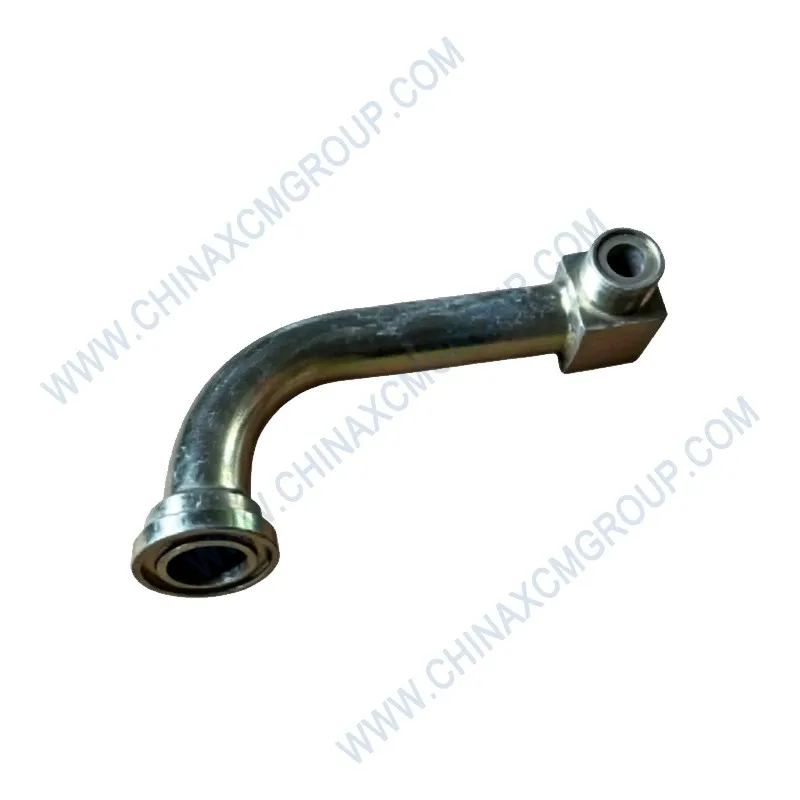
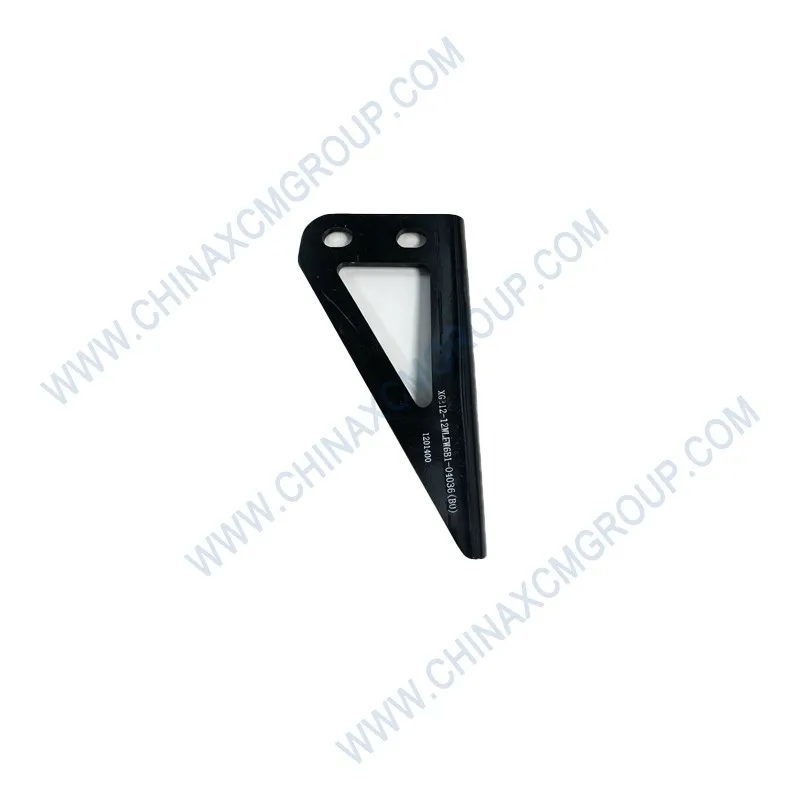
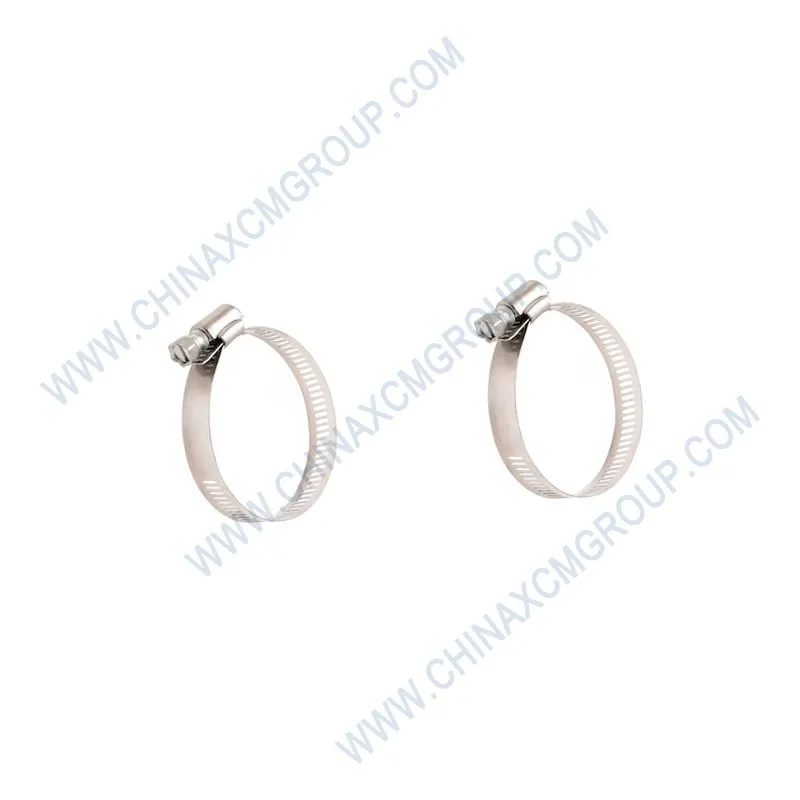
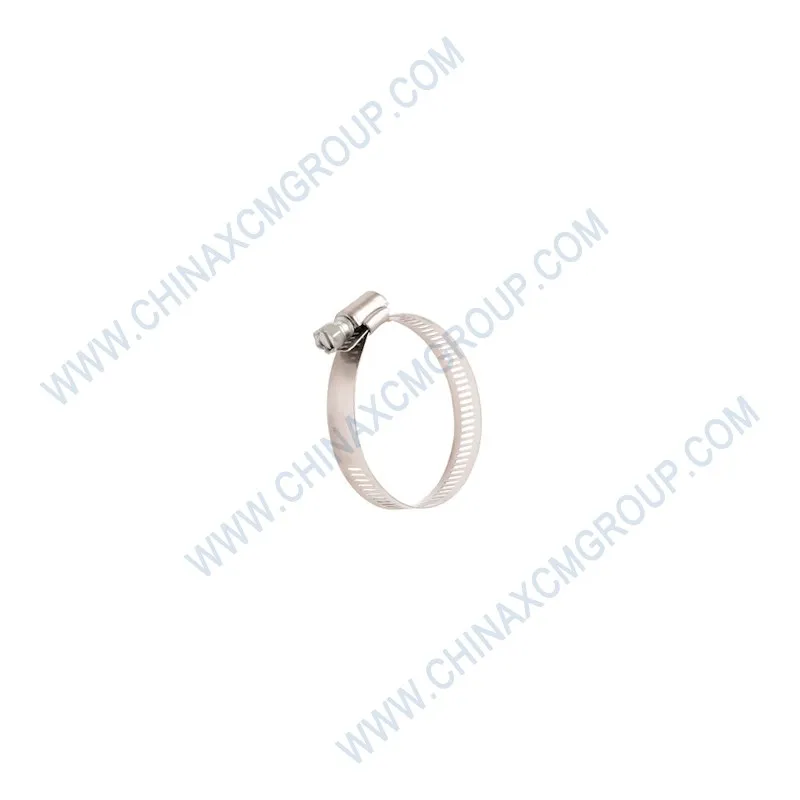
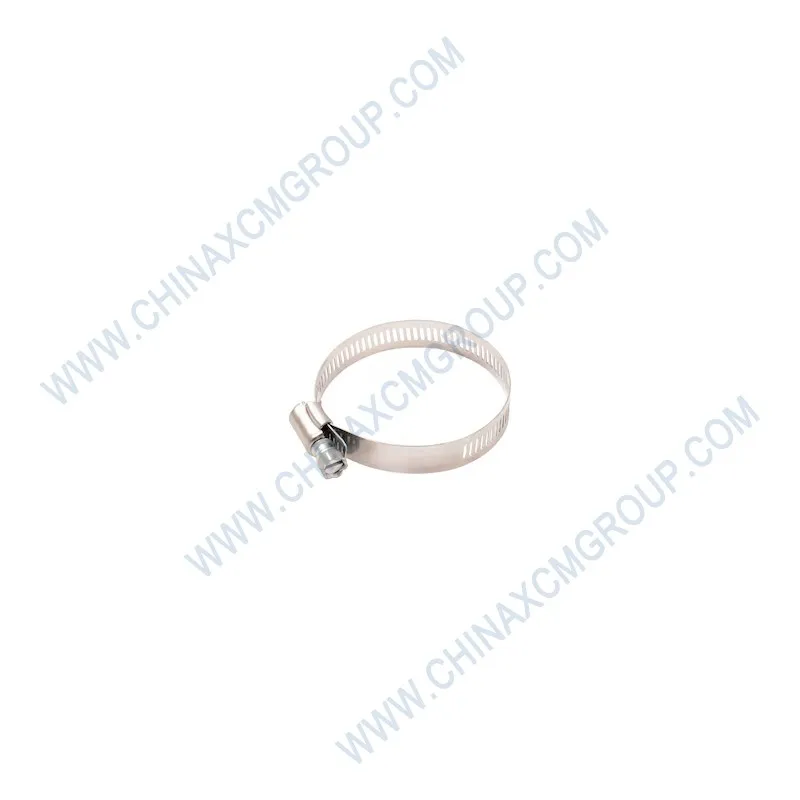
The genuine XCMG Reducing Exhaust Pipe Clamp with OEM number 804400617 is a high-strength V‑band clamp engineered for XCMG articulated dump trucks, wheel loaders, and off‑highway equipment.
This reducing clamp securely joins exhaust pipes of different diameters, typically connecting a 102 mm (4 in) outlet to a 127 mm (5 in) inlet, or similar stepped configurations found in turbocharger and after‑treatment systems.
Manufactured from 304 stainless steel with a precision-machined V‑groove, the XCMG 804400617 reducing clamp withstands exhaust temperatures up to 750°C and provides a leak‑tight seal under extreme vibration and thermal cycling.
Its T‑bolt design with a self‑locking nut allows easy installation and consistent clamping force, eliminating the need for constant re‑torquing.
Ideal for connecting turbocharger outlets to DPF (diesel particulate filter) or SCR (selective catalytic reduction) systems on AD‑series trucks, this clamp prevents soot leaks, exhaust noise, and backpressure loss, ensuring peak engine performance and emissions compliance.
The XCMG Reducing Exhaust Pipe Clamp 804400617 solves the common problem of joining exhaust pipes of different diameters without costly reducers or welded adapters.
Its unique stepped V‑groove mates perfectly with flanges of two different sizes, creating a leak‑tight joint that withstands the high thermal expansion and vibration of turbocharged diesel engines.
On AD60 and AD80 trucks, this clamp is used to connect the turbocharger outlet (102 mm) to the DPF inlet (127 mm). A loose or failed clamp can cause exhaust leaks, soot buildup, increased backpressure, and false OBD (On‑Board Diagnostics) faults.
The clamp’s uniform radial compression ensures even sealing around the entire circumference, eliminating the point‑loading that can distort flanges.
The 804400617 clamp is fabricated entirely from 304 stainless steel – band, housing, and T‑bolt – providing excellent oxidation resistance up to 750°C continuous, with intermittent peaks up to 850°C.
This alloy also resists corrosion from exhaust condensates, road salt, and under‑hood chemicals. The band is precision‑rolled to a stepped V‑profile that matches the flange geometry of both pipe sizes.
The T‑bolt is cold‑forged with rolled threads for maximum fatigue life. A Belleville spring washer is included to maintain clamping force during thermal cycling. The nut is a self‑locking all‑metal type (prevailing torque), suitable for high temperatures (nylon‑insert nuts would melt).
The clamp also features a rounded inner edge to prevent cutting into the flange sealing surface, a common problem with sharp‑edged aftermarket clamps.
The XCMG reducing exhaust clamp 804400617 is a direct OEM replacement for original part numbers 804400617A, 860124600, and 860298774.
It is specifically designed for the stepped flange used on Cummins QSM11 and Deutz TCD engines, where the turbo outlet is 102 mm and the DPF inlet is 127 mm.
The clamp can also be used on other reducing applications, such as 90 mm to 115 mm or 115 mm to 140 mm, but always verify flange dimensions before ordering.
The clamp is marked with the size range (e.g., “102/127”) and the XCMG part number. The T‑bolt should be positioned for easy access, typically at the 6 o’clock or 12 o’clock position on the exhaust pipe.
To replace a leaking or damaged reducing clamp, first allow the exhaust system to cool completely (below 60°C). Loosen the nut and open the clamp.
Inspect the mating flanges for cracks, warpage, or carbon buildup. Clean the flange faces with a wire brush and solvent. Do not use sandpaper or abrasive pads that could scratch the sealing surface.
Position the new XCMG 804400617 clamp around the flanges, ensuring the stepped V‑groove fully engages both flange lips. Close the band and insert the T‑bolt.
Hand‑tighten the nut until the band just contacts the flanges. Torque to 25 Nm (first pass). Start the engine and bring it to operating temperature (exhaust gas >300°C). Shut down and re‑torque to 15 Nm (second pass).
After the first 10 hours of operation, re‑check torque. If the nut has loosened, replace the nut with a new one (all‑metal nuts lose locking ability after removal). Inspect the clamp every 500 hours for signs of rust, cracking, or looseness.
Counterfeit reducing exhaust clamps sold as 804400617 often use 430 stainless steel (magnetic) or plated carbon steel, which rusts rapidly at high temperatures. Symptoms include rust streaks, black soot marks around the joint, or a loose clamp that rattles.
Genuine XCMG clamps are non‑magnetic (304SS), have a laser‑etched part number, and a holographic label on the packaging. The stepped V‑groove is precision‑ground and will show a uniform matte finish.
Another common issue is incorrect groove profile. Aftermarket clamps may have a constant V‑angle instead of a stepped groove, which will not seat properly on reducing flanges, leading to gas leaks. Use a go/no‑go gauge to check the groove profile if in doubt.
Bolt galling: Counterfeit T‑bolts may have poorly rolled threads that seize when torqued. Genuine XCMG bolts are coated with a dry lubricant (MoS2) and have a reduced thread root radius to prevent galling at high temperatures.
A leaking reducing clamp can cause false oxygen sensor readings, leading to improper DPF regeneration and increased fuel consumption. It can also allow cool ambient air to enter the exhaust during over‑run, causing thermal shock to the DPF substrate.
Replacing a worn clamp with a genuine XCMG 804400617 clamp costs approximately $35 – a tiny fraction of the cost of a new DPF ($4,000+) or a turbocharger ($2,500+).
Predictive maintenance: During daily inspections, look for black soot marks around the stepped exhaust joint. If you see soot, the clamp is leaking. Also, listen for a “chuffing” sound or exhaust smell in the engine bay. If the clamp feels loose by hand (once cold), replace it immediately.
After replacing a clamp, use an exhaust gas analyzer downstream of the joint to verify zero leakage. Replace the clamp every 4,000 hours as part of a preventive exhaust system overhaul.
Payback analysis: A genuine clamp costs ~$35. If it prevents one DPF crack ($4,000) or a turbo bearing failure caused by excess backpressure ($2,500), the savings exceed 100 times the cost. For a fleet of 20 trucks, proactively replacing all reducing clamps every 4,000 hours virtually eliminates exhaust leaks.
Every XCMG Reducing Exhaust Pipe Clamp 804400617 is manufactured in an IATF 16949‑certified facility. Each clamp undergoes 100% dimensional inspection (using a go/no‑go gauge for groove profile), material verification (XRF), and torque‑to‑seal testing (sample per lot).
XCMG provides a 24‑month warranty against material defects, cracking, or loss of clamp force.
Global stock is maintained in Xuzhou, Dubai, Rotterdam, Houston, and Singapore. Emergency orders ship within 24 hours. Bulk packs of 10 clamps (part number 804400617‑B10) are available for fleet customers at a 15% discount.
Each clamp includes a new all‑metal nut and a tube of anti‑seize compound for the bolt threads.
To verify authenticity, scan the QR code on the packaging – it links to the certificate showing material grade, groove profile measurements, and salt spray test results.
Always insist on genuine XCMG 804400617; counterfeit clamps have been known to snap under thermal cycling, causing exhaust separation and engine compartment fires.
XCMG engineers tested the 804400617 reducing exhaust clamp under extreme conditions: 1,000 thermal cycles from ambient to 750°C (20 minutes each), 5,000 hours of random vibration at 30g RMS, and 1,000 hours of salt spray (ASTM B117).
The clamp maintained 90% of initial clamp force, showed no cracking, and the bolt threads remained free of galling. The stainless steel surface showed only slight discoloration (straw color) with no scaling.
For applications with very high exhaust temperatures (e.g., engines with after‑treatment regeneration at 850°C), XCMG offers a 310S stainless steel version (suffix “-310S”) that withstands up to 1000°C.
The clamp’s design includes a floating bridge that allows the stepped V‑band to self‑center on the flanges, compensating for minor misalignment (up to 1.5 mm radial offset). This feature is essential for maintaining a seal on engines where the exhaust system is subject to vibration and thermal growth.