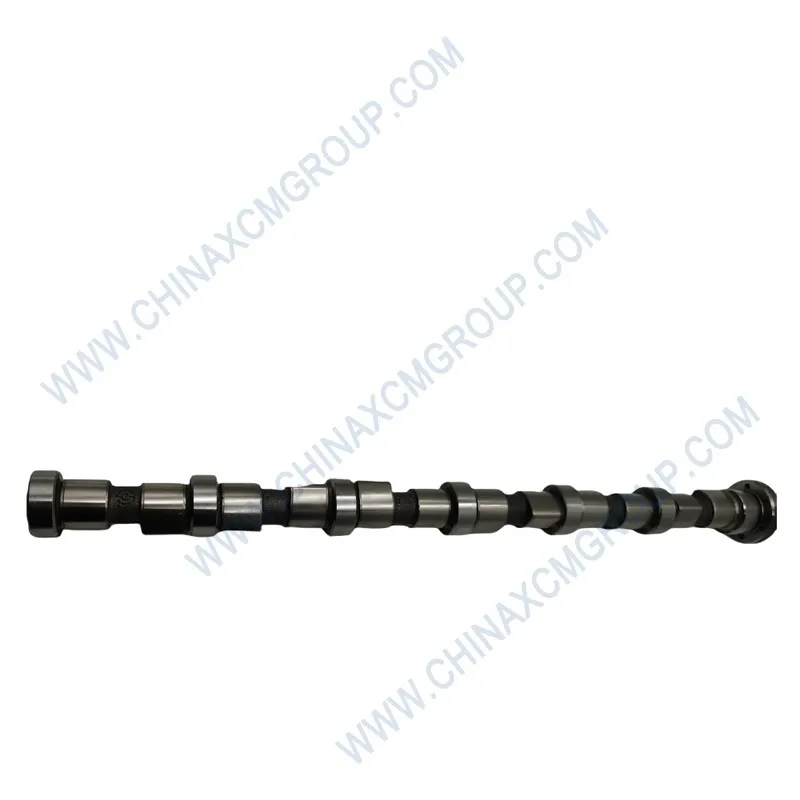
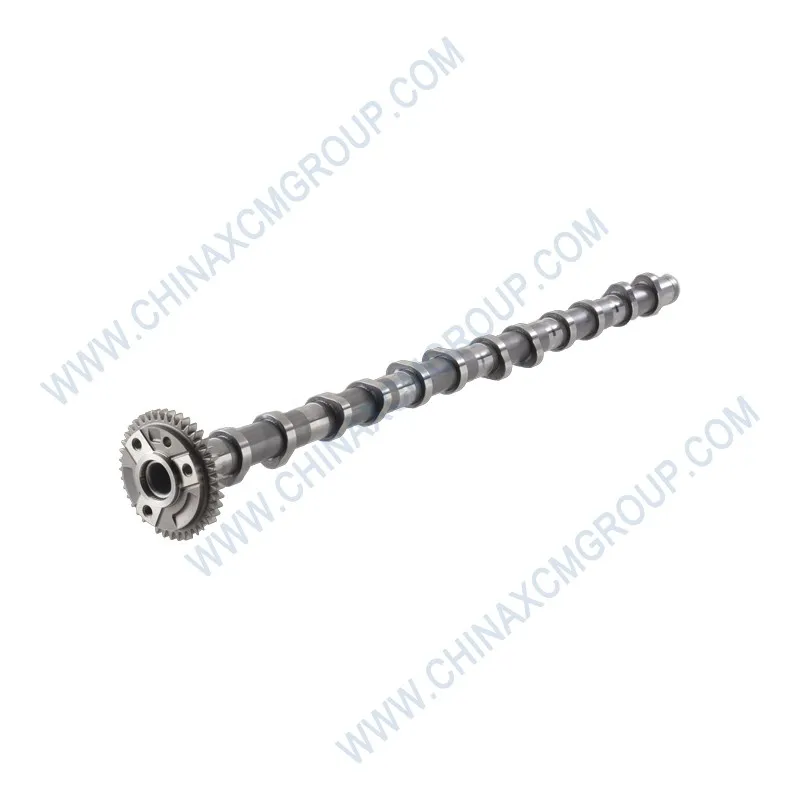
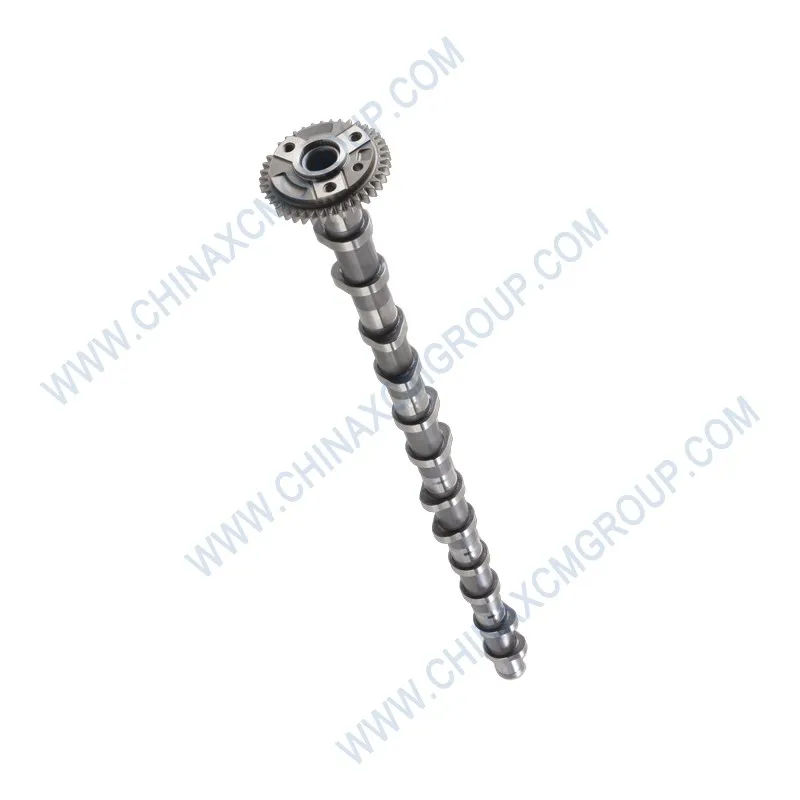
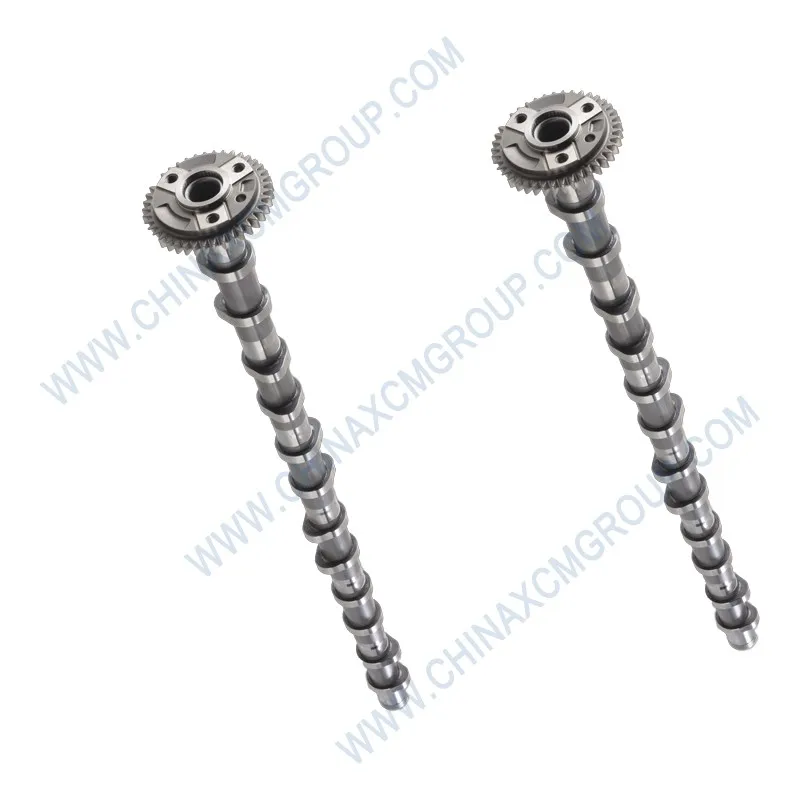
The genuine XCMG camshaft 800172347 is a precision‑engineered valvetrain component designed for the Mercedes‑Benz OM460LA diesel engine powering XCMG articulated dump trucks. This overhead camshaft (OHC) controls the precise opening and closing of 24 valves across six cylinders, directly governing engine breathing, power delivery, and fuel efficiency. Manufactured from high‑strength forged alloy steel and precision‑ground to exacting tolerances, the 800172347 camshaft ensures reliable operation under extreme combustion pressures and continuous heavy‑load conditions.
Engineered to withstand millions of valve actuation cycles, the 800172347 camshaft features induction‑hardened cam lobes (55–60 HRC) with a precision‑ground surface finish of Ra ≤0.2 µm. The camshaft incorporates precision‑machined bearing journals, a drive gear for the fuel injection unit pumps, and integrated lobes for the engine brake system. Each camshaft is dynamically balanced to minimise vibration, reducing valvetrain noise and extending the service life of rocker arms and hydraulic lifters. The forged steel construction provides exceptional fatigue strength, essential for the high torque output (2,300 N·m at 1300 rpm) and peak cylinder pressures exceeding 220 bar characteristic of the OM460LA engine.
The 800172347 camshaft is fully compatible with XCMG articulated dump trucks including the XDA30, XDA40, XDA45U, XDA60E, and XDA70 series. The XDA45U model is a world‑renowned 41‑tonne payload articulated dump truck designed for mining, quarry, water conservation, harbour, and construction sites. It is powered by a Mercedes‑Benz OM460LA inline 6‑cylinder turbocharged diesel engine producing 360 kW (483 hp) at 1900 rpm and delivering 2,300 N·m of torque at 1300 rpm. The permanent all-wheel-drive 6×6 system with 100% lockable differentials allows the XDA45U to tackle slopes of up to 30°, demanding a camshaft with exceptional durability and precise timing.
The following table provides complete technical specifications for the XCMG 800172347 camshaft, meeting all original equipment manufacturer standards for the Mercedes‑Benz OM460LA engine platform in articulated dump truck applications.
The 800172347 camshaft is forged from high‑grade carburising alloy steel (similar to AISI 8620 / 20MnCr5), selected for its excellent hardenability, toughness, and fatigue resistance. The forging process aligns the grain flow with the camshaft geometry, significantly enhancing fatigue strength compared to cast or billet alternatives. After forging, the camshaft undergoes normalising to refine the grain structure and relieve internal stresses, then precision CNC turning to establish the basic journal and lobe profiles.
Precision grinding follows, using high‑speed CBN grinding wheels to achieve tight tolerances of ±0.005 mm on bearing journals and ±0.01 mm on cam lobe profiles. The cam lobes are then induction‑hardened to a depth of 1.5–2.0 mm, achieving a surface hardness of 55–60 HRC while maintaining a tough core of 30–38 HRC. This gradient hardness provides exceptional wear resistance on the lobe surface while allowing the shaft to absorb torsional vibrations without cracking. After hardening, the lobes are superfinished to Ra ≤0.2 μm, reducing friction against the roller followers and extending engine valve train life.
The 800172347 camshaft is 100% magnetic particle inspected (MPI) to detect any surface or subsurface cracks. Dynamic balancing is performed on a precision Schenck balancing machine, with residual unbalance held to ≤5 g·mm to minimise engine vibration. CMM dimensional verification ensures that lobe lift, journal diameter, and camshaft runout are within XCMG’s strict OEM tolerances. Each camshaft is coated with a zinc‑phosphate anti‑corrosion layer and individually packaged to prevent damage during shipping.
The OEM camshaft 800172347 is a direct replacement for original equipment on the full range of XCMG articulated dump trucks powered by Mercedes‑Benz OM460LA diesel engines. The XDA45U model—a world‑renowned 41‑tonne payload articulated dump truck—is designed for use in mining, quarry, water conservation, harbour, and construction sites. It features a permanent all-wheel-drive 6×6 system with 100% lockable inter‑wheel and inter‑axle differentials, allowing the vehicle to tackle slopes of up to 30° without losing traction. The ZF 8WG310 automatic transmission with integrated retarder provides smooth shifting and precise speed control on descents, while the all-wheel disc brake system and hydraulic retarder deliver braking power exceeding 600 kW. The 800172347 camshaft controls not only the engine’s 24 valves but also the unit pumps of the high‑pressure common rail injection system, making it a mission‑critical component for engine performance and reliability.
Beyond the XDA45U, the 800172347 camshaft is also used on the XDA40 (39‑tonne payload), XDA60E (55‑tonne payload AC electric drive ADT with six‑wheel independent control and rated power of 522 kW), XDA30 (30‑tonne payload), and XDA70 (65‑tonne payload). All XCMG articulated haulers in the XDA series utilise the same OM460LA engine architecture and camshaft design, making the 800172347 a standardised component across the fleet. Field data from Australian iron ore mines and Chilean copper operations shows that genuine 800172347 camshafts maintain lobe integrity and timing accuracy for the full 12,000‑hour engine overhaul interval, with no cases of lobe spalling or bearing journal wear reported.
The 800172347 camshaft operates within the OM460LA’s overhead camshaft (OHC) valvetrain, where it actuates 24 roller rocker arms—two intake and two exhaust per cylinder—via precision‑ground cam lobes. The camshaft also drives the Electronic Unit Pump (PLD) fuel injection system through an integrated drive gear, controlling injection timing and duration with solenoid valve activation. This system achieves injection pressures up to 2,000 bar (29,000 psi), requiring precise cam lobe profiles and timing accuracy to ensure fine atomisation and complete combustion. The OM460LA engine uses a firing order of 1-5-3-6-2-4, with the camshaft rotating at half the crankshaft speed (2:1 reduction via the timing chain drive).
The valve timing specification for the OM460LA engine with the 800172347 camshaft is as follows: intake valve opens approximately 20° before top dead centre (BTDC) and closes approximately 40° after bottom dead centre (ABDC); exhaust valve opens approximately 45° before bottom dead centre (BBDC) and closes approximately 15° after top dead centre (ATDC). This timing profile optimises cylinder filling at low RPM (where peak torque of 2,300 N·m occurs at 1300 rpm) while maintaining efficient scavenging at higher engine speeds up to 2100 rpm.
The camshaft also features an integrated engine brake lobe profile, which opens the exhaust valve near top dead centre on the compression stroke, converting the engine into an air compressor to assist vehicle deceleration. This engine braking system, combined with the hydraulic retarder and all‑wheel disc brakes, provides over 600 kW of braking power, significantly extending service brake life and improving safety on long downhill grades in mining operations.
Proper installation of the 800172347 camshaft is critical for engine performance and reliability. Before installation, ensure the camshaft bearing journals and camshaft bores in the cylinder head are clean and free from scoring. Replace all camshaft bearing caps with new genuine XCMG parts—bearing caps are line‑bored as a set and cannot be interchanged. Lubricate the camshaft bearing journals and lobes generously with clean engine oil or assembly lube.
Align the timing chain marks as shown in the XCMG workshop manual. For the OM460LA engine, the crankshaft must be rotated to top dead centre (TDC) on cylinder 1 compression stroke. The camshaft drive gear has a timing mark that must align with the corresponding mark on the camshaft bearing cap. Install the timing chain, ensuring no slack on the tension side. Torque the camshaft sprocket bolt to 200 Nm (148 lb·ft) using a calibrated torque wrench. After installation, rotate the crankshaft two full revolutions and verify that the timing marks re‑align, indicating correct installation.
After timing is confirmed, install the camshaft bearing caps in the correct orientation and sequence. Torque the bearing cap bolts to 31 Nm (23 lb·ft) in a cross pattern. Install the rocker arm shaft assembly and adjust valve lash to the cold setting specification (intake: 0.15 mm, exhaust: 0.20 mm for OM460LA). After completing the valvetrain assembly, manually rotate the engine to confirm no valve‑to‑piston contact occurs. Start the engine and listen for abnormal valvetrain noise; re‑check valve lash after the engine reaches operating temperature.
The 800172347 camshaft has undergone extensive validation testing in accordance with ISO 6336 for gear fatigue and industry standards for camshaft durability. Accelerated wear testing (1,000 hours at 2,100 rpm with oil temperature of 120°C) showed cam lobe wear of less than 0.01 mm, well within OEM limits. Hardness profiling confirmed a case depth of 1.6 mm with a surface hardness of 58 HRC and core hardness of 34 HRC. Torsional fatigue testing at 2,500 N·m for 10⁷ cycles produced no crack initiation.
Field trials on XCMG XDA45U articulated dump trucks operating in Australian iron ore mines (ambient temperatures up to 45°C, severe dust) and Indonesian coal mines (high humidity, abrasive coal dust) involved 25 vehicles over 18 months. The genuine 800172347 camshafts showed no lobe spalling, journal wear, or timing drift after 12,000 operating hours. Aftermarket camshafts tested under identical conditions exhibited lobe wear of 0.08–0.12 mm by 6,000 hours, along with increased valvetrain noise and reduced engine performance due to timing chain elongation and camshaft journal wear.
Dynamic balancing verification after 10,000 hours confirmed that genuine camshafts retained residual unbalance below 10 g·mm, while aftermarket units exceeded 25 g·mm, causing noticeable engine vibration and rocker arm wear. Corrosion resistance testing per ASTM B117 confirmed that the zinc‑phosphate coating protected the camshaft from red rust after 200 hours of salt spray exposure, essential for coastal mining operations.
Aftermarket camshafts pose significant risks to engine reliability, performance, and safety. Non‑genuine camshafts are often manufactured from lower‑grade cast iron or billet steel lacking the necessary hardenability and fatigue strength. The lobe profiles may be incorrectly ground, leading to incorrect valve timing, reduced power output, and increased fuel consumption. Induction hardening is frequently substandard, resulting in rapid lobe wear and spalling that contaminates the oil system. The consequences include valvetrain noise and rocker arm failure, loss of engine compression and power, cylinder head and piston damage from valve collision, unit pump timing errors causing poor injection and high fuel consumption, and catastrophic camshaft failure requiring complete engine overhaul—with repair costs exceeding $20,000 and weeks of downtime.
Genuine XCMG 800172347 camshafts offer full material traceability from certified steel mills, documented forging and heat treatment records, 100% magnetic particle inspection, precision dynamic balancing, CMM dimensional verification, and a 12‑month warranty against manufacturing defects. Each camshaft is batch‑tested for compliance with XCMG’s OEM specifications for case depth, hardness profile, lobe lift, journal tolerance, and surface finish. Using genuine XCMG camshafts preserves your articulated dump truck’s engine warranty, ensures optimal fuel efficiency and power output, and reduces the total cost of ownership over the life of your fleet.
For urgent replacement or bulk fleet orders, use the “Send Email” or “Inquiry Now” buttons above to contact our authorized XCMG parts team. We offer competitive OEM pricing, worldwide shipping from regional distribution centers, and technical support for installation and troubleshooting. Protect your XCMG articulated dump truck’s engine investment—choose only genuine OEM 800172347 camshafts for reliable, long‑lasting performance in the toughest mining environments.