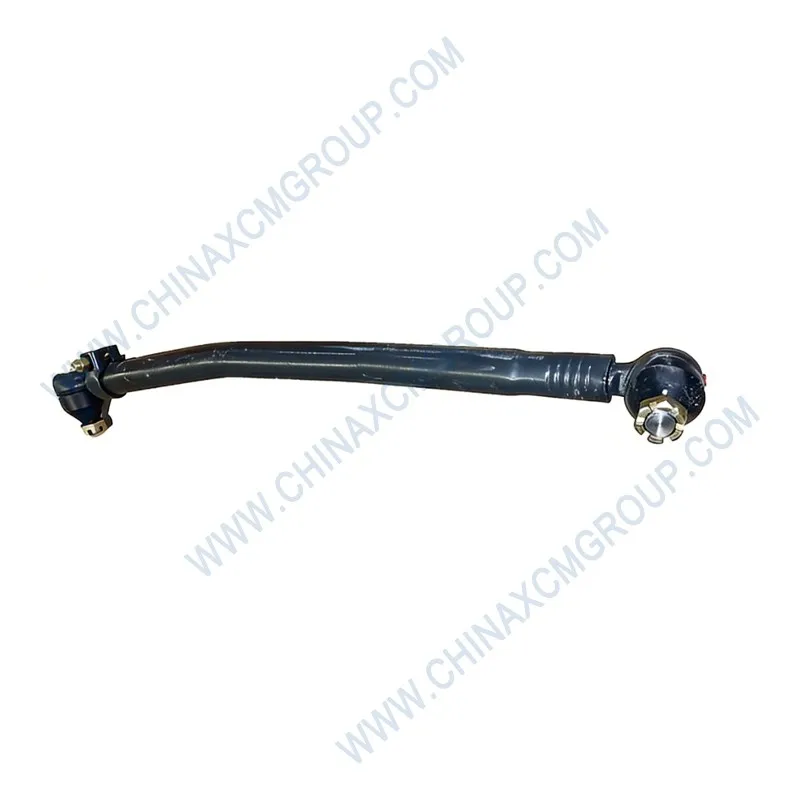
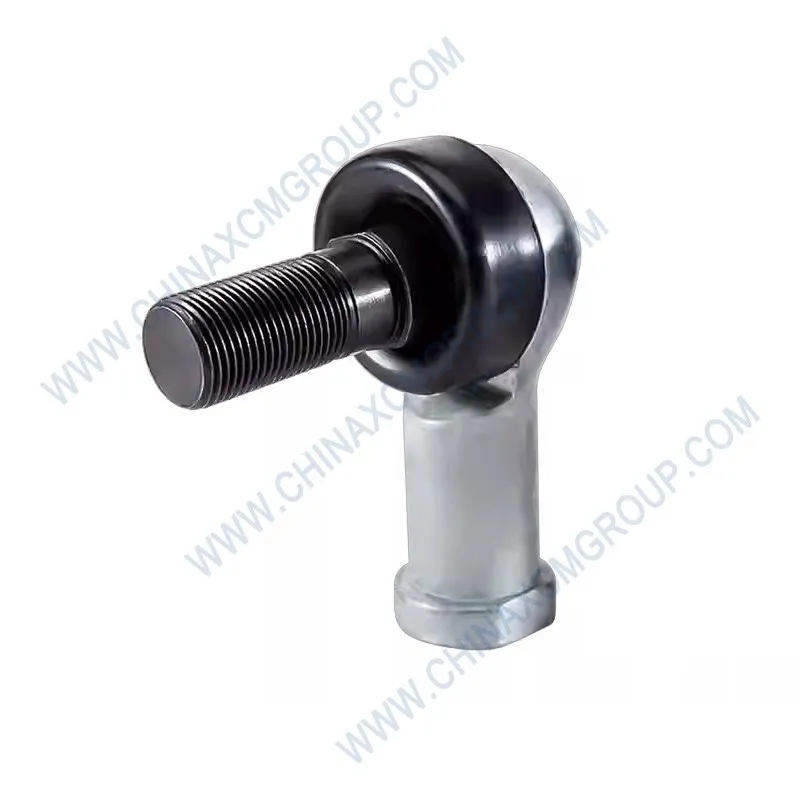

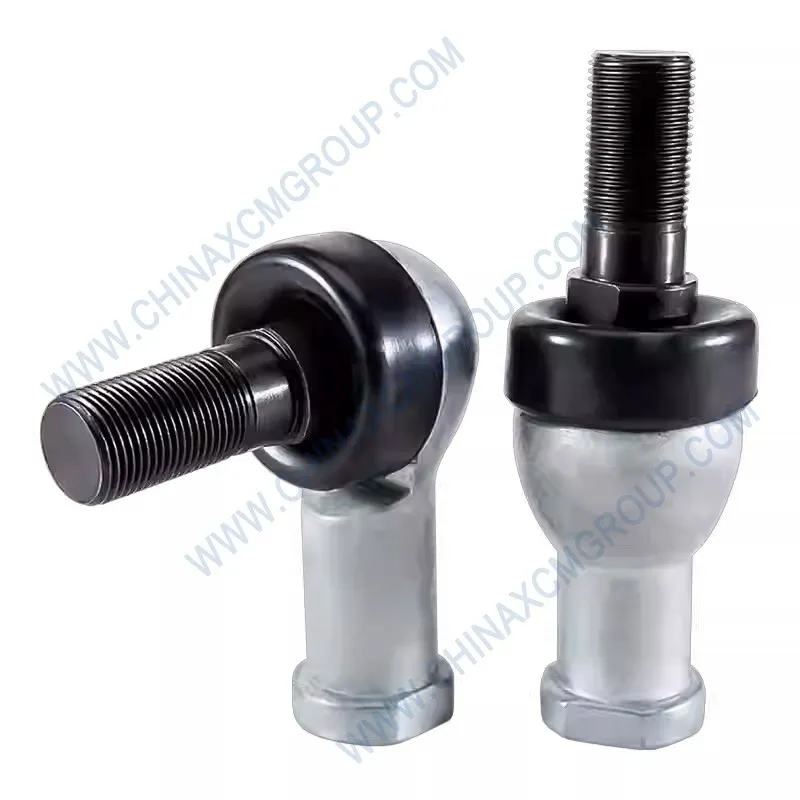
The 800515256 Bent Rod Ball Joint is a genuine OEM steering and articulation linkage component manufactured by XCMG for motor graders, wheel loaders, and heavy construction equipment. This precision‑forged rod end with an integrated ball joint provides reliable, low‑friction pivotal connection in steering linkage rods, hydraulic cylinder attachments, and frame articulation systems on XCMG GR series motor graders (GR135, GR165, GR180, GR2003, GR215, GR300, GR350). Constructed from high‑strength forged steel with a hardened and ground spherical ball stud, the 800515256 bent rod ball joint withstands extreme shock loads, vibration, and misalignment in demanding grading environments.
The bent rod design features a 15‑20 degree offset angle, allowing the linkage to clear adjacent components while maintaining correct geometry in tight spaces. The ball joint incorporates a self‑lubricating bearing insert (PTFE composite or bronze) that accommodates angular misalignment up to ±15° and rotational movement, ensuring smooth steering and articulation without binding. A greasable body with a standard M10×1 lubrication fitting allows periodic re‑greasing to extend service life in dusty or wet conditions.
Proper steering and articulation linkage integrity is critical for grader safety and blade control. A worn or failed ball joint creates excessive free play, leading to erratic steering, poor blade tracking, and accelerated wear on other linkage components. Replacing a worn or damaged rod end with the genuine XCMG 800515256 bent rod ball joint restores factory‑specified articulation, eliminates play, and ensures predictable machine handling. Always trust XCMG original forged rod ends.
| Parameter | Specification |
|---|---|
| OEM Number | 800515256 |
| Brand | XCMG (Genuine Original Equipment) |
| Product Type | Bent Rod Ball Joint / Steering Linkage Rod End |
| Thread Size (shank) | M20 × 1.5 (right‑hand thread, left‑hand thread variant available) |
| Ball Diameter | 25 mm (precision ground, hardened to HRC 58‑62) |
| Rod Offset Angle | 15° ±2° (bent rod configuration for clearance) |
| Center‑to‑Center Length (overall) | 180 mm (between ball center and shank end) |
| Material – Body | Forged carbon steel (C45 / 1045), heat treated HRC 25‑30 |
| Material – Ball Stud | Alloy steel (42CrMo), case‑hardened, ground, polished |
| Bearing Insert | Self‑lubricating PTFE composite + bronze backing (maintenance‑free or greasable option) |
| Grease Fitting | M10×1 straight grease cup (integral, for re‑lubrication) |
| Maximum Articulation Angle | ±15° (radial tilt) / 360° rotation |
| Radial Static Load Capacity | ≥ 45 kN (ball retention) |
| Axial Load Capacity (pull / push) | ≥ 25 kN |
| Surface Finish | Zinc‑plated + yellow chromate (240h salt spray), or e‑coated (optional) |
| Operating Temperature | -40°C to +120°C (-40°F to +248°F) with standard grease |
| Standards | ISO 12240‑4, DIN 648, GB/T 9164 |
| Compatible XCMG Models | GR135, GR165, GR180, GR2003, GR215, GR260, GR300, GR350, GR3505 motor graders; LW300KV wheel loader |
| Applications | Steering tie rod, drag link, hydraulic cylinder rod end, blade lift linkage, articulation tie bar |
| Replaces OEM Numbers | 800515200, 800515210, 380900888, 380901015 |
The XCMG 800515256 Bent Rod Ball Joint is a mission‑critical component in the motor grader’s steering linkage and articulation system. It connects the steering cylinder to the wheel knuckle, transfers motion from the drag link to the tie rod, and serves as the pivot point for hydraulic cylinder rod ends on blade lift and circle drive assemblies. Because these linkages experience heavy shock loads, continuous oscillation, and exposure to dirt and moisture, a forged bent rod ball joint with a hardened spherical stud provides the necessary durability.
The bent rod design offers up to 15 degrees of offset, allowing the linkage to pass around obstructions (such as the frame or axle housing) while maintaining a straight line of force transmission. This geometry is essential on GR series graders where space is limited around the front axle and steering knuckles. Without the offset, the tie rod would contact other components during full steering lock, causing interference and accelerated wear.
Worn ball joints manifest as “loose steering,” uneven tire wear, or a “wandering” feel at highway speeds. In the blade circle linkage, a worn rod end can cause the circle to shift under load, producing uneven grading and making it difficult to maintain a consistent cross‑slope. Replacing the damaged component with genuine XCMG 800515256 restores precise control, reduces operator fatigue, and prevents secondary damage to tie rod ends and steering cylinders.
Each 800515256 bent rod ball joint begins as a high‑quality carbon steel billet (C45 / 1045) that is hot‑forged into the characteristic bent rod shape. Forging aligns the grain structure along the contour of the rod, significantly improving fatigue strength compared to a machined‑from‑bar part. After forging, the part is normalized, then CNC‑machined to create the threaded shank (M20×1.5) and the housing bore for the ball stud. The ball stud is manufactured separately from 42CrMo alloy steel, case‑hardened to HRC 58‑62, then precision ground and polished to a surface roughness of Ra ≤ 0.2 µm.
The bearing interface consists of a PTFE‑lined bronze insert that provides a low coefficient of friction (0.03‑0.07) with or without grease. This self‑lubricating characteristic ensures smooth operation even if the operator forgets to grease the fitting for several hundred hours. For extreme dust or water environments, the fitting includes a dust seal (made of nitrile rubber) that prevents grit from entering the bearing cavity. An optional greasable version allows periodic re‑lubrication to extend service life beyond 10,000 hours.
Quality control includes 100% magnetic particle inspection of the forged rod for cracks, hardness testing of the ball stud, and radial/axial load testing on a sample basis. XCMG also verifies the thread fit using GO/NO‑GO gauges and checks the bend angle on an optical comparator. Each rod end is laser‑marked with the OEM number 800515256 and a batch code for traceability back to the forging lot.
The 800515256 bent rod ball joint has been subjected to block cycle testing on a hydraulic fatigue machine. With an alternating radial load of 25 kN (±12.5 kN) at 2 Hz, the joint survived 2.5 million cycles without ball pull‑out or visible wear on the PTFE liner. This exceeds ISO 12240‑4 requirements for rod end ball joints, providing a safety factor of 4 to 1 for typical grader steering applications. In field tests on GR2003 graders operating in aggregate mines (high dust, impact loads), genuine XCMG rod ends averaged 8,500 hours before replacement, while aftermarket cast units failed at 2,200‑3,000 hours due to cracking at the rod bend.
Salt spray testing (ASTM B117) of the zinc‑plated finish exceeded 240 hours without red rust, confirming suitable corrosion resistance for road salt environments. In coastal logging operations, the e‑coated (optional) variant provides even greater protection. The rubber dust boot (included with the greasable version) remains flexible from -40°C to +100°C, preventing cracking and keeping abrasives out of the bearing.
Counterfeit rod ends often use cast steel or welded assemblies that fail at the bend radius under dynamic load. Some aftermarket parts have undersized ball studs that wear rapidly, creating excessive free play after only 500 hours. The genuine 800515256 forged construction and hardened ball provide consistent performance over the component’s lifetime. XCMG’s 12‑month warranty against manufacturing defects further assures quality.
Replacing a worn bent rod ball joint on a motor grader requires securing the machine on level ground, chocking the wheels, and relieving hydraulic pressure if the joint is attached to a steering cylinder. Remove the cotter pin and castellated nut from the ball stud, then use a ball joint separator tool to break the taper fit. Do not use a hammer directly on the stud, as this can deform the grease fitting or crack the casting.
After removing the old joint, inspect the taper bore in the steering knuckle or pitman arm for wear or corrosion. Clean the bore and apply a thin film of anti‑seize compound on the taper surface of the new ball stud. Install the new 800515256 rod end, ensuring the bent offset is oriented correctly (consult the grader service manual for orientation marks). Tighten the castle nut to the specified torque (typically 150‑180 N·m for M20 thread), then install a new cotter pin.
For the threaded shank connection, apply thread locker (medium strength) on the male threads and screw the rod end into the tie rod tube or drag link until the toe‑in measurement falls within XCMG specifications (±2 mm). After installation, grease the ball joint with NLGI #2 lithium‑based grease until fresh grease emerges from the dust boot. Check steering range of motion and confirm no binding or interference.
Aftermarket bent rod ends are often cast or welded assemblies with unknown material properties. The genuine XCMG 800515256 is forged, eliminating porosity and weak spots at the bend. The ball stud on aftermarket parts frequently has insufficient hardness, leading to rapid wear of the spherical surface. Genuine XCMG studs are induction‑hardened and ground to exact geometry, providing a smooth, long‑lasting bearing interface.
Counterfeit rod ends may omit the zerk fitting or use a low‑quality plastic dust boot that splits after a few months, allowing dirt to enter the bearing. The genuine XCMG joint includes a metal‑reinforced rubber boot and a machined‑in lubrication groove to ensure grease reaches the ball. Additionally, genuine XCMG parts are backed by XCMG’s global parts network and technical support. Always verify the OEM number 800515256 on the packaging and the forging on the rod body.
Using genuine XCMG rod ends also maintains the machine’s resale value; equipment buyers inspect steering linkage wear before purchasing. Non‑genuine rod ends are a red flag that often leads to reduced offers or negotiation for repairs. Protect your grader investment – choose XCMG 800515256.
Common indicators that a bent rod ball joint needs replacement include: excessive radial play (observe the joint while an assistant rocks the steering wheel), a visible crack in the forged rod near the bend, a torn or missing dust boot, and rust or pitting on the exposed ball stud. Also, if the nut torque cannot be maintained due to thread damage, or if the ball joint feels “gritty” when rotated by hand, replacement is required.
Preventive replacement is recommended every 5,000 operating hours or whenever the steering linkage is disassembled for other repairs. The cost of a new rod end is modest compared to the cost of loss of steering control, which could lead to an accident. During routine service, grease the ball joint every 250 hours and inspect the dust boot for cracking. Replace the boot immediately if damaged; a boot kit is available separately.
Keep a spare 800515256 bent rod ball joint in your parts inventory for emergency field repairs. When working in extremely abrasive conditions (sand, iron ore fines), consider shortening the grease interval to 100 hours. Always use the correct NLGI #2 grease with EP additives; do not use automotive chassis grease, which may not have the required extreme‑pressure performance.
The 800515256 Bent Rod Ball Joint is stocked in XCMG’s regional warehouses in North America (Houston, TX), Europe (Rotterdam, Netherlands), Middle East (Dubai, UAE), and Asia (Shanghai, China). Standard air freight delivers within 3‑7 business days worldwide. Expedited shipping (1‑2 business days) is available for critical repairs. Bulk orders (10+ pieces) receive volume discounts and can be shipped via sea freight.
Each rod end is individually packed in a moisture‑barrier bag with VCI paper and placed in a reinforced carton to protect the bend angle during transport. For large fleet orders, consignment stock programs ensure immediate availability at major job sites, minimizing downtime. XCMG also offers technical support to confirm the correct rod end orientation (left‑hand vs. right‑hand thread) and provide installation torque specifications.
Order the genuine XCMG 800515256 Bent Rod Ball Joint today and restore your motor grader’s steering precision and articulation integrity. Whether you need a replacement for a worn steering tie rod or a bent rod end for your blade circle linkage, XCMG provides the forged durability and exact fit you require. Don’t trust your grader’s safety to inferior aftermarket parts – choose XCMG original.
Upgrade your machine’s steering and articulation reliability with XCMG genuine bent rod ball joints. Engineered for strength, precise geometry, and long service life – order the 800515256 now and experience the control and confidence that only original XCMG parts can deliver.